Pogonomyrmex
Pogonomyrmex californicus
Nuptial Flight Calendar
Care Guide
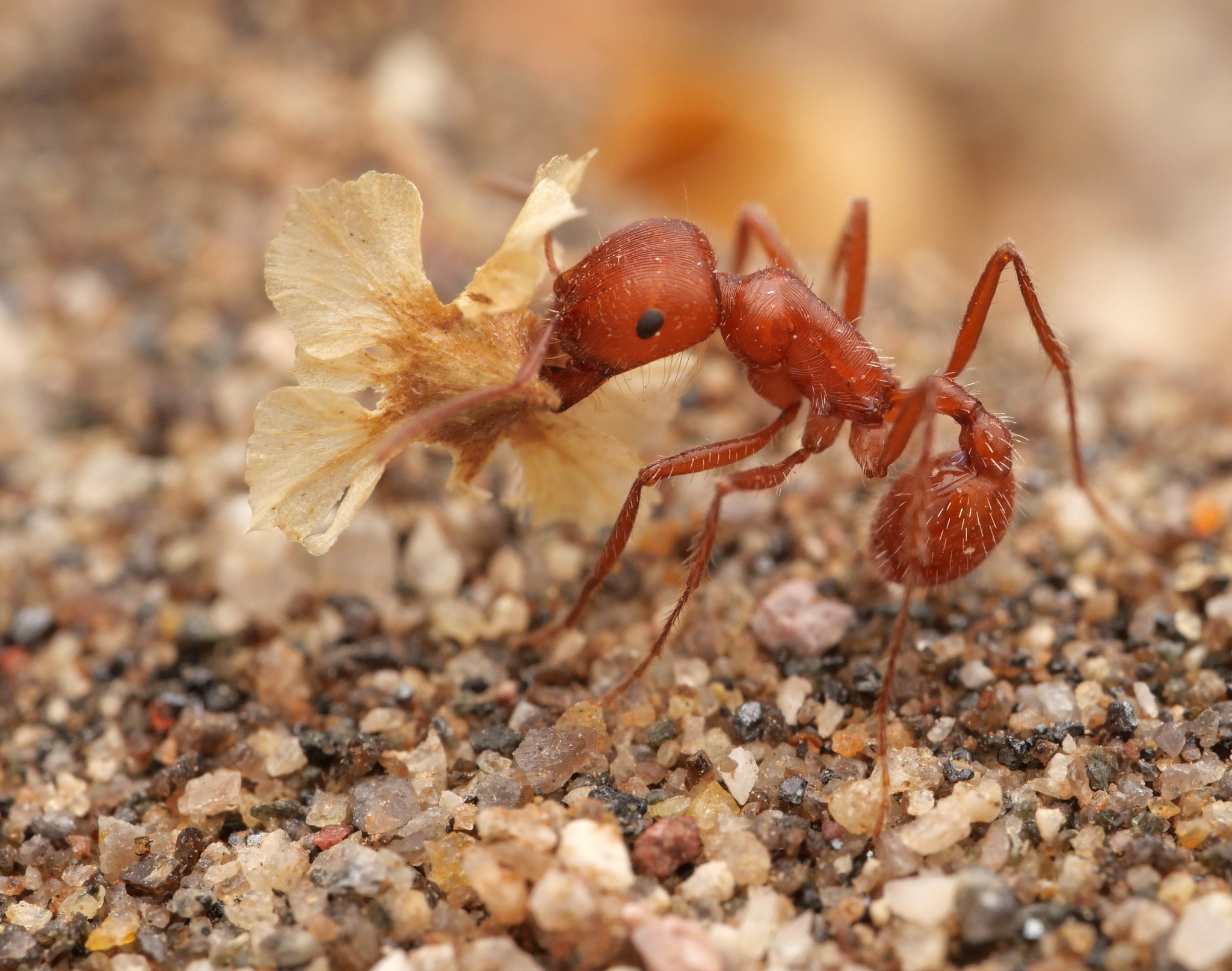
Pogonomyrmex californicus, commonly known as the California harvester ant, is a striking and rewarding species for ant keepers of all experience levels. A single colony is monomorphic — meaning workers are all roughly the same size, ranging from 5 to 8 mm, while the queen herself measures a modest 9–11 mm. Despite their uniform looks, these ants make up for it with bold personality and memorable behavior. Their large, powerful mandibles are perfect for carrying seeds many times their own weight, and they are famous for building impressive above-ground nesting mounds in the wild, often ringed with small pebbles. In captivity, this species is known for its fast growth and enthusiasm for clearing a foraging area.
One of the most defining traits of Pogonomyrmex californicus is their dual diet. They are primarily granivorous, meaning seeds form the backbone of the colony’s nutrition. Offer a variety of oil-rich seeds such as sesame, poppy, or millet, and watch worker ants methodically store them in dedicated chambers. Protein is equally important during brood rearing, and these ants readily accept small insects like fruit flies, crickets, or mealworms. A consistent supply of both seeds and insects will promote steady colony expansion. Notably, this species does not require any hibernation period, making it a joy for keepers who live in climates with short winters or want year-round activity.
Care difficulty
Keeping Pogonomyrmex californicus is well-suited for beginners. The semi-claustral founding means the queen must be fed during the early stages, but once you have a small worker force, care becomes highly straightforward. They are robust and forgiving of minor fluctuations in temperature and humidity.
Housing
A nest environment with a temperature range of 24–32°C and low humidity of 30–50% is ideal. These ants prefer dry conditions, so a plaster or acrylic formicarium with a well-drained heating section works wonders. Provide a dedicated outworld for foraging activities, as these ants love to explore and pile up refuse in a designated corner. The most crucial point is to give them a stable, vibration-free location — Pogonomyrmex are sensitive to disturbances from handling or loud noises, especially when the colony is still small.
First days after purchase
Upon arrival, transfer your colony into the prepared formicarium and place it in a dim, quiet spot. Give them at least 48 hours to settle. In the first days, only offer a droplet of sugar water and a few seeds, along with a clean water source. Avoid any sudden temperature shifts. Watch for the workers to begin foraging and storing seeds — this is a great sign they feel secure. Once you see active seed collection and the queen laying eggs, you can slowly introduce protein to support the first generation of workers. With patience and minimal disruption, your Pogonomyrmex californicus colony will quickly become a lively centerpiece of your ant collection.