Camponotus
Camponotus herculeanus
Nuptial Flight Calendar
Care Guide
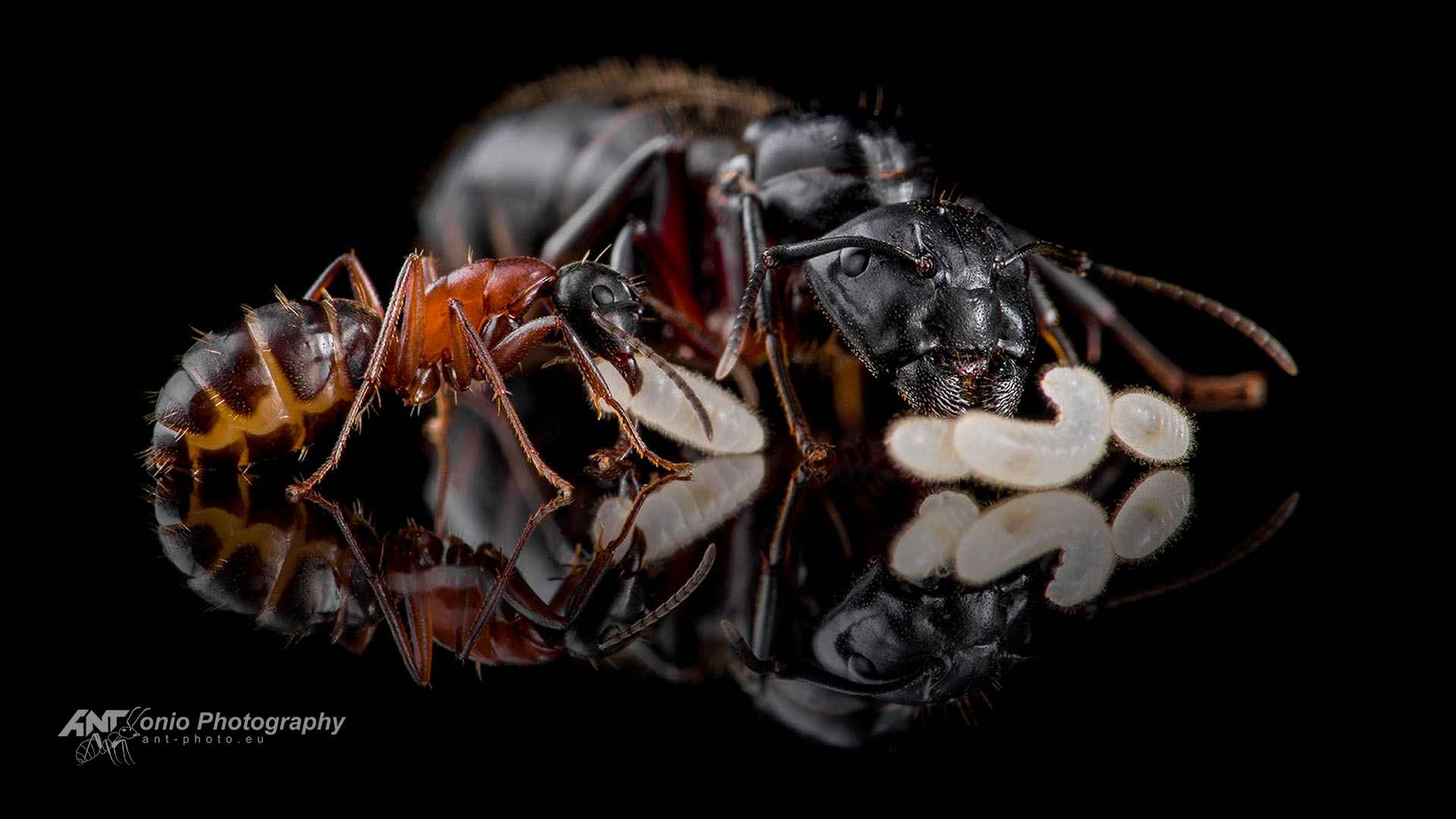
Camponotus herculeanus, the Hercules carpenter ant, is a robust and visually striking species native to boreal forests across Europe and Asia. Workers exhibit moderate polymorphism, ranging from smaller minors around 6 mm to imposing majors reaching up to 14 mm, with the queen measuring 16–18 mm. Their coloration is typically jet black with reddish-brown legs and a subtle metallic sheen, making them a favorite among collectors. These ants are named for their impressive size and strength, but they also possess a calm temperament compared to some more aggressive Camponotus species. Founding is claustral, meaning the queen seals herself inside a chamber and raises the first brood entirely on her own metabolic reserves—a reliable and rewarding process for keepers.
One of the most fascinating aspects of Camponotus herculeanus is their seasonal rhythm. In the wild, they undergo a natural winter diapause that is essential for colony health and future growth. Without this hibernation period, queens may fail to lay eggs the following spring, and worker lifespans can shorten. During the active season, these ants are energetic foragers that scavenge for insects and collect honeydew from aphids. They also readily accept sugar water and protein jelly in captivity, making dietary management straightforward. Their strong mandibles allow them to tackle a variety of prey, from small crickets to mealworms.
Care difficulty
Keeping Camponotus herculeanus is best suited for intermediate keepers, primarily because of their mandatory hibernation requirements. Beginners willing to provide a cool period will find them hardy and forgiving once established. The biggest challenge lies in ensuring a proper temperature gradient: the nest should be kept between 18–24°C, with a slightly warmer area for brood rearing. Humidity in the 50–70% range is important, especially for young larvae, and can be maintained by regularly moistening the nest substrate. Overly dry conditions lead to desiccation, while excessive moisture promotes mold, so careful observation is key.
Housing
A formicarium for Camponotus herculeanus needs to accommodate a colony that can eventually reach several thousand workers—though they rarely exceed 10,000 even in optimal conditions. Wood or plaster nests work well, as these ants naturally nest in decaying timber. Provide a separate foraging area with a heat source on one side to create a gradient. During the growth phase, ensure the nest has enough chambers for the queen to lay eggs and for workers to store food. Avoid bright lights and vibrations, as these ants are sensitive during the early stages of colony development.
First days after purchase
Upon receiving your Camponotus herculeanus colony, place the formicarium in a quiet, dimly lit spot and let the ants settle for at least 24 hours. Do not offer large prey immediately; start with small drops of sugar water and a tiny protein source. Check that the humidity level is adequate and that the queen has a secure chamber. Observe from a distance—if workers are exploring and the queen remains calm, the colony is adjusting well. Patience during this acclimation period sets the stage for a thriving, long-lived colony.