Solenopsis
Solenopsis xyloni
Nuptial Flight Calendar
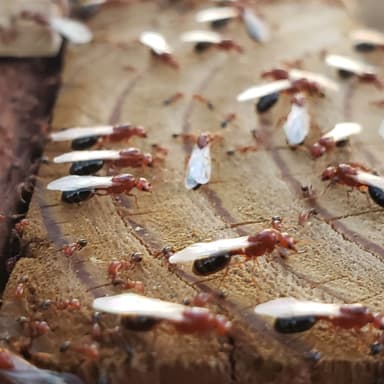
Flight months: May, Jun, Jul, Aug, Sep, Oct
Care Guide
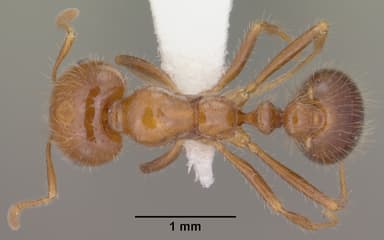
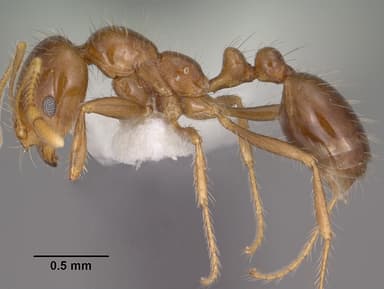
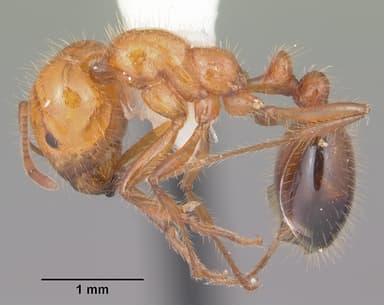
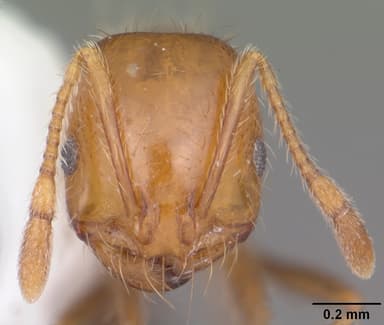
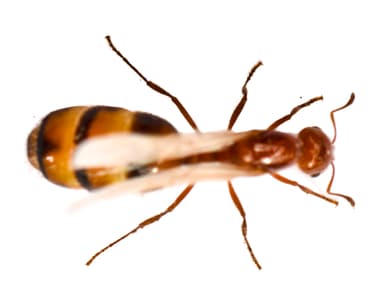
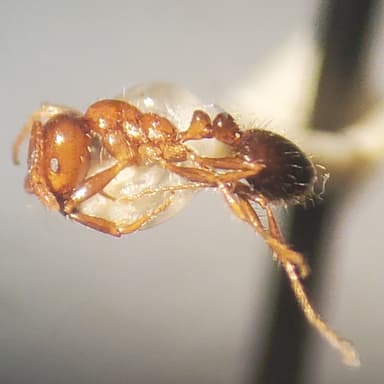
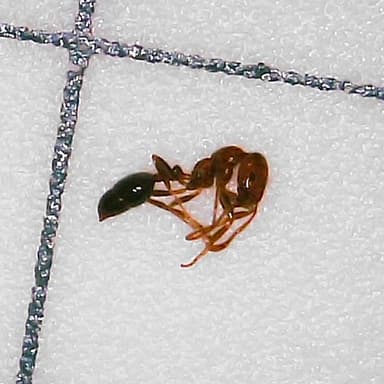
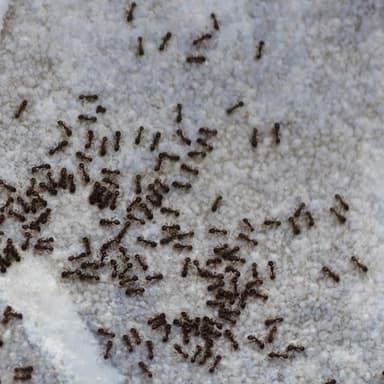
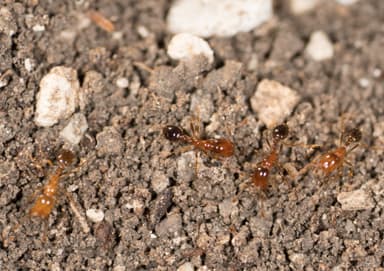
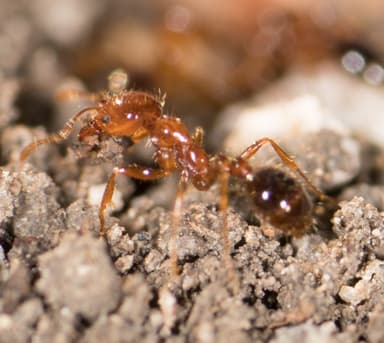
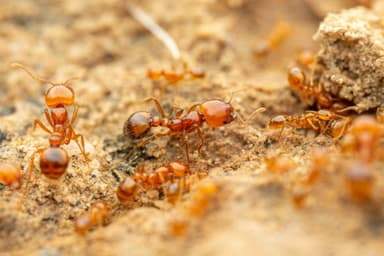
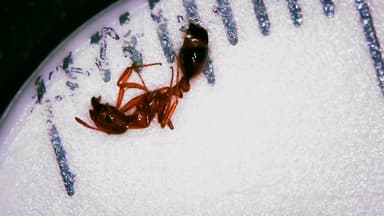
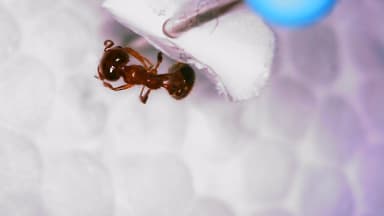
Solenopsis xyloni, commonly known as the southern fire ant, is a strikingly polymorphic species native to the warmer reaches of North America, with GBIF occurrence records bounding its range from roughly Northern California to the mid-Atlantic and south into Mexico. This species displays a dramatic size range: queens measure a robust 8 to 10 millimeters, while workers span a continuous spectrum from petite 2.5-millimeter minors to stout 6-millimeter majors, broadly grouped into three functional castes. The deep amber to brownish-red workers, with their darker gasters, embody the classic fire ant silhouette, and colonies can swell to an impressive 100,000 individuals over several years (Taber 2000). What makes S. xyloni especially fascinating for the hobbyist is its express train of a life cycle—claustral founding queens raise their first nanitic workers rapidly, and thereafter the colony expands with a vigor that demands respect. They are tenacious foragers, quick to recruit nestmates to food, and their sting, while less notorious than that of the invasive Solenopsis invicta, is still a memorable reminder of their potent venom.
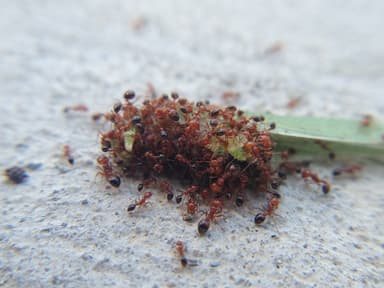
Given their explosive growth potential and defensive disposition, S. xyloni is best suited to the intermediate keeper who has already mastered the basics of humidity and escape prevention with slower-growing species. Complete beginners may find the sheer speed with which a thriving colony can outgrow its housing and the ever-present risk of escapes daunting. The ants are hyper-aware of vibrations and will pour out of any breach with alarming coordination, so a well-sealed formicarium is non-negotiable. That said, for anyone who enjoys a high-energy display colony where workers swarm a protein source seconds after it hits the outworld, this ant is deeply rewarding. The key to success is proactive expansion planning—colonies will need progressively larger nests every few months during the active season, and under no circumstances should they be housed in setups with gaps larger than a minor worker’s head capsule.
Housing for S. xyloni must prioritize both containment and the species’ environmental tolerances. A vertical, modular formicarium made of plaster, ytong, or a similar humidity-retentive material works well, as it allows the ants to self-regulate moisture preference. The nest should be kept at a temperature gradient between 22 and 30 degrees Celsius, with a warm spot at one end to encourage brood development; supplemental heating via a cable or mat placed against one side of the nest achieves this. Humidity inside the nest chambers should hover between 50 and 70 percent, which is readily maintained by watering the nest medium or using a hydration reservoir. The outworld can be left drier to discourage mold. A thin layer of sand or a sand-clay mix makes an acceptable substrate in foraging areas, as it mimics the well-drained soils of their native range described by Creighton (1950) and gives workers a familiar texture for digging and anchoring food items. Because these ants are climbers, a complete fluon or talcum barrier strip at the top of the outworld is essential; anything less will almost certainly result in escapes.
Dietarily, the southern fire ant is a model generalist. Workers collect protein with gusto to feed their ever-hungry larvae, and they will accept everything from chopped insects—crickets, mealworms, roaches—to thawed pinky mouse parts as the colony grows large. Offer protein two to three times weekly, removing leftovers after a day to prevent spoilage. Carbohydrates are equally critical, fueling the adult workers and queen. A small feeding dish of sugar water, honey water, or even diluted maple syrup, replaced every few days, will sustain them. A useful trick is to position the carbohydrate source near the nest entrance on the first feeding to observe recruitment, but thereafter move it to the far side of the outworld to encourage foraging traffic. Water must be available at all times, ideally in a test-tube setup with a cotton plug or a dedicated water feeder, as these ants drink copiously in the dry nest air.
This species requires a cool hibernation to trigger its annual cycle. In the wild, colonies in the northernmost part of their range experience chilly winters, and even those from warmer latitudes undergo a distinct slowdown. From approximately November to February, the nest temperature should be gradually lowered to a stable 15 degrees Celsius. A wine cooler or a cool basement works well. During this period, brood production halts, and the ants cluster lethargically. They will not eat, but a small water source must remain. Skipping hibernation will often result in a restless, dwindling colony that fails to reach reproductive maturity years down the line. When spring comes, raise the temperature slowly back to the active range over a week, and the queen will resume laying with renewed vigor.
In the first days after a mated queen or a small founding colony arrives in the mail, patience is the watchword. Regardless of whether you have a single queen in a test tube or a young colony with a handful of workers, place the setup in a quiet, dimly lit space within the target temperature range and do not disturb it for at least 24 hours. The vibrations of transit are profoundly stressful. Once they have settled, offer a tiny droplet of sugar water on a slip of foil just inside the tube opening if workers are present, and remove it within a few hours if untouched. For a solo queen, no feeding is necessary until the first workers eclose—she will subsist on her wing muscles. Avoid the temptation to check constantly; light and breath moisture are disturbances. You will know the colony is ready for connection to an outworld when the workers begin consistently pulling at the cotton plug or clustering by the entrance, signaling their urge to forage. At that point, attach a small foraging arena and introduce a pre-killed fruit fly or a similarly tiny insect fragment. Watch for aggressive recruitment, and then enjoy the remarkable spectacle of your fire ant colony coming to life.