Pheidole
Pheidole noda
Nuptial Flight Calendar
Flight months: Jun, Jul, Aug, Sep
Care Guide
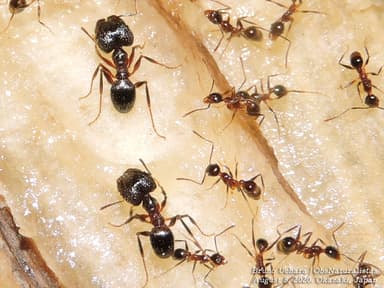
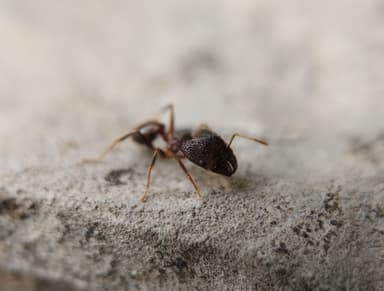
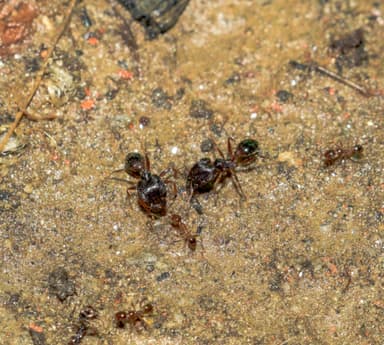
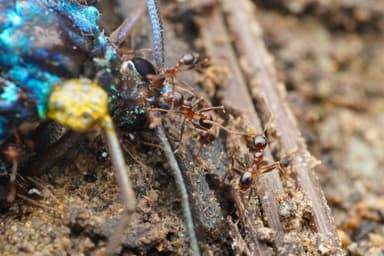
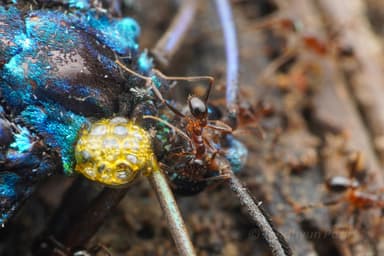
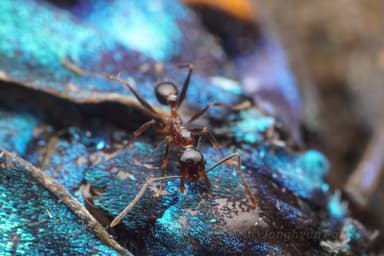
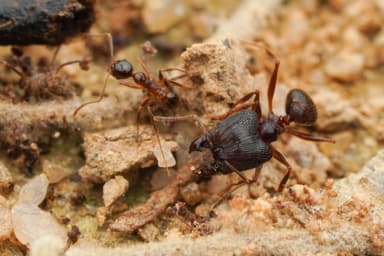
Pheidole noda is a remarkably robust ant species belonging to one of the world’s most hyperdiverse genera, and it showcases all the traits that make Pheidole so beloved by hobbyists. Queens measure a substantial 7–8.5 mm, while the true spectacle lies in the pronounced dimorphism of their workers: the minor caste ranges from just 2.5–4.5 mm, and the majors, with their disproportionately enormous, blocky heads packed with muscle, can appear almost comically oversized by comparison. This two-caste system (minor and major workers) powers a colony that can, under optimal conditions, swell to an impressive 30,000 individuals. In their native range across East Asia – from Japan, China, and Korea, as defined by collection records spanning 22° to 42° north – they thrive in warm-temperate to subtropical habitats. Colonies are founded claustrally by a single queen who seals herself away to rear her first tiny nanitic workers without foraging, an efficient strategy that leads to explosive growth once the colony is established. What truly captivates keepers is the bold behavior and tireless industry of these ants: minors form dense, frantic foraging trails while the major workers act as living seed mills and formidable defenders, their mandibles capable of crushing prey with ease.
As a care difficulty rating of “beginner” suggests, Pheidole noda is an outstanding choice for those new to the hobby, yet its impressive colony expansion and high activity levels also satisfy more experienced enthusiasts. The species is extremely forgiving of minor husbandry fluctuations and eagerly exploits food sources, making it a reliable and engaging display ant. However, prospective keepers must appreciate that this is not a timid, slow-growing species; its populous colonies require consistent feeding once they reach a few hundred workers, and their small size demands an escape-proof setup. The ants are notorious for exploiting the tiniest gaps in formicarium construction, so all ventilation holes and lid seams must be secured with fine stainless-steel mesh or PTFE barriers. Given the natural range and climatic data, they are perfectly suited to life at room temperature, with a target gradient of 20–28°C, and their preferred humidity range of 50–70% is easily maintained in a standard grout, plaster, or ytong nest. A slight moisture differential within the nest allows the colony to self-regulate, and a thin layer of sand or clay substrate in the outworld encourages natural digging and waste management behavior.
Feeding Pheidole noda is a highlight of their care, as they are voracious omnivores that accept an exceptionally wide variety of foods. Protein should be provided in the form of small insects such as fruit flies, pinhead crickets, mealworm pieces, or chopped cockroaches, with an emphasis on adjusting prey size to match the colony’s current brood demand—majors will readily dismember larger items. Carbohydrates are equally important, and a small test tube filled with sugar water topped with a cotton ball, or a dab of pure honey offered on a slip of foil, will be rapidly drained. Always remove uneaten protein after 24–48 hours to prevent mold, and ensure a constant supply of fresh water, either through a dedicated water tower or a moistened nest area. A study of related Pheidole species from Northern Vietnam by Eguchi (2008) highlights the genus’s reliance on a mixed diet for sustaining their prolific brood production, and P. noda is no exception—consistent feeding directly correlates with growth rate and the production of major workers.
This species requires a true hibernation period. In their natural habitat, winter temperatures drop, and captive colonies must be gradually cooled to a steady 12°C for approximately three to four months. Without this diapause, queens may suffer reduced fecundity and workers experience premature die-off cycles. The transition should begin in late autumn by slowly reducing ambient temperatures over several weeks until the target hibernation temperature is reached, typically using a wine cooler, basement, or unheated room that can maintain a stable 12°C. During this time, the colony’s metabolism slows dramatically; they cluster together and cease foraging almost entirely. A small water source must remain available, but feeding is unnecessary. Monitor occasionally for any signs of abnormal mortality, but a healthy colony will emerge in spring with renewed vigor and a surge in egg-laying.
The first days after your Pheidole noda colony arrives are critical for their long-term success. Place the queen and her small entourage of workers, or a founding queen with her first brood, into a prepared mini-outworld connected to a small, darkened nest chamber. Immediately cover the setup and leave it in a quiet, vibration-free area for at least 24–48 hours without any disturbance. A tiny drop of sugar water on a cotton pad placed near the nest entrance can be offered right away, but avoid offering protein until you see the workers actively drinking and exploring. Observe for the queen to resume laying eggs—indicated by a clutch of tiny white ovals at her side—and wait until the nanitic workers have fully matured and begun foraging before offering a miniscule piece of insect. During this settling phase, resist the temptation to check on them more than once a day, as excessive light and movement can cause a queen to eat her brood. Once you witness the first minor workers confidently navigating the outworld in search of food, you’ll know your colony has accepted its new home and is on the fast track to becoming the bustling metropolis that makes this species such a delight.