Brachymyrmex
Brachymyrmex patagonicus
Nuptial Flight Calendar
Flight months: Jan, Feb, Apr, May, Jun, Jul, Aug, Sep, Nov, Dec
Care Guide
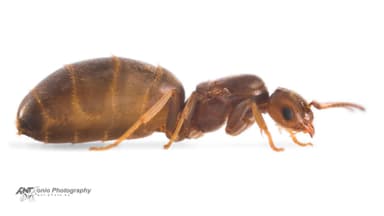
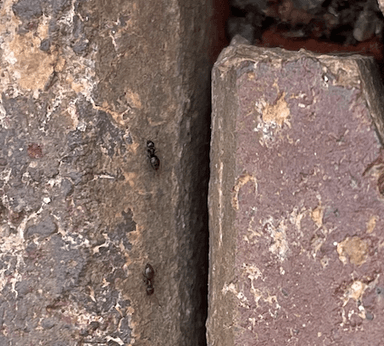
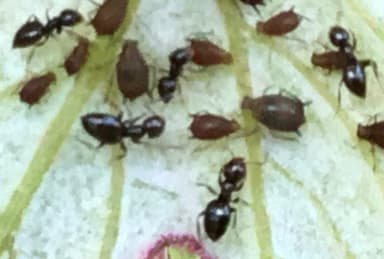
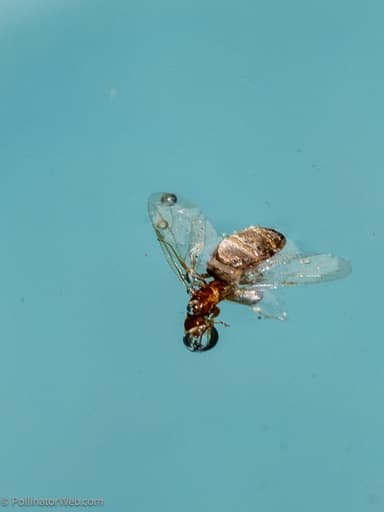
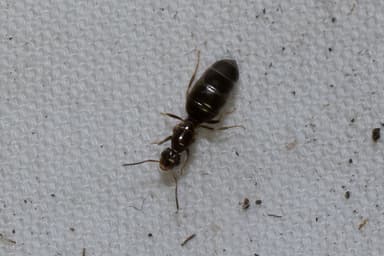
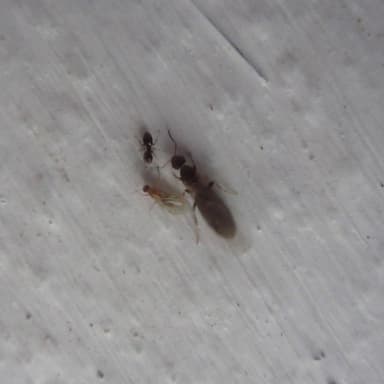
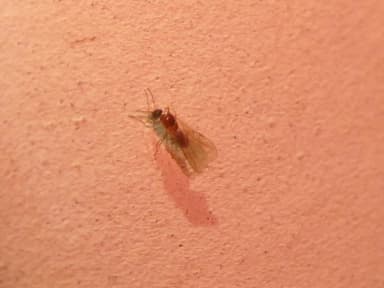
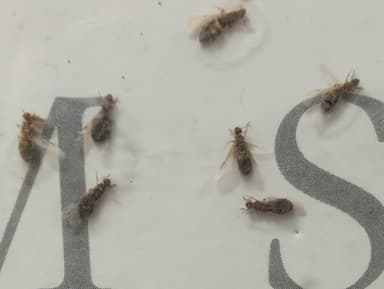
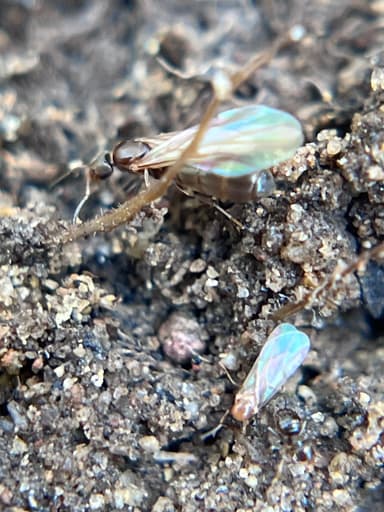
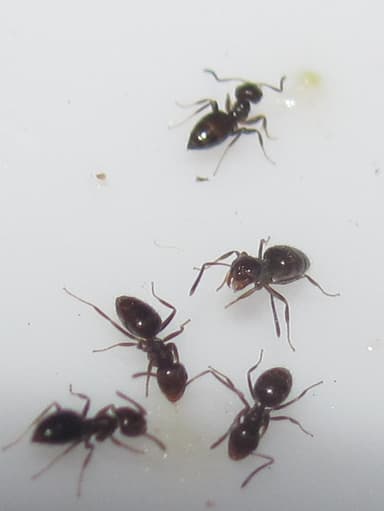
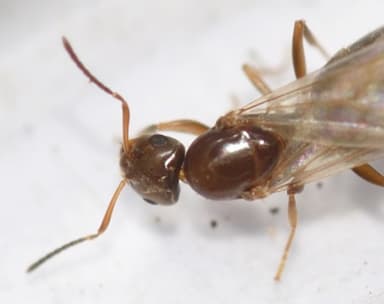
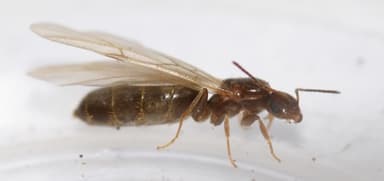
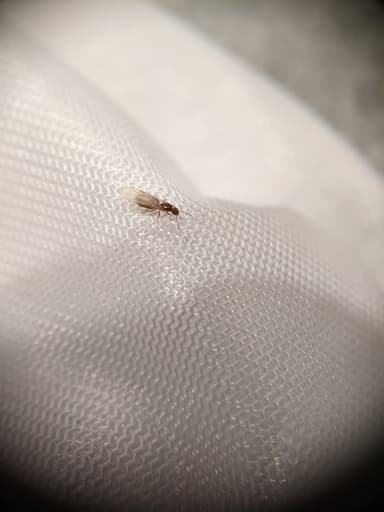
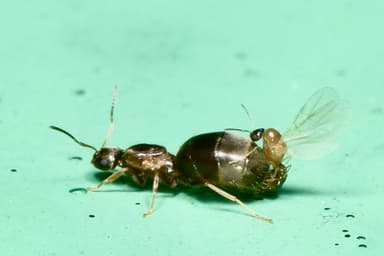
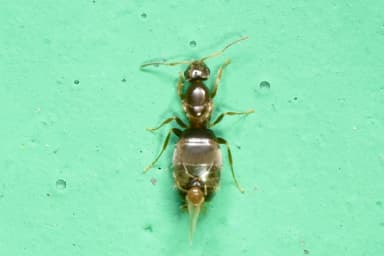
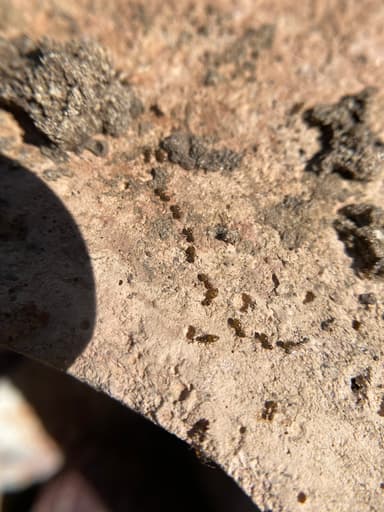
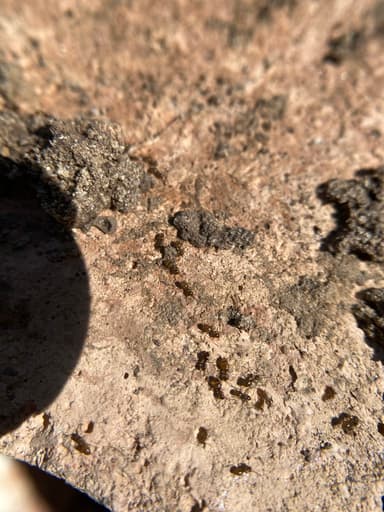
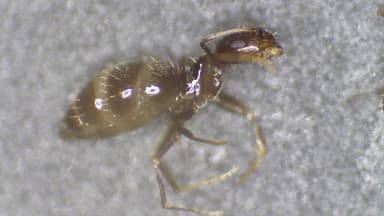
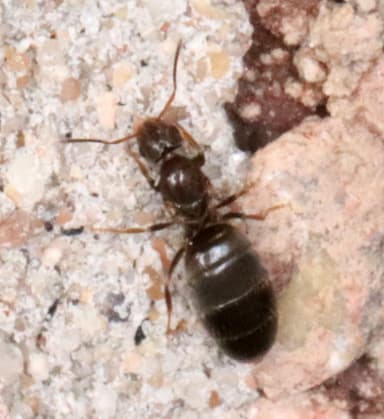
Brachymyrmex patagonicus, often referred to as the dark rover ant, is a diminutive but endlessly fascinating species that has quietly conquered urban landscapes from its native South America to much of the southern United States. The queens measure a modest 3.5 to 4.5 mm, while the workers are truly tiny at just 1.3 to 1.8 mm — about the size of a sesame seed — with no polymorphic castes, so every worker you see will be a uniform minor (Quirán et al. 2004). This minuscule scale allows surprisingly large colonies to thrive in tight spaces; mature nests can number up to 10,000 individuals without ever feeling crowded in a well-designed formicarium. Their claustral founding means the newly mated queen can raise her first brood entirely on her own body reserves, tucked away alone in a tiny chamber. What makes B. patagonicus so captivating to keep is the sheer pace of its life: foragers appear as a constant, delicate trickle of movement, and the colony’s adaptability — nesting in soil, rotten wood, or even the cracks of pavements — reveals a hardy opportunist that is a joy to observe up close. Nuptial flights in the Southeastern United States occur on warm, humid afternoons from May through September, often after rain, while in their native Argentina and Paraguay they fly during the austral summer months of November to February (MacGown & Hill 2010; GBIF occurrence data).
This is undeniably a beginner-level ant, recommended for anyone starting out in the hobby or for those who simply want a low-maintenance colony that still displays complex behaviors. The colony does not require a hibernation period — a huge advantage for keepers who prefer year-round activity — and the temperature and humidity tolerances are forgiving. They thrive between 22 and 30°C and appreciate a relative humidity of 50 to 70%, ranges easily achieved in most homes with minimal equipment. Their forgiving nature extends to their escape-proneness; while any ant of this size demands well-sealed enclosures, a simple PTFE barrier along the rim of an outworld is usually sufficient. Because founding is claustral, you won’t need to provide food until the first workers arrive, making the initial waiting period entirely hands-off. For these reasons, B. patagonicus suits young enthusiasts, classroom setups, or busy adults who might forget a feeding without catastrophic consequences.
When it comes to housing, think small and secure. A typical nest setup might be a plaster or ytong formicarium with a single shallow chamber to start, since the young colony will expand slowly; a founding queen alone needs nothing more than a darkened test tube with a water reservoir. As workers emerge, you can connect the nest to a small foraging arena. Because these ants naturally nest in soil and decaying organic matter, a thin layer of sand-loam substrate inside the nest can boost their comfort, but it isn’t strictly necessary — many keepers successfully raise them in plain plaster nests that maintain the recommended humidity. To keep the colony within the 50–70% humidity sweet spot, provide a water source with a gradual gradient, such as by moistening one end of the nest or using a test tube setup, and monitor with a small digital hygrometer. Avoid overly wet conditions, which can lead to fungal issues. Heating is best applied under one side of the nest so the ants can thermoregulate, with a small heat mat or cable maintaining the nest floor between 22 and 30°C. Given their minuscule size, always check for even the smallest gaps; they will exploit any crack in a lid or a dried-out barrier.
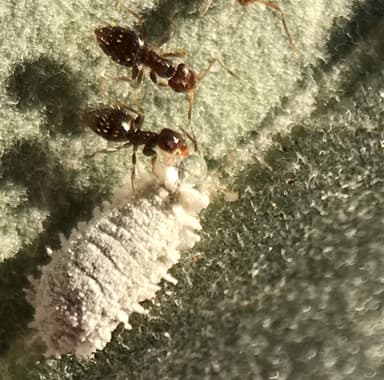
Diet for B. patagonicus is refreshingly straightforward. Workers eagerly accept small insect fragments — fruit flies, pinhead crickets, or chopped mealworms — as their protein source, and they have a particular fondness for sugary liquids. A tiny droplet of honey, maple syrup, or sugar water offered on a piece of wax paper will be quickly discovered and devoured. Because of the colony’s small worker size, it’s essential to offer appropriately sized food portions to avoid spoilage; a single fruit fly can feed many workers. Always provide a clean water source, either through a test tube filled with water and blocked with cotton, or a small water feeder in the outworld. While they are not picky, a rotating menu of protein and carbohydrates will keep the colony thriving. Avoid leaving large insect carcasses that could mold — these ants are efficient scavengers but can be overwhelmed by overly generous feedings.
This species does not require hibernation, and attempting to cool them artificially can do more harm than good. They maintain a steady activity level all year, which makes them endlessly watchable even during winter months when many other ants are dormant. You can simply maintain the same temperature and feeding schedule year-round, with no need to simulate a seasonal chill. Keep this in mind if you also keep temperate ants: B. patagonicus needs a separate space free from any cooling you might apply to others.
After purchase, your queen may arrive alone in a test tube or with a small founding workforce. In either case, resist the urge to check on her constantly. Place the tube in a dim, vibration-free area at room temperature, and wait at least three to five days before even shining a light in. If she has no workers yet, she will not need any food until the first nanitic workers eclose, which can take a few weeks. Once a handful of workers is present, introduce a tiny drop of sugar water near the tube’s opening and observe: the workers should find it within hours if they are settled. At that stage, you can begin offering micro-insect pieces every few days and slowly expand their space. The key things to watch for in the first two weeks are signs of stress — such as workers clustering motionless or the queen ceasing to lay eggs — which usually indicate that the setup is too bright, too frequently disturbed, or too dry. With patience and a light hand, this adaptable little ant will soon become a bustling microcosm of activity right on your desk.