Odontoponera
Odontoponera transversa
Care Guide
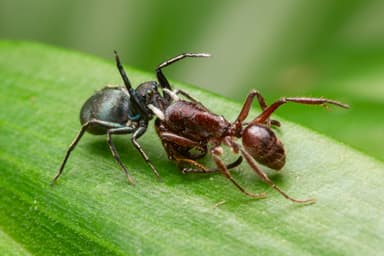
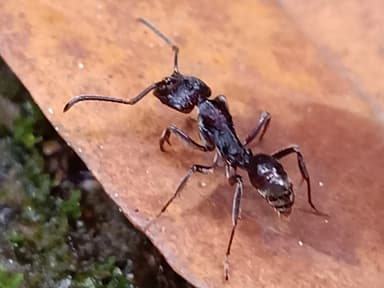
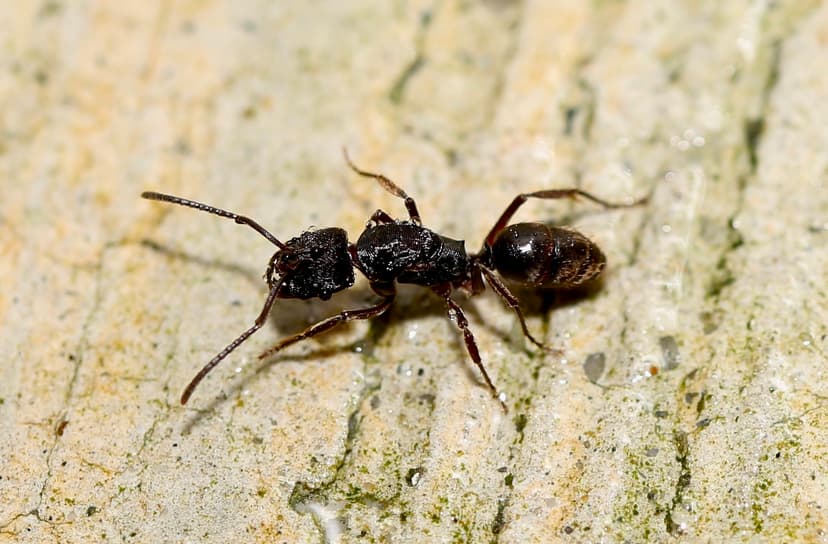
Odontoponera transversa, commonly known as the transverse spiny ant, is a striking species native to Southeast Asia. Workers are robust, measuring 8–11 mm, with a distinctive reddish-brown to black exoskeleton and prominent spines on the thorax. The queen is notably larger at 13–15 mm and, like her workers, possesses a powerful sting that she uses to subdue prey. Colonies are moderate in size, typically ranging from 50 to 300 workers, and are founded semi-claustraly — meaning the queen must forage for food during the early stages of colony development, a process that requires patience and careful observation from the keeper.
These ants are primarily insectivorous predators. Their diet should consist of a variety of soft-bodied insects such as cockroaches, crickets, and mealworms, which they hunt with impressive speed and precision. They will also readily accept honeydew and sugar water as supplementary energy sources, but protein is essential for brood development. Unlike seed-harvesting species, Odontoponera transversa relies entirely on live or freshly killed prey, so a steady supply of feeder insects is a must. Their feeding response is often vigorous, making them a joy to watch during mealtime.
Care difficulty
Keeping Odontoponera transversa is best suited for intermediate keepers. The semi-claustral founding phase demands extra attention, as the queen must be provided with small, manageable prey without being disturbed. Once the first workers eclose, the colony becomes more resilient, but their high humidity requirements and sensitivity to dryness mean that environmental control is crucial. Their sting, while not medically significant for most people, is painful and can cause local swelling — a good reason to handle their setup with care and respect.
Housing
A formicarium for Odontoponera transversa should maintain a humidity level of 70–85% and a temperature range of 24–28°C. A well-draining substrate with moisture retention, such as a mix of sand and clay or coconut fiber, works well. The nest area must be kept dark and stable; these ants are intolerant of sudden vibrations or bright light. A spacious outworld with a water source and a feeding area is essential, as the colony will grow to several dozen workers quickly. Regular moistening of the nest — without flooding — is key to successful brood rearing. A test tube or acrylic nest with adjustable hydration is ideal for small to medium colonies.
First days after purchase
Upon receiving your Odontoponera transversa colony, transfer them gently into their new formicarium and place it in a quiet, dim location. Allow the ants to settle for at least 24 hours before offering food. During this acclimation period, avoid disturbing the nest. Ensure the humidity is high and that a small water source is available. Offer a single small insect (e.g., a freshly killed fruit fly or micro cricket) to gauge their foraging response. Patience is essential — once they feel secure, these ants will display their fascinating predatory behavior, and your colony will thrive.