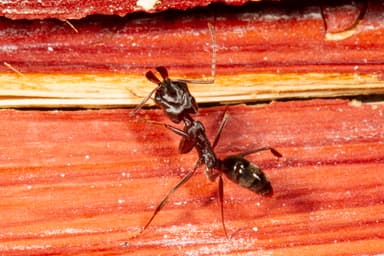
Odontomachus
Odontomachus brunneus
Care Guide
Odontomachus brunneus, commonly known as the brown trap-jaw ant, is a fascinating species that captivates keepers with its explosive hunting technique. These ants possess one of the fastest predatory strikes in the animal kingdom—their specialized mandibles can snap shut in less than a millisecond, stunning or killing prey instantly. The queen measures 14–16 mm, while workers range from 10–12 mm, making them a medium to large-sized species with a robust, glossy appearance. Colonies are moderate in size, typically reaching 200–1,000 workers, which allows for an intimate yet active observation experience.
Founding is semi-claustral, meaning the queen must leave the nest to forage during the early stages. This makes initial colony establishment more demanding than fully claustral species. The queen will hunt insects and gather sugary foods to feed her first brood, so keepers must provide a steady supply of small prey—flightless fruit flies or pinhead crickets work well—along with sugar water or honeydew. Once the first workers emerge, they take over foraging duties, and the colony quickly becomes more resilient.
Care difficulty
Keeping Odontomachus brunneus is rated as intermediate. Their semi-claustral founding requires attentive feeding and a stable environment. They are not as forgiving as beginner-friendly species, but their dramatic feeding behavior and quick colony growth make the extra effort rewarding. These ants are diurnal and highly active, often seen patrolling their foraging area. They do not require hibernation, so year-round warmth and humidity are essential.
Housing
Provide a formicarium with a dry nesting chamber and a connected outworld for foraging. Temperature should be maintained between 24–28°C, with humidity at 60–80%. A moist section in the nest—such as a plaster or clay area that can be hydrated—helps workers regulate brood development. Avoid overly wet conditions, as trap-jaw ants prefer moderate humidity with good ventilation. The outworld should have a soft substrate like sand or soil, as these ants are prone to jumping when startled—a smooth surface can lead to escapes. A secure lid or fluon barrier is strongly recommended. Offer a varied diet of live or freshly killed insects (crickets, roaches, mealworms) and a constant supply of sugar water in a feeder. They will also accept honeydew if offered.
First days after purchase
When your Odontomachus brunneus colony arrives, transfer them into their prepared formicarium with minimal disturbance. Place the setup in a quiet, dimly lit area and allow the ants a day to acclimate before offering food. Check that the queen has access to a small drop of sugar water and a tiny insect—if she is alone (semi-claustral), she will need to feed regularly. Avoid bright lights and vibrations during this settling period. Observe the queen’s activity; if she is actively foraging and tending to her first larvae, the colony is off to a strong start. Within a few weeks, the first workers will emerge, and the colony’s signature trap-jaw strikes will become a daily spectacle.