Hypoponera
Hypoponera eduardi
Care Guide
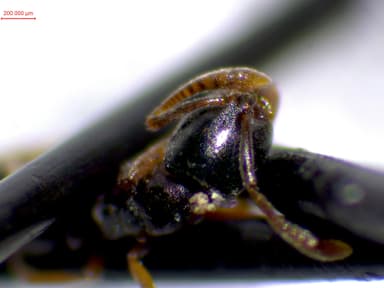
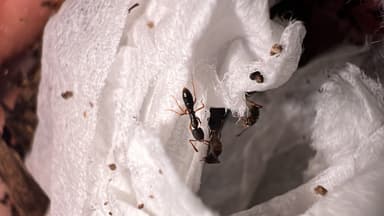
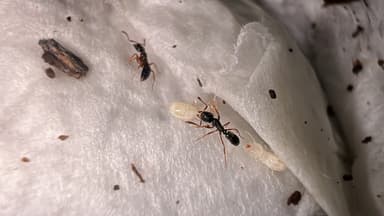
Hypoponera eduardi is a discreet and elegant ant species, often overlooked by beginners but highly rewarding for those ready to take on an intermediate challenge. Although small in stature, with queens measuring just 3–4 mm and workers 2–3 mm, these ants display a remarkable degree of coordination and subtlety in their underground world. Colonies remain modest, typically numbering between 50 and 200 workers, making them perfectly suited for keepers who appreciate a manageable yet deeply engaging colony.
One of the most striking aspects of Hypoponera eduardi is its entirely insectivorous diet. Unlike seed‑harvesters or sugar‑loving species, these ants thrive on protein‑rich prey such as fruit flies, small crickets, and mealworm pieces. They are efficient hunters and scavengers, quickly dismembering their prey within the nest. This carnivorous focus means their metabolic waste is minimal, keeping the formicarium cleaner than many other species – a decided advantage for the keeper. No sugar water or honey is required; a steady supply of small insects is the key to a healthy, growing colony.
Care difficulty
Keeping Hypoponera eduardi is rated intermediate primarily because of its demanding humidity requirements and its sensitivity to environmental fluctuations. The colony’s small size and claustral founding make the early stages relatively straightforward, but maintaining the high humidity (70–90%) needed for larval development requires consistent attention. These ants do not hibernate, so they can be kept active year‑round at temperatures between 20 and 28°C – a comfortable range for most heated rooms or incubators.
Housing
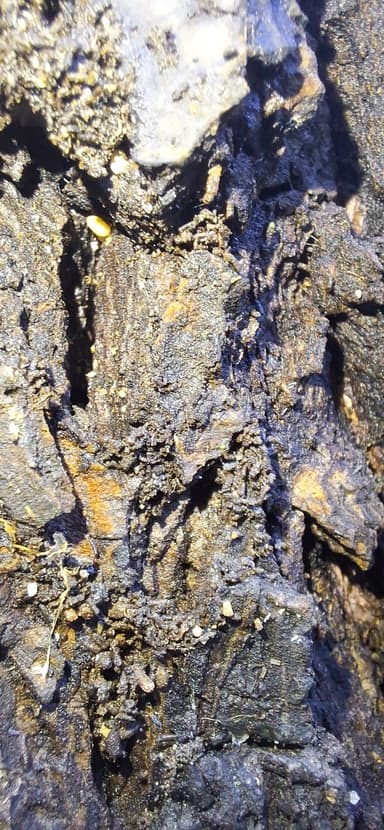
A formicarium with good moisture retention is essential. Consider a setup with a plaster or clay nest section that can be regularly moistened, or a soil‑based substrate that holds humidity without becoming waterlogged. Because Hypoponera eduardi is naturally subterranean, it prefers diffuse lighting and plenty of dark, sheltered spaces in the nest. The outworld should be kept relatively dry to avoid fungal growth, but the nest zone must stay damp – a gradient that mimics their natural leaf‑litter habitat. Offering a varied structure with small chambers will satisfy their nesting instincts. As the colony is small, even a modest formicarium can house them comfortably for years.
First days after purchase
Upon arrival, place your colony in a quiet, dimly lit spot and allow them to settle for at least 24 hours without disturbance. Check that the nest area is sufficiently moist – a drop of water on the cotton or plaster every couple of days will help. Offer a few small dead insects, such as crushed fruit flies, near the nest entrance. Do not expect immediate foraging; these ants are cautious and may take several days to explore. Observe from a distance, and resist the urge to tap or move the formicarium. With patience and stable conditions, your Hypoponera eduardi colony will soon reveal its quiet, efficient rhythm – a true joy for any dedicated ant keeper.