Plagiolepis
Plagiolepis vindobonensis
Nuptial Flight Calendar
Flight months: Jun, Jul, Aug, Sep
Care Guide
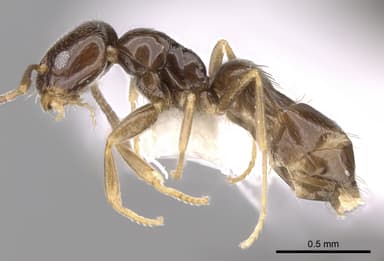
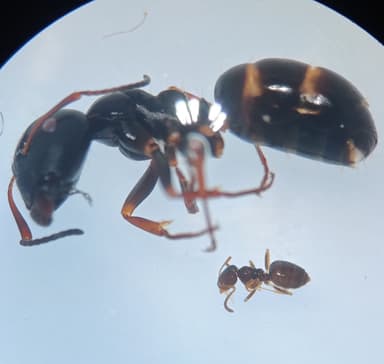
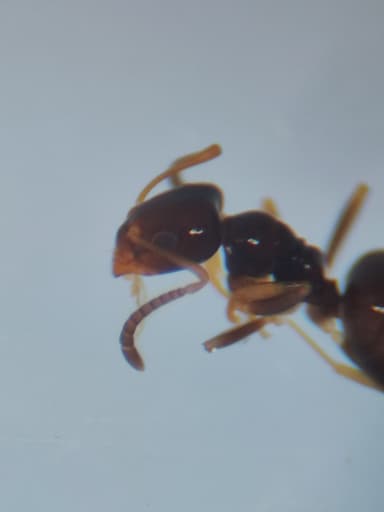
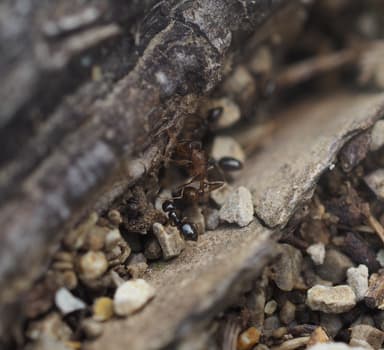
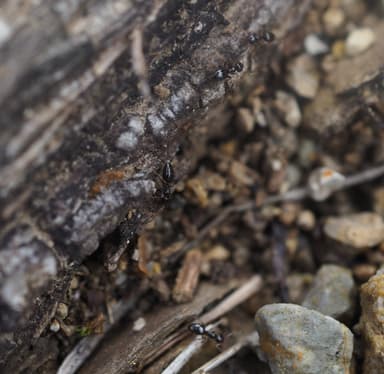
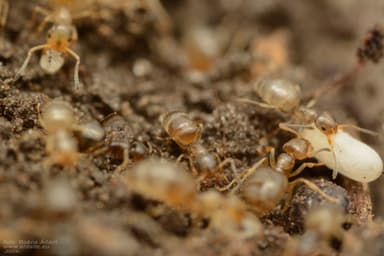
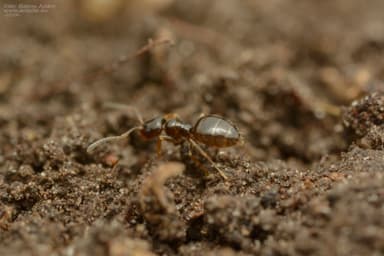
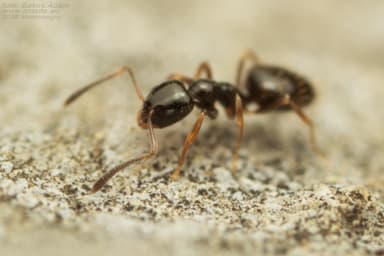
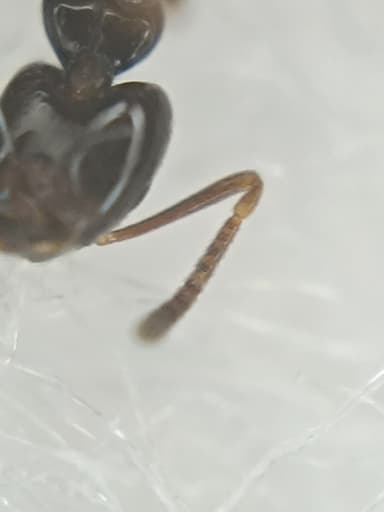
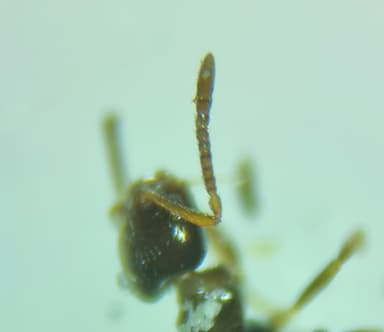
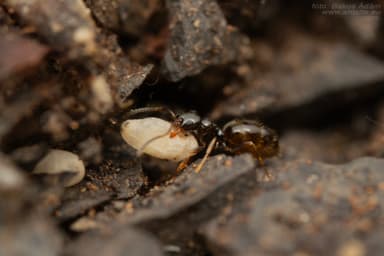
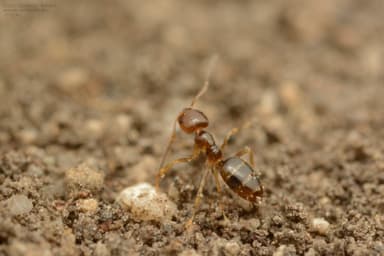
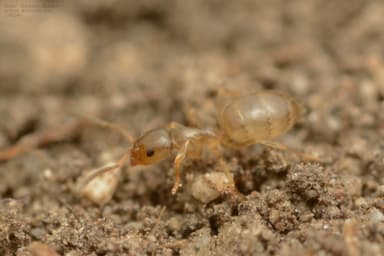
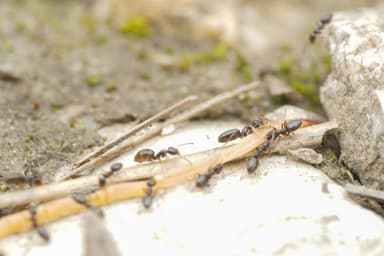
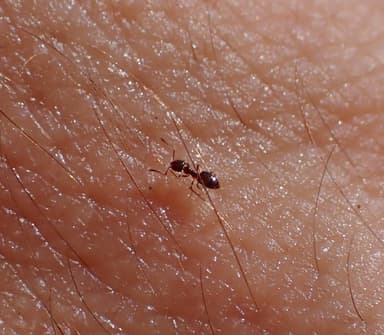
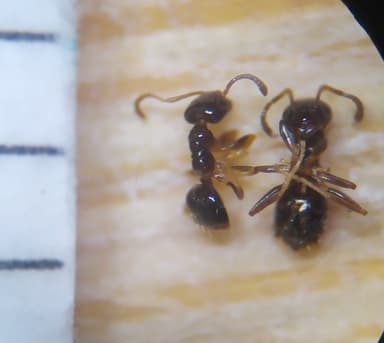
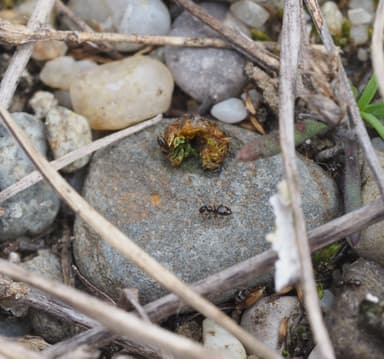
Plagiolepis vindobonensis is a diminutive ant that demands a keen eye and steady hand from its keeper, yet rewards with a fascinating glimpse into the ecology of a rarely cultured European species. Originally described by Lomnicki in 1925 and later refined in a comprehensive revision of the genus by Seifert (2020), this species inhabits a broad swath of Central and Southeastern Europe, with GBIF occurrence records clustering between latitudes 40° and 50° N and longitudes from 9° to 30° E. The workers are monomorphic and tiny, measuring just 1.8–2.5 mm, while the queens are a modest 3.5–4.5 mm. Colonies are founded claustrally by a single queen and can eventually swell to a maximum of around 10,000 individuals, though such numbers are seldom attained in captivity. Their small size and pale, often yellowish coloration make them inconspicuous in the wild, where they nest in soil, under stones, or in rotting wood. What makes P. vindobonensis particularly interesting to the hobbyist is its intermediate-level care; it is not as forgiving as common beginner ants, but it offers a manageable challenge for those who have mastered the basics and wish to explore the more cryptic corners of Palearctic myrmecology.
This species is best suited for ant keepers with some prior experience, particularly with small, fast-moving formicines. The care difficulty is rated intermediate, and the chief reason is the sheer minuteness of the workers. Escape prevention must be meticulous—any ventilation holes need ultrafine stainless steel mesh (no larger than 0.2 mm openings), and barrier substances like PTFE or fluon must be applied flawlessly to outworld rims. Observation requires a good macro lens or magnifying glass, and manipulating escapees is practically impossible. Moreover, their environmental tolerances are narrow: temperature should be kept between 20°C and 28°C, and humidity between 40% and 60%. These are not ants that will thrive on neglect, but for the careful keeper who enjoys the ritual of daily monitoring and microfeeding, P. vindobonensis can become a jewel of a collection. The nuptial flights occur in mid to late summer (July through September), typically on warm, humid afternoons following rain, though confidence in these records is low and captive breeding remains rare.
Housing for P. vindobonensis must balance security with the species’ modest needs. A plaster, ytong, or fine-sand–clay nest block with a few prefabricated chambers works well, as it retains humidity evenly and mimics the soil interstices they favor. Given their stride length, chambers should be shallow—just a few millimeters deep—to allow the ants to feel secure without getting lost in vast architecture. A separate outworld connected by narrow tubing allows feeding and waste disposal without disturbing the nest. Maintain the nest at 40–60% humidity by periodically adding water to a reservoir or by placing a damp cotton plug at one end; a gentle gradient allows the ants to choose their preferred microclimate. Temperature can be provided by a heat cable or mat placed against one side of the nest, aiming for a gradient from around 20°C up to 28°C at the warmest spot. While substrate is not strictly necessary, a very fine layer of sand or sieved soil in the outworld helps the ants express natural foraging behavior and reduces stress. As with all tiny species, any gap larger than 0.5 mm is an escape hatch, so silicone sealants and tight-fitting lids are essential.
Feeding P. vindobonensis is an exercise in miniature. Protein is required for brood production and should be offered as small, soft-bodied prey such as Drosophila melanogaster, springtails, or freshly killed and cut segments of mealworms and crickets. Because workers are only 2 mm long, a whole fruit fly might be a group effort; offering prey that is slightly larger than a worker encourages cooperative foraging and reduces waste. Carbohydrates can be supplied as a dilute honey-water mix, maple syrup, or a commercial ant nectar, always presented in a way that prevents drowning—a soaked cotton ball in a tiny dish is ideal. Water must be continuously available, ideally via a test tube waterer with a cotton plug. Colonies are often timid and feed best in low light, so place food items near the nest entrance at dusk and remove anything uneaten after 48 hours to prevent mold. A pinch of pollen or a tiny piece of ripe fruit occasionally can provide micronutrients, but the core diet should remain insects and sugars.
A winter diapause is obligatory for this temperate species and is a key factor in long-term colony health. The ants require a hibernation period of roughly three to four months at a steady temperature around 8°C. In practice, this means gradually reducing warmth and light in late October, moving the formicarium to a cool, dark place such as a wine cooler or an unheated room that reliably stays in the 5–10°C range. The ants will cluster and cease foraging; do not offer food during hibernation, but ensure a water source remains unfrozen and accessible. Check monthly for desiccation or excessive condensation, and in early spring slowly reintroduce warmth, prompting the queen to resume egg-laying. Skipping or shortening hibernation often leads to weak colonies, reduced queen longevity, and an eventual population crash—a pattern well-documented in many European ant species (Seifert 2020). Patience during this quiet period is rewarded with vigorous spring activity.
The first days after acquiring a colony or a mated queen are delicate. If you receive a founding queen in a test tube, place the tube in a dark drawer or cabinet for 24 hours to let her settle without disturbance; she has already undergone the claustral phase and likely carries her first eggs. For a small colony, immediately connect their tube to a prepared nest and outworld, but cover everything with a light cloth to reduce stress. After a day of rest, offer a barely visible droplet of sugar water on a piece of wax paper and, if workers are present, a pre-killed Drosophila. Watch for the queen: she should remain calm, often surrounded by a retinue of attendants; any frantic pacing or constant escape attempts suggest the setup is too bright, too dry, or insecure. Ensure all fluon barriers are intact—newly arrived ants are expert escape explorers. Monitor the water plug and humidity, and avoid any vibrations for at least a week. Once the first workers are foraging regularly in the light, you can gradually unveil the setup and enjoy the quiet industry of one of Europe’s most endearing miniature ants.