Aphaenogaster
Aphaenogaster senilis
Nuptial Flight Calendar
Flight months: May, Jun, Jul
Care Guide
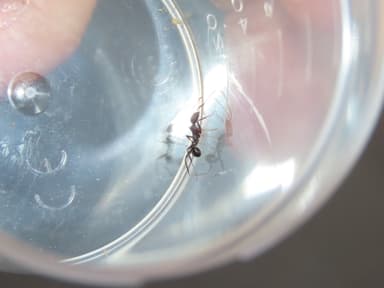
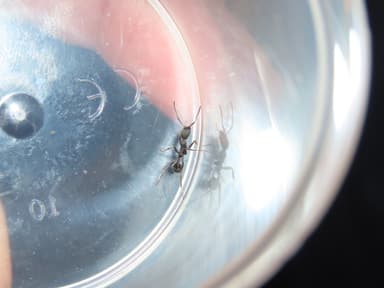
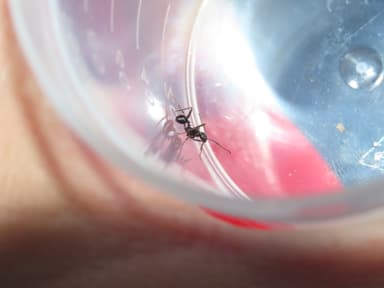
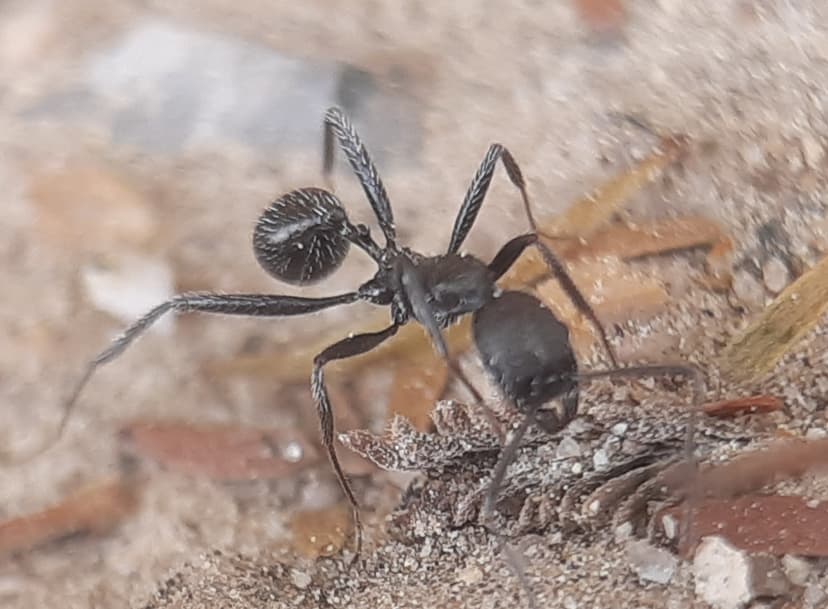
Aphaenogaster senilis is a slender, graceful ant native to the western Mediterranean, ranging from the sun‑baked coasts of the Iberian Peninsula into southern France. Queens measure a stately 8.5 to 10 millimetres, while the monomorphic workers fall between 5 and 7 millimetres, all sharing the long legs, elongated thorax and characteristically sculptured waist that make the genus a joy to observe. Colonies are founded not by solitary queens undertaking a claustral flight, but through budding – a process in which a group of workers escorts a mated queen to a new nest site, a trait known as dependent colony foundation (Cronin et al. 2013). Mature colonies reach around 3,000 individuals, a manageable size that never overwhelms but still provides constant activity. Their foraging is highly coordinated, and they have become a model organism for studies on collective decision‑making in social insects (Boulay et al. 2007). The species’ evolutionary story, shaped by the complex climatic history of the Mediterranean basin, adds another layer of fascination for the naturalist (Galarza et al. 2009).
Labelled as beginner‑friendly, Aphaenogaster senilis is an excellent ant for those new to the hobby as well as seasoned keepers looking for a robust, active display species. Their tolerance for a reasonable range of temperature and humidity fluctuations means minor husbandry mistakes rarely prove fatal. They are not particularly aggressive, though they will readily defend their brood and nest, and their long legs and rapid, staccato gait make every feeding session a spectacle. Because they propagate by budding, it is important to understand that you will be purchasing an established colony fragment with a fertile queen and a cohort of workers, not a lone newly mated queen. This makes the first weeks far less delicate than with independently founding species, but also means the colony arrives with a sense of urgency to settle; a smooth transition is key. The moderate colony size and absence of polymorphic castes suit keepers who prefer elegance over brute mass, and their diurnal habits ensure you can enjoy their behaviour at the same time you enjoy your morning coffee.
Housing this Mediterranean jewel requires replicating the warm, moderately dry conditions of its native range. Aim for a temperature gradient within the foraging arena, from a warm end of around 28°C to a cooler end near 20°C, while the nest interior should be held most commonly at the warmer end, around 24–26°C. Humidity should sit between 50% and 70%, achieved by providing a nest with a moisture‑retaining substrate; a plaster or ytong nest with a water tower works superbly, as does a naturalistic setup using a mix of sandy soil and clay that allows the ants to excavate their own chambers. A deep foraging area with a tight‑fitting, escape‑proof lid is essential, because workers are swift and will explore every millimetre. Lighting need not be specialised, but a gentle day‑night cycle encourages natural rhythm. The nest’s hydration can be adjusted seasonally – slightly moister in the heat of the artificial summer, and gradually drier as you prepare for the winter rest.
Feeding Aphaenogaster senilis is straightforward, which further cements its beginner status. They are omnivorous, with workers scavenging and actively hunting small invertebrate prey. Offer protein sources such as freshly killed fruit flies, small crickets, or mealworms two to three times a week, adjusting the quantity so that all is consumed within a day to prevent spoilage. Carbohydrates should be provided in liquid form: a small drop of sugar water, honey water diluted to a thin syrup, or commercial ant jellies placed on a feeding dish or on a piece of foil to avoid drowning risks. Fresh water must always be available, either through a test‑tube waterer secured in the foraging area or by maintaining a humidity gradient that allows condensation drinking inside the nest. Although they handle a wide variety of foods, avoid overly large or tough‑shelled prey that could overwhelm a young colony; even mature colonies benefit from prey being pre‑killed or crushed.
A proper hibernation is not optional for this species – it is a biological requirement that safeguards colony health and eventual gyne production. Over the Mediterranean winter, temperatures drop enough to induce a metabolic slowdown, and we must mimic this with a cool rest period of three to four months at around 15°C. About two weeks before cooling, stop offering protein and reduce sugars, allowing the workers to clear their digestive tracts. Slowly drop the temperature over several days to avoid shock, and during the cool phase keep the nest just barely moist, but never bone‑dry. A wine cooler, a cold basement, or a dedicated ant‑cooler works well; the key is stability. Once spring arrives, warm the colony gradually back to its active range over a week. If you acquire a very small colony with fewer than perhaps 20 workers in late summer, some keepers choose to overwinter them with a milder regime or delay the deep hibernation by a month or two to allow them to build reserves; but as a rule, the full seasonal cycle should be introduced by the colony’s second year.
When your Aphaenogaster senilis colony arrives, the initial days set the tone for a smooth transition. Remove the packaging carefully, and if the ants are in a temporary transport tube, simply place the tube in a darkened, quiet room‑temperature space for several hours to let them recover from the journey. A full 24‑hour settling period inside the intended nest or a small outworld is ideal before you offer any disturbance. On the second day, connect the tube to a small foraging area and place a tiny droplet of sugar water and a freshly killed fruit fly or half a small cricket near the entrance. Resist the temptation to watch constantly at first; these ants can be shy until the colony feels secure, but within days their boldness will grow. Ensure the temperature and humidity are within range and check that water is available without flooding. Avoid moving the nest more than necessary, and hold off on any major cleaning or redecoration for at least two weeks. You can expect the first workers to start exploring by day three, their long antennae always in motion, and regular foraging will commence within the week, signalling that your colony has accepted its new home.