Polyrhachis
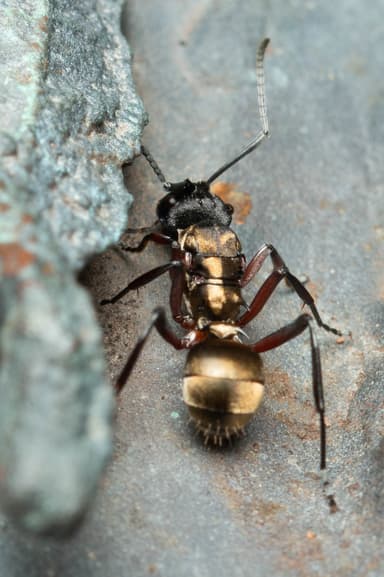
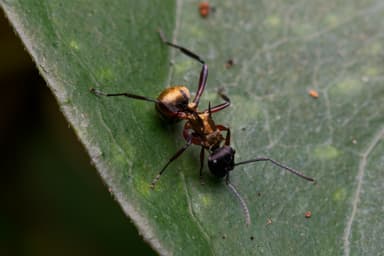
Polyrhachis rufifemur
Care Guide
Polyrhachis rufifemur is a striking species that brings a touch of the exotic to any ant collection. These ants are named for their reddish femurs, which contrast beautifully with their dark, glossy bodies. Workers measure between 6 and 8 mm, while the queen is slightly larger at 10–12 mm. Although they lack the extreme size variation seen in some other genera, their most characteristic feature is the pair of sharp spines on the thorax — a signature of the Polyrhachis genus. These spines not only give them a formidable appearance but also serve as a defense against predators. The colony size ranges from 200 to 500 workers, making them a medium-sized, manageable species that still offers a satisfying level of activity.
In the wild, Polyrhachis rufifemur are skilled architects, often building nests in hollow twigs, under bark, or in pre‑existing cavities. They are semi‑claustral founders, meaning the queen must forage during the early stages of colony establishment. This requires a bit more attention from the keeper compared to fully claustral species. The ants are diurnal and relatively fast-moving, showing great interest in foraging for insects and sweet liquids. Their diet should consist of a balance of protein (small crickets, fruit flies, or mealworms) and carbohydrates (sugar water or honeydew). A varied menu keeps them healthy and encourages active brood development.
Care difficulty
Keeping Polyrhachis rufifemur is best suited to intermediate ant keepers. The semi‑claustral founding phase demands that you provide small prey items directly to the queen without disturbing her too much — a delicate balance. Once the first workers emerge, the colony becomes more robust, but they remain sensitive to sudden changes in environment. They do not require hibernation, which simplifies overwintering care, but stable warmth is important throughout the year.
Housing
A formicarium with a moderate humidity level of 50–70% is ideal. These ants do well in setups that mimic their natural nesting preferences: a nest with small chambers and tunnels, perhaps made of acrylic or natural materials like cork or clay. The foraging area should be escape‑proof and offer plenty of space for the ants to roam. Temperature should be kept between 22–28°C; a heat mat on one side of the nest can create a useful gradient. Moisture is essential — regularly dampen the nest substrate without flooding it, as the larvae require higher humidity. Polyrhachis rufifemur are not particularly aggressive but appreciate seclusion; bright light and vibration can stress them, especially when the colony is small.
First days after purchase
Upon receiving your Polyrhachis rufifemur colony, place the formicarium in a quiet, dimly lit area. Allow the ants at least 24–48 hours to acclimatize before any interference. Check that water is available — a small test tube with a cotton plug works well in the early stages. Offer a tiny drop of sugar water and a small insect piece, but do not overfeed. Observe the queen’s behavior: if she is actively foraging, she is likely ready to continue raising her first brood. Minimize opening the nest and avoid any sudden movements. With patience, you will soon see the first workers taking over the daily tasks, and your colony will grow into a lively, fascinating display of ant life.