Harpegnathos
Harpegnathos saltator
Nuptial Flight Calendar
Care Guide
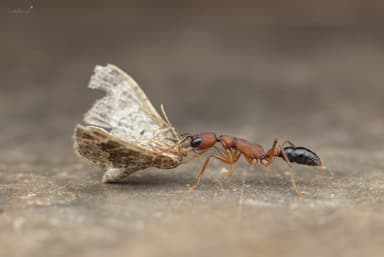
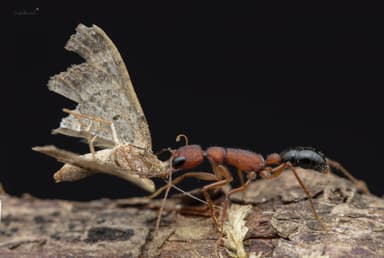
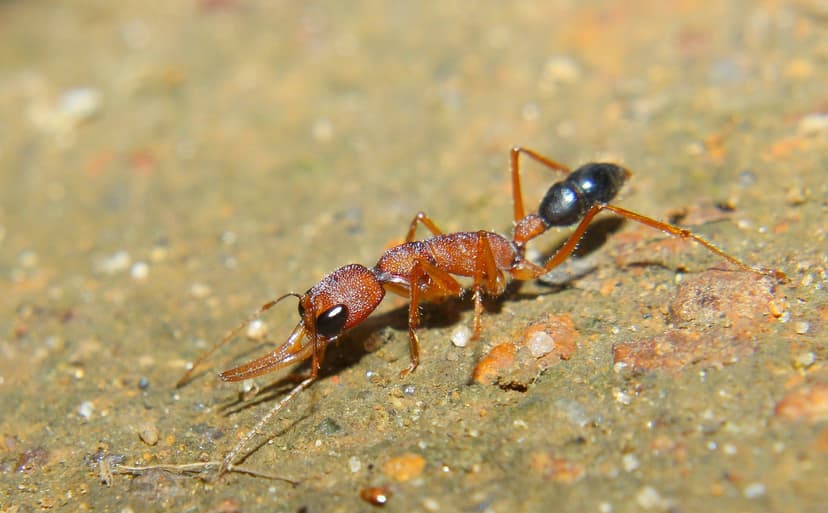
Harpegnathos saltator, commonly known as the Indian jumping ant, is one of the most fascinating and visually striking species in the ant world. These ants are renowned for their extraordinary ability to leap several times their body length to capture prey or escape threats, a behavior made possible by their powerful hind legs and large, forward-facing eyes that grant them excellent binocular vision. The queen measures between 13 and 15 mm, while workers are slightly smaller at 10–12 mm, but what truly sets this species apart is their complex social structure. Unlike many ants, workers in Harpegnathos saltator colonies can become gamergates—reproductive individuals that lay eggs if the queen is lost, meaning the colony can persist without a founding queen for extended periods. Colony size remains modest, typically ranging from 30 to 300 workers, allowing for intimate observation of their intricate social interactions.
Founding a new colony is semi-claustral, meaning the queen must leave the nest to forage during the early stages. She initially lays a small batch of eggs and hunts for insects to feed herself and her developing larvae, making the founding phase particularly delicate. Once the first workers emerge, they take over foraging and brood care, and the colony grows steadily. Their diet consists primarily of insects—crickets, flies, and roaches are ideal—supplemented with sugar water to provide energy. They do not require hibernation, as they originate from tropical climates, so keeping them active year-round is possible with consistent warmth and humidity.
Care difficulty
Harpegnathos saltator is an advanced-level species, not recommended for beginners. Their semi-claustral founding, sensitivity to environmental fluctuations, and need for high humidity demand careful attention. Additionally, their jumping and fast movements can make maintenance challenging—escape prevention is critical. Experienced keepers will find them immensely rewarding, but patience and precision are essential.
Housing
A formicarium with controllable humidity is a must. Maintain humidity levels between 70 and 80%, which often requires a substrate that retains moisture, such as a mix of sand and clay, or a plaster nest. Temperature should be kept steady at 25–28°C, with a slight gradient allowing ants to choose warmer or cooler zones. Provide a large, escape-proof foraging area with a lid, as these ants are exceptional jumpers. A small heating mat under part of the nest can help achieve the required temperature. They are sensitive to vibrations and sudden disturbances, so place the setup in a quiet location away from heavy foot traffic or mechanical noise.
First days after purchase
Upon receiving your Harpegnathos saltator colony, allow the test tube or transport container to rest in a dark, calm environment for several hours. Then, carefully connect it to a pre-moistened nest area. Resist the urge to handle or open the foraging area—let the ants explore at their own pace. Provide a droplet of sugar water and a small insect (like a fruit fly or pinhead cricket) near the nest entrance. Monitor humidity daily, as even short drops can stress the colony. With steady conditions and minimal disturbance, your jumping ants will soon display their remarkable hunting behavior and become a true highlight of your collection.