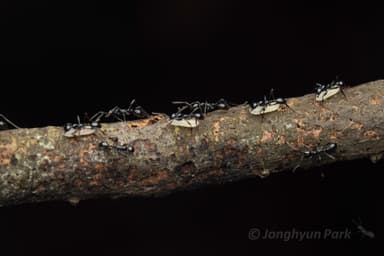
Aenictus
Aenictus laeviceps
Care Guide
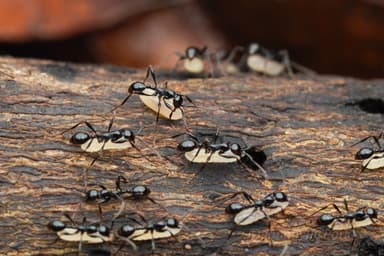
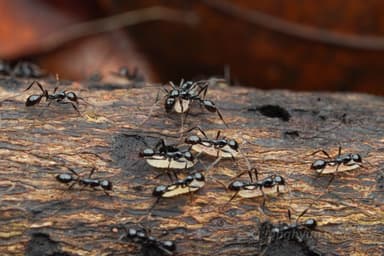
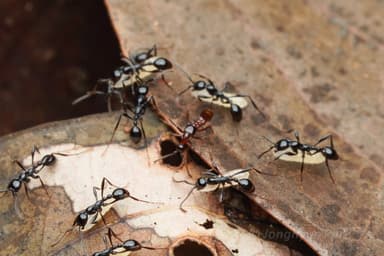
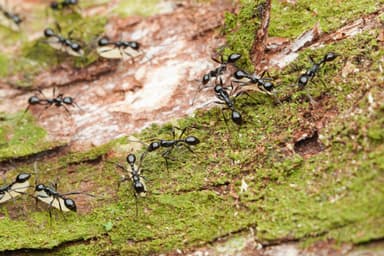
Aenictus laeviceps is a remarkable army ant species, instantly recognizable for its highly organized raiding columns and nomadic lifestyle. The queen, measuring 10–15 mm, is the largest member of the colony, while workers range from 3 to 5 mm and show subtle size variation but no distinct castes. Colonies are enormous, often numbering between 50,000 and 500,000 individuals, and their primary diet consists entirely of insects — especially the brood of other ant species and small arthropods. These ants are relentless hunters, moving in dense phalanxes that overwhelm prey through sheer numbers and coordinated group attacks.
Despite their fearsome reputation, Aenictus laeviceps found their colonies claustrally, meaning the founding queen seals herself in a chamber and raises her first brood without foraging. This initial phase is surprisingly manageable, but once the colony grows past a few hundred workers, their true army ant nature emerges. They require near-constant movement, forming temporary bivouacs rather than permanent nests, and will abandon any formicarium that does not offer them the ability to relocate. In captivity, this means the keeper must provide a large, interconnected system of tubes and chambers that can be rearranged, or use a setup that allows the colony to freely migrate between nest modules as they do in the wild.
Care difficulty
Keeping Aenictus laeviceps is a challenge reserved for expert ant keepers. Their immense colony size, high temperature and humidity needs, and nomadic behavior make them unsuitable for beginners. The colony must be kept at a steady 26–30 °C with humidity levels of 70–90% — any drop in humidity can cause rapid desiccation of larvae and workers. Feeding requires a constant supply of live or freshly killed insects; they will not accept seeds, sugars, or artificial foods. Without a steady stream of protein-rich prey, the colony will decline quickly. Additionally, their tendency to raid and consume other ants means they cannot be housed near other colonies.
Housing
A formicarium for Aenictus laeviceps must prioritize mobility and high humidity. The best approach is a series of connected chambers with soft, moisture-absorbing substrates such as plaster or clay. The nest area should be kept dark and humid, while the foraging arena needs to be spacious enough to accommodate their massive raiding trails. Because these ants do not hibernate, year-round climate control is essential. Many keepers use heated cabinets or insulated boxes to maintain the required temperatures. The most important detail is providing a bivouac site — a confined, low-ceiling chamber where the colony can cluster together around the queen. If they feel exposed or unable to form a tight cluster, they will become stressed and may fail to thrive.
First days after purchase
Upon receiving your Aenictus laeviceps colony, transfer them gently into a pre-warmed, pre-humidified formicarium. Place the setup in a quiet, vibration-free location and do not disturb them for at least 48 hours. During this acclimation period, avoid bright light and ensure the humidity stays at the upper end of the range. Offer small, freshly killed insects (such as fruit flies or pinhead crickets) within the first day; if they accept food, it is a good sign. Watch for the queen to be surrounded by a tight cluster of workers — this indicates she is safe and the colony is settling. Resist the urge to open the nest frequently; army ants are highly sensitive to disturbance and may abandon their bivouac if stressed. Patience and stability are the keys to getting these extraordinary predators established.