Messor
Messor wasmanni
Nuptial Flight Calendar
Flight months: May, Jun, Jul
Care Guide
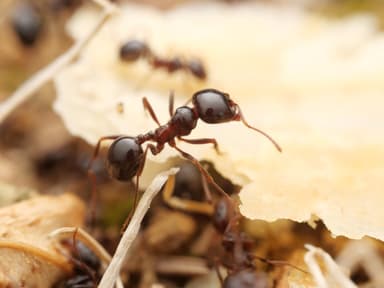
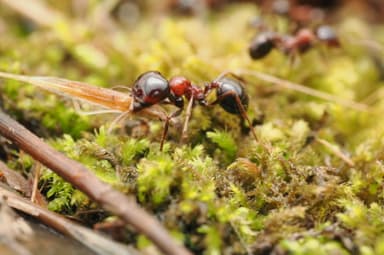
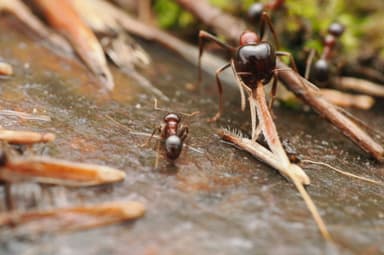
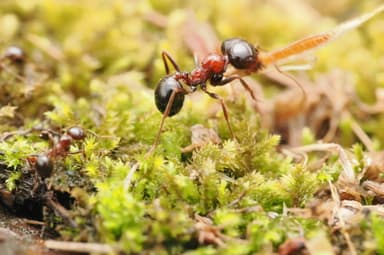
Messor wasmanni is a captivating harvester ant native to the sun‑baked landscapes of the western Mediterranean, its range stretching from the Iberian Peninsula across to Italy and Greece, and south into the Maghreb. First described by Krausse in 1910, this species is instantly recognisable by the striking polymorphism of its worker caste. Minor workers may be a mere 4 mm, while the robust, large‑headed majors can reach a full 9 mm, with queens measuring a substantial 12–15 mm. A mature colony can number up to 10,000 individuals, yet it never feels overcrowded thanks to their orderly division of labour – minors tend the brood and process seeds, medias forage and store, and that handful of majors, with their powerful mandibles, crack the toughest grains. What draws many keepers to M. wasmanni is its fundamentally granivorous lifestyle; a founding queen is fully claustral, requiring no food until her first workers eclose, and the colony will create elaborate seed stores that are a delight to observe through a nest wall. Their glossy, mostly black bodies with faint brownish highlights gleam under a warm lamp, and their deliberate, almost methodical foraging columns bring a touch of the Mediterranean maquis to any ant room.
For a hobbyist wondering where to start with a harvester ant, Messor wasmanni is an outstanding choice and firmly earns its “beginner” rating. These ants are remarkably tolerant of minor husbandry slip‑ups, particularly where humidity is concerned, and their moderate growth rate gives a keeper ample time to learn. The colony rarely becomes overwhelmingly large under typical home conditions, and their less aggressive nature, compared with some Messor relatives, makes maintenance straightforward. You will seldom be met with a frenzy of alarmed majors; instead, disturbances typically prompt a slow, measured retreat. Because they do not demand a complex, high‑humidity setup and are not prone to sudden die‑offs, they suit novices who want a visually impressive, caste‑diverse colony without the steep learning curve of more delicate tropical species.
Providing the right housing is crucial to seeing the colony thrive. M. wasmanni flourishes in a well‑ventilated nest with a pronounced humidity gradient: the brood chamber should be kept slightly moist, but the dry seed‑storage areas must remain arid, mimicking the cracked earth of their native terrain. A nest made of plaster, ytong, or a 3D‑printed design with a removable glass cover works beautifully, as long as at least one chamber can be heated to 25–28 °C (they tolerate a range of 22–30 °C) while another stays cooler. Ambient humidity in the nest can be as low as 30% and rarely needs to exceed 60%; indeed, chronic dampness is their enemy, encouraging fungal growth on the precious seed hoard. I have often seen success with a simple setup where water is supplied only through a test‑tube drinking station in the outworld, leaving the nest itself dry except for a small, externally moistened plaster disk in the brood zone. The outworld should be large enough to accommodate a scattering of seeds and allow workers to dispose of seed husks and debris, with a fine sand or sandy‑loam substrate that helps them navigate and grip.
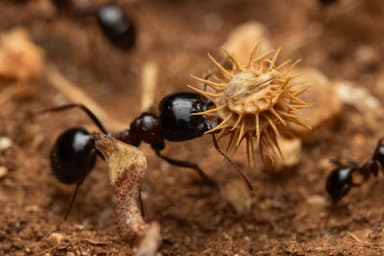
Diet is where Messor wasmanni truly diverges from typical sugar‑loving ants, and understanding this makes all the difference. The backbone of their nutrition is seeds: offer a mix of tiny grass seeds, niger seed, canary grass seed, dandelion, and poppy seeds, but be sure to avoid coated or treated commercial birdseed. Workers use their powerful mandibles to grind these into a fine, protein‑rich “ant bread” which is fed to the larvae. While this seed metabolism supplies much of their energy, they still require animal protein for optimal brood production. Twice a week, provide a freshly killed fruit fly, a sliver of mealworm, or a cricket leg; protein is especially critical when the colony has large numbers of larvae. M. wasmanni will occasionally sip from a droplet of honey water or sugar water, but this is more a treat than a necessity – colonies offered sugars too frequently may reduce their seed processing, which can disrupt the natural behavioural cascade. Always keep a clean water source available, as they drink readily and evaporation contributes to local humidity. Never spray water directly into the nest, as that can trigger seed spoilage.
A genuine hibernation period is not merely recommended, it is required for the long‑term health of M. wasmanni colonies. In their Mediterranean homeland, winter temperatures dip, triggering a natural diapause that resets the colony’s biological rhythms and appears vital for sustained egg‑laying by the queen. Begin the cooling process in late October or November, gradually lowering the temperature over two weeks until the nest sits at around 12 °C. Maintain this for at least eight to twelve weeks, typically until February or early March. During diapause, the workers cluster tightly, movement becomes lethargic, and feeding all but ceases; a single water feeder and perhaps a few dry seeds should remain, but any protein promptly removed to prevent spoilage. Warmer microclimates in a home often make this the trickiest step, so many keepers use a wine cooler or a cool basement. Emerging from hibernation is equally gentle: raise the temperature back by a couple of degrees each day, and within a fortnight the queen will resume egg‑laying, often with renewed vigour (Bolton’s Catalogue; AntWiki: Messor wasmanni).
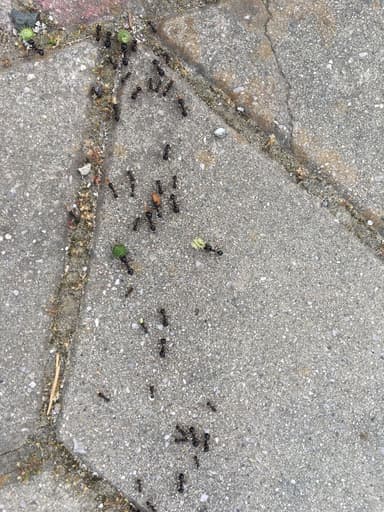
The first days after your M. wasmanni colony arrives are a critical settling‑in window. Keep the test tube or shipping container exactly as supplied, wrapped in a dark cover, and placed in a quiet, warm spot around 24 °C for two to three days. The queen and any workers will be stressed from transit, and immediately connecting them to a full nest invites panic; patience pays. On day two or three, place a tiny pinch of fine seeds – niger or poppy is ideal – just outside the tube entrance, along with a cotton‑plugged water feeder. You may be treated to the charming sight of a minor worker tentatively exploring, then dragging a seed back inside. Do not offer protein for the first week, as an uneaten insect piece can rapidly mold in a confined space. Watch for telltale signs of contentment: workers grooming the queen, a cluster of eggs beneath her, and seeds neatly stacked in a corner of the tube. Once you see regular foraging trips, connect the tube to a small, dry outworld and a nest extension, and you are on your way to watching one of the Mediterranean’s most industrious seed‑gatherers build its empire under your care.