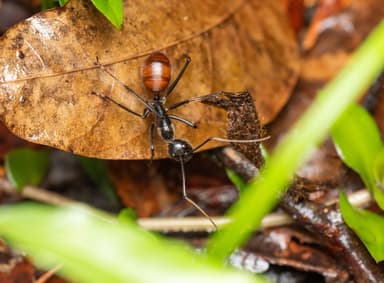
Dinomyrmex
Dinomyrmex gigas
Nuptial Flight Calendar
Flight months: Jan, Feb, Mar, Apr, May, Jun, Jul, Aug, Sep, Oct, Nov, Dec
Care Guide
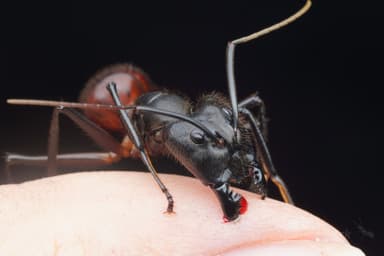
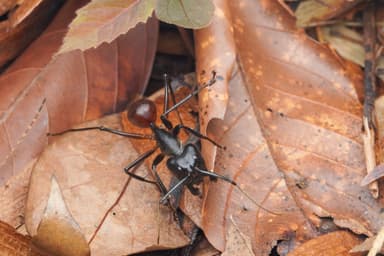
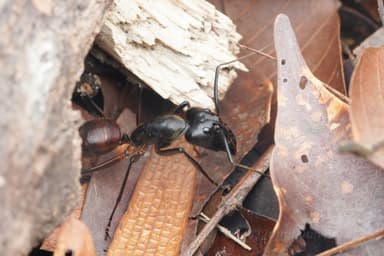
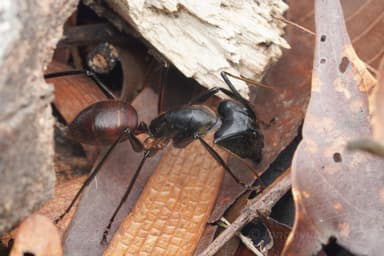
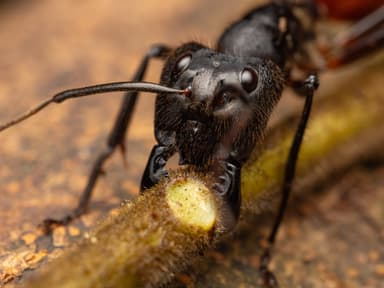
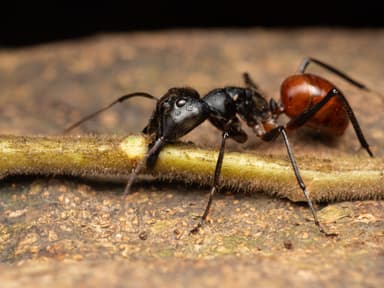
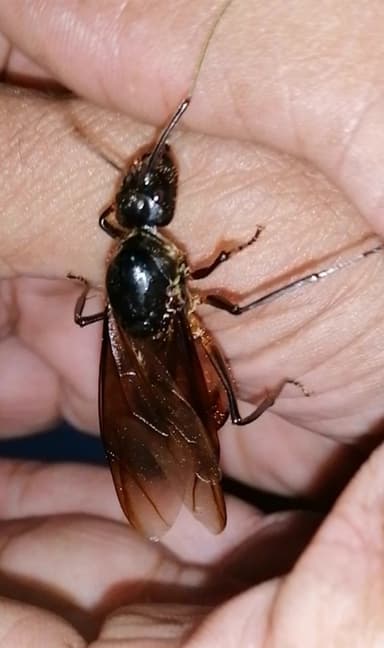
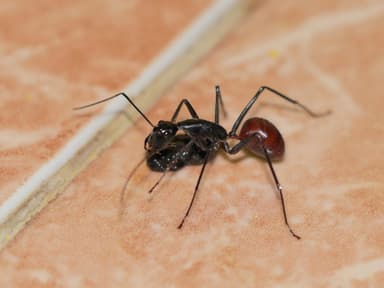
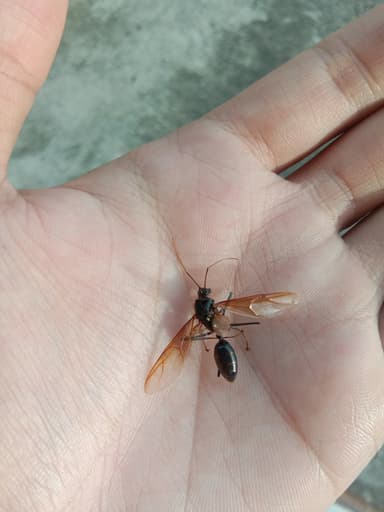
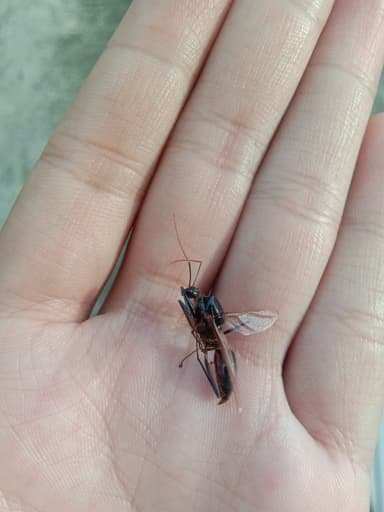
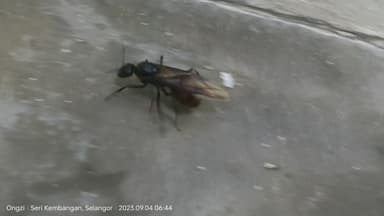
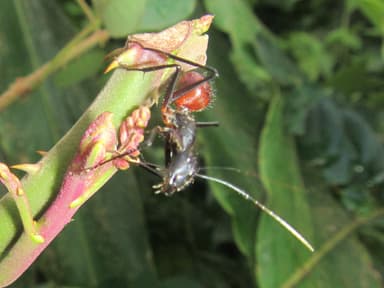
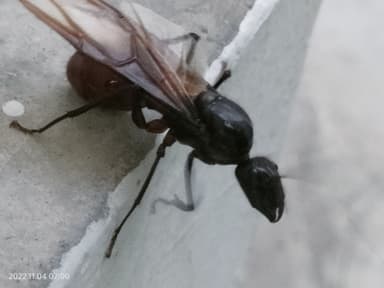
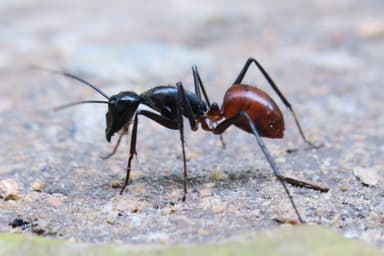
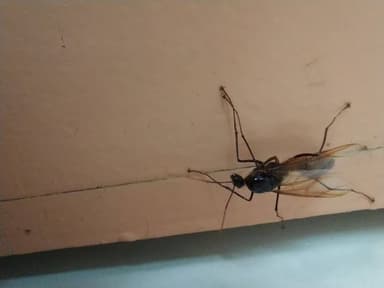
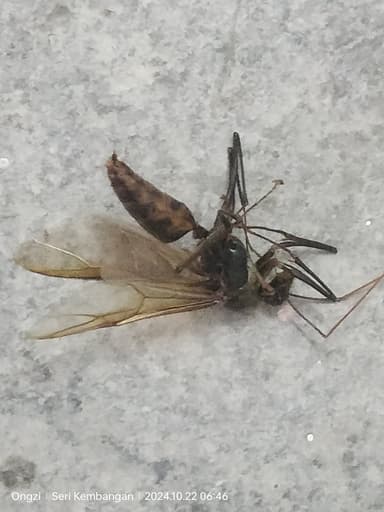
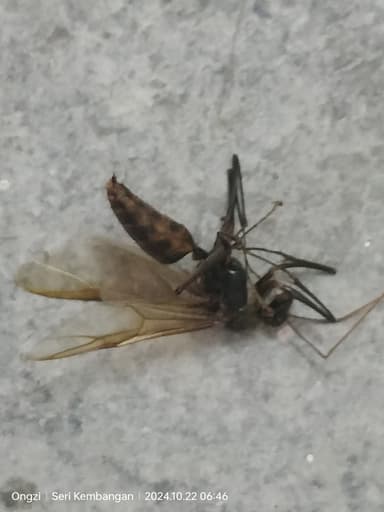
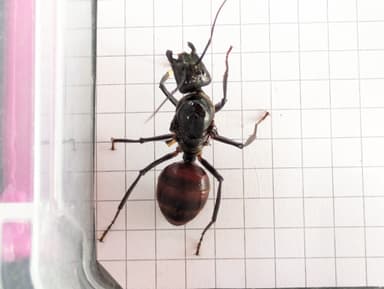
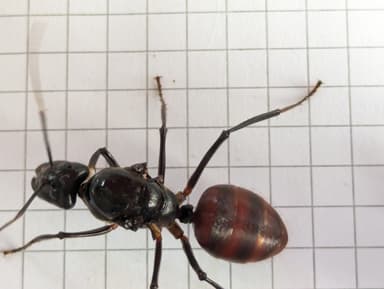
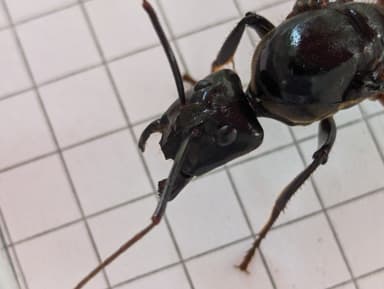
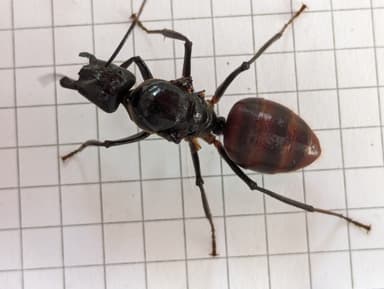
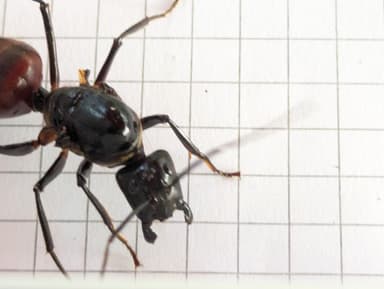
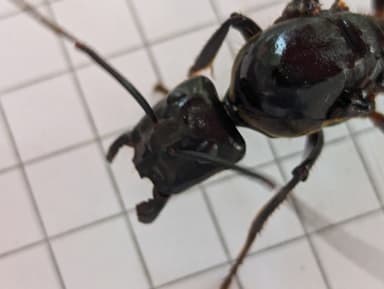
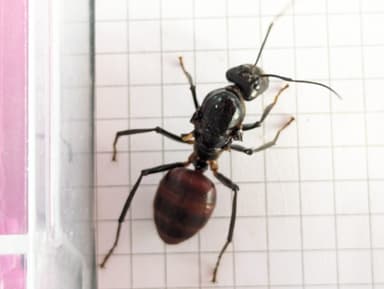
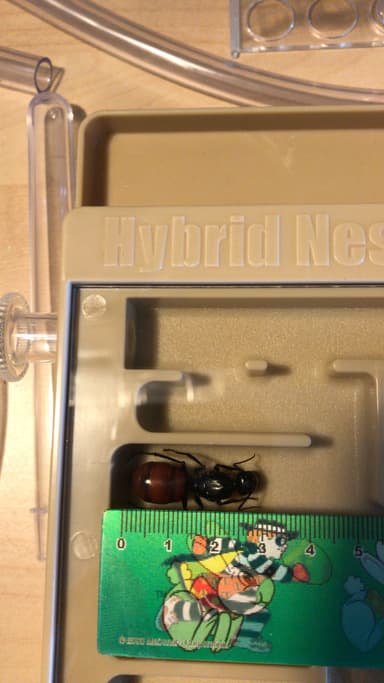
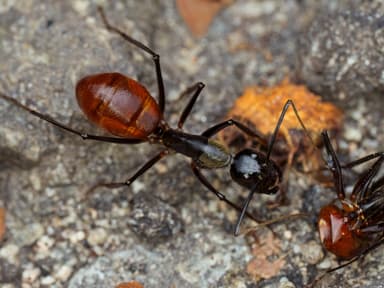
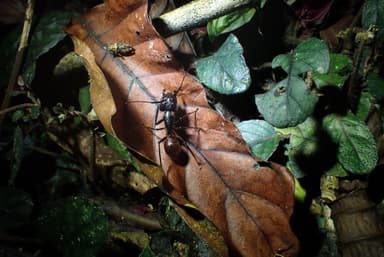
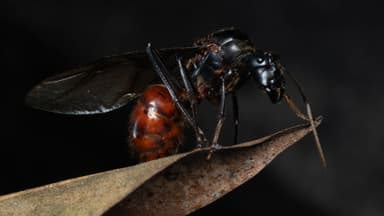
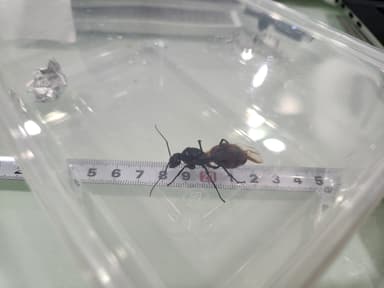
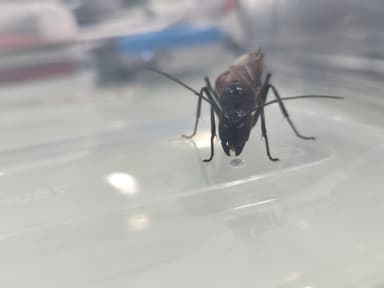
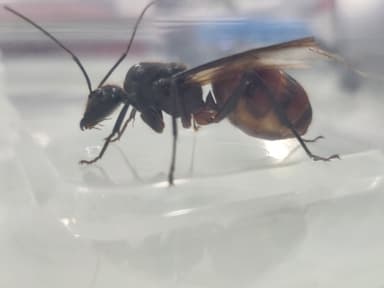
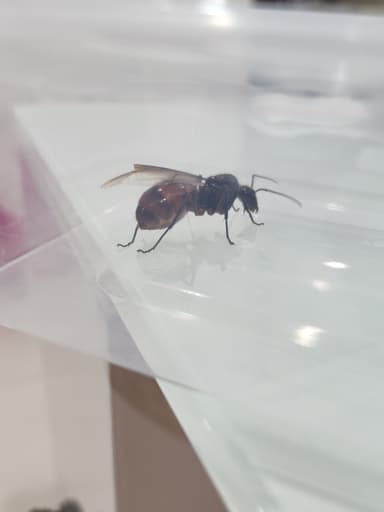
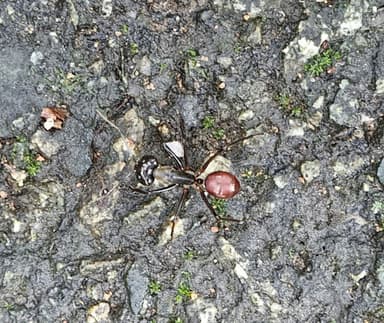
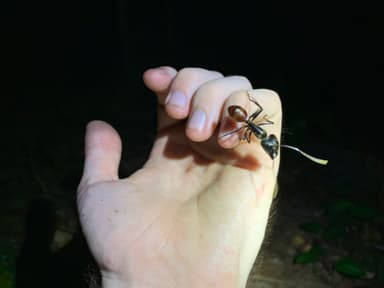
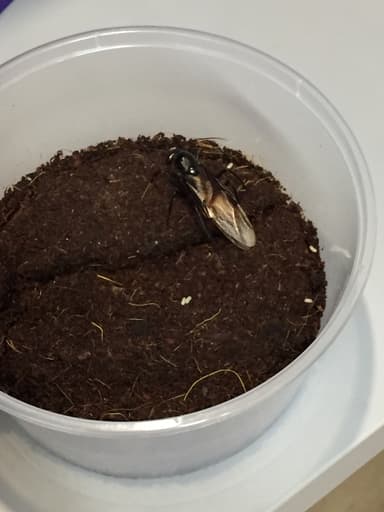
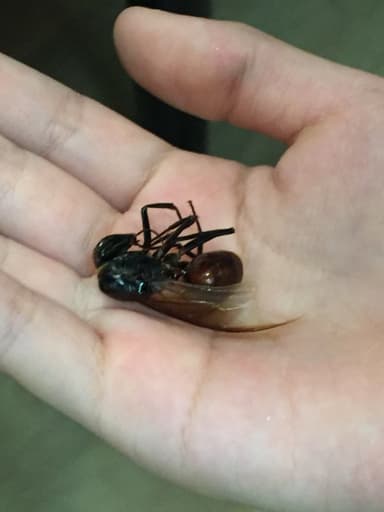
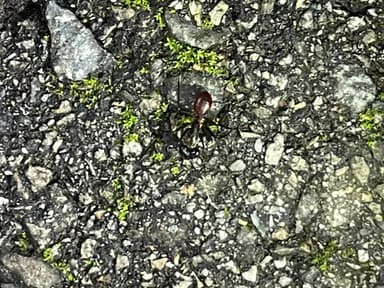
Dinomyrmex gigas, the Malaysian giant ant, is a breathtaking species that commands attention as one of the world’s largest ants. The queen measures an impressive 26 to 31 millimetres, while workers span from 18 to 28 millimetres, exhibiting clear dimorphism between smaller minors and robust majors. These nocturnal giants inhabit the lowland rainforests of Southeast Asia, with a natural distribution ranging from Borneo and Sumatra up to parts of the Malay Peninsula and beyond, roughly between latitudes 8.5°S and 18.5°N and longitudes 95°E to 125°E. Their colonies, which can grow to around 7,000 individuals, are famously polydomous, meaning they use multiple interconnected nests across the forest floor and lower canopy (Pfeiffer & Linsenmair 1998). This architectural complexity, combined with their striking dark exoskeleton often accented with reddish tints and their powerful mandibles, makes them a bucket-list species for dedicated formicariists. The revision of the genus Camponotus by Ward et al. (2016) now places this species in its own genus, Dinomyrmex, reflecting its distinct evolutionary lineage.
This species is unequivocally suited to expert keepers. The care difficulty is high, not because the ants are aggressive or fragile in the sense of sudden die-offs, but because they demand an unwavering commitment to replicating tropical microclimates and providing exceptionally spacious enclosures. A minor deviation in humidity or temperature can stress the colony, and their sheer size makes any escape a formidable problem. Beginners tempted by their grandeur should resist; instead, gaining years of experience with more forgiving Camponotus species is a wiser path. The keeper must be prepared for a long-lived, large colony that will outgrow most off-the-shelf formicaria within a season. They are best suited to those who enjoy engineering custom setups and have the resources to maintain a dedicated tropical room or large heated vivarium.
Housing Dinomyrmex gigas successfully means thinking big, very big. A mature colony with thousands of individuals needs a formicarium that mimics their natural polydomous habit; a multi-chambered nest connected by tubing to a generous outworld is ideal. Many keepers achieve good results with large ytong or plaster nests that retain moisture beautifully, paired with a soil or cork-floored outworld. Temperature must be held steadily between 24°C and 30°C, with the sweet spot around 27°C, and relative humidity should never dip below 70%, ideally hovering between 75% and 85%. This high humidity in the nest can be maintained via an external water source or automated misting, but excellent ventilation is equally critical to prevent lethal mould outbreaks. The ants’ size and strength mean all enclosures must be completely escape-proof; a tight-fitting lid and a barrier of PTFE fluon are non-negotiable. Provide sturdy branches and rough climbing surfaces, as these ants are primarily nocturnal foragers that traverse vertical structures in the wild.
In the rainforests, D. gigas are opportunistic omnivores with a diet that leans heavily on carbohydrate-rich honeydew from sap-sucking insects, supplemented by invertebrate prey and occasionally scavenged vertebrates (Pfeiffer & Linsenmair 2000). In captivity, a similarly balanced menu is straightforward to provide. Offer a steady supply of sugar water, honey, or ripe fruit such as banana and mango as their primary energy source. For protein, feed pre-killed insects like crickets, mealworms, and roaches two to three times per week, adjusting quantities to colony size. Some keepers offer pinky mice parts to large colonies, but this is rarely necessary. All solid food should be removed promptly if uneaten to keep the humid environment sanitary. A constant source of fresh water, either via a test tube setup or a shallow drinking dish with pebbles to prevent drowning, is vital because the high temperatures increase their water requirements.
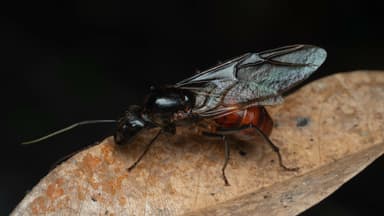
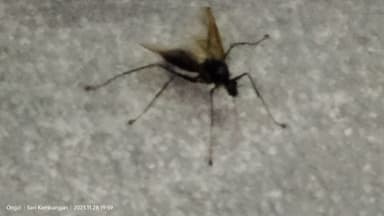
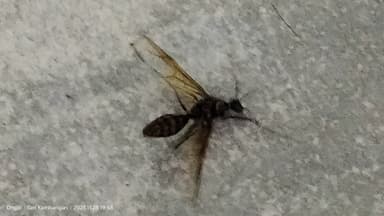
A distinct advantage of this tropical species is that it does not require hibernation. In their equatorial home, seasonal changes are minimal, and nuptial flights, while possibly peaking after rains, can occur year-round under warm, humid nighttime conditions. Thus, the keeper must simply maintain stable temperatures and long day lengths (a 12:12 light/dark cycle is fine) throughout the year. This continuous activity means the colony will demand food and attention every week without the winter break that temperate species afford, another factor contributing to the expert care rating.
The initial days after introducing your queen or founding colony are delicate. Upon arrival, place the test tube or founding chamber in a quiet, darkened area within the prepared setup and resist any urge to check on them for at least 48 hours. Vibration and light are major stressors during this settling phase. When you first feed, offer a tiny dab of honey on a piece of foil and a single, freshly killed small cricket; do not overfeed. Monitor from a distance: a healthy queen will settle into a chamber and begin laying eggs within a few weeks, while workers should display calm, deliberate exploratory behaviour. Watch closely for signs of excess condensation or mould, which indicate ventilation problems, and ensure the humidity gradient allows the ants to move to slightly drier areas if they choose. Patience in these first weeks sets the foundation for a thriving, awe-inspiring colony that will grow to become a centrepiece of any expert collection.