Cataglyphis
Cataglyphis nodus
Nuptial Flight Calendar
Flight months: Jun, Jul, Aug
Care Guide
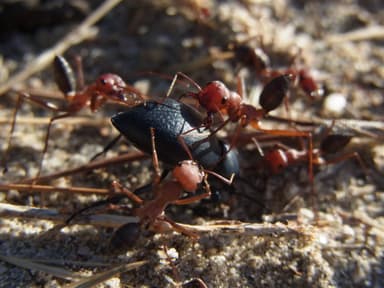
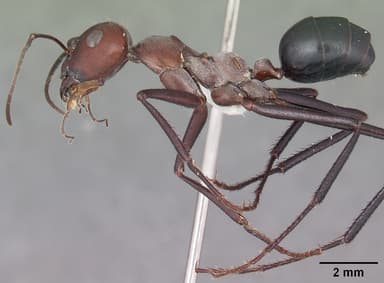
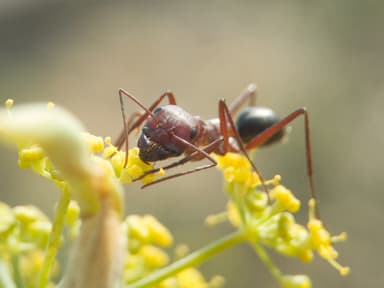
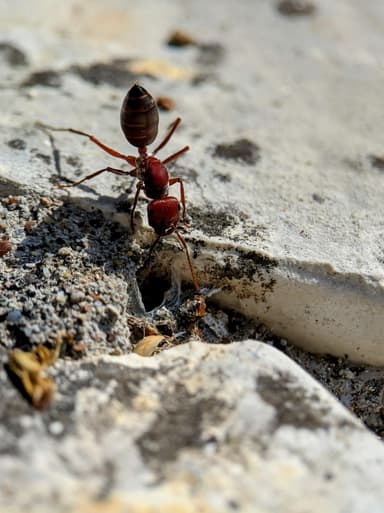
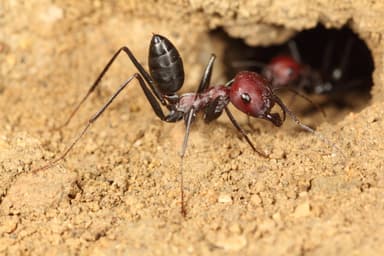
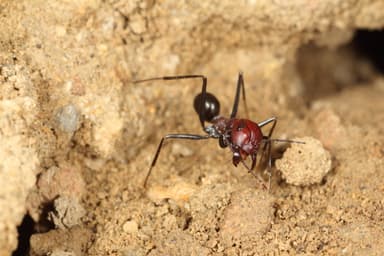
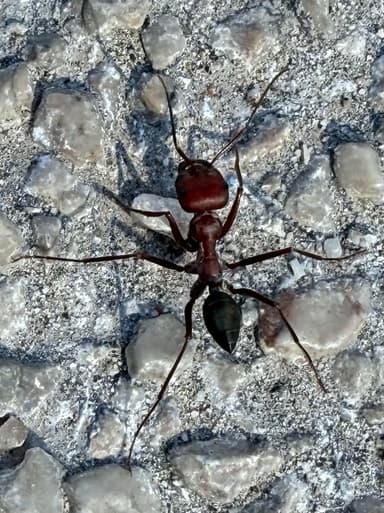
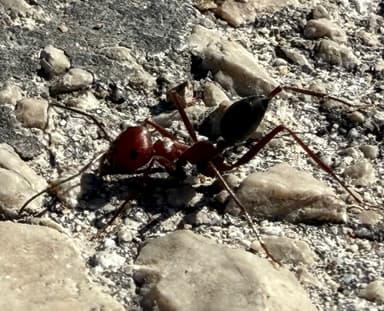
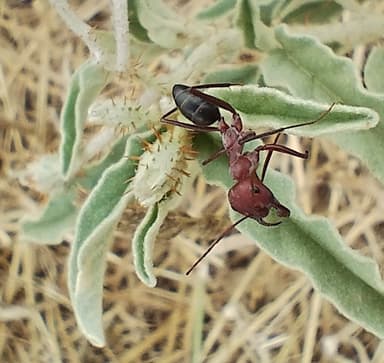
Few ants capture the imagination of seasoned keepers quite like Cataglyphis nodus, a sleek, long-legged desert navigator hailing from the sun‑scorched landscapes of the Mediterranean basin. As a member of the bicolor species group (Agosti 1990), this thermophilic ant epitomizes extreme adaptation: workers venture out at noon when soil temperatures soar and even desert‑dwelling rivals retreat. The queen measures a robust 11 to 14 mm, while her polymorphic workers span 5 to 10 mm and are divided into two distinct castes — minor foragers and noticeably larger majors with proportionally bigger heads that likely assist in prey transport or nest defence. A mature colony can reach up to 2,000 individuals, though in captivity numbers often stay more modest. What truly fascinates is their cognitive prowess; landmark studies by Knaden & Wehner (2006) revealed how these ants use a sophisticated combination of path integration and polarized light compass orientation to find their way back to the nest over barren, featureless terrain. For the observant keeper, every foraging bout becomes a tiny drama of resilience and homing precision.
*Cataglyphis nodus is best suited to intermediate keepers who have already mastered the basics of moisture‑sensitive species and are eager to replicate an arid microclimate. Absolute beginners may struggle with the narrow humidity window and the ants’ breathtaking speed, which turns routine maintenance into a potential escape drill. The species does not forgive accidentally high humidity — brood and callow workers quickly succumb to fungal infections — nor does it thrive in a “set and forget” setup. That said, anyone with experience keeping Messor* or other harvesters will find the progression both logical and deeply rewarding. Patience, careful observation, and a willingness to invest in a well‑designed formicarium are key; in return, you gain a colony that exhibits some of the most captivating natural behaviours known among ants, including heat‑seeking foraging and rapid, visually oriented homing.
Creating a proper home begins with acknowledging that these ants demand a hot, dry environment that mimics the sun‑baked soils of their native range, which stretches from the Balkans and Greece around 30° to 45° north latitude and as far west as the Iberian Peninsula. A ytong or plaster nest block serves admirably, provided it is kept almost completely dry. I recommend a very limited water source — a small, stoppered test tube with a pinhole in the cotton, or a single moistened corner of a plaster nest that supplies just a whisper of humidity, keeping the nest atmosphere between 30% and 50% relative humidity. The bulk of the nest must remain arid. Temperature is equally crucial: maintain a gradient from a cool end of about 24°C to a basking spot of 32°C, achieved with a small heat mat or lamp placed on one side. Never heat the entire nest uniformly; the ants self‑regulate by moving brood to their preferred zone. The outworld should be lined with a dry, sandy‑loam substrate to offer secure footing for their frantic sprints, and you must barrier the rim with a permanent PTFE or oil‑based solution because these ants are both excellent climbers and incredibly swift, capable of exploiting any gap before you can react.
Dietary needs reflect a life spent scavenging in a nutrient‑poor landscape. Cataglyphis nodus are predominantly insectivorous generalists, feeding on an array of dead arthropods they overpower or find desiccated (Knaden & Wehner 2006). In captivity, offer a steady supply of small, soft‑bodied prey such as fruit flies, pinhead crickets, chopped mealworms, or tiny roach nymphs. Protein is critical for brood production, so feed several times a week when larvae are present. Carbohydrates can be delivered as a droplet of diluted honey, maple syrup, or a specialised ant nectar on a small piece of foil or a clean pebble placed near the nest entrance; replace it before it crystallizes or molds. Crucially, while the colony needs drinking water, any free‑water source must be extremely modest. A short test tube with water plugged tightly by cotton, laid in the outworld and replaced weekly, provides all the hydration they require without raising ambient humidity. Never spray the nest or provide a water sponge, as this will inevitably tip the delicate moisture balance.
A proper winter dormancy is non‑negotiable for long‑term colony health, even though these ants hail from relatively mild climates. The colony naturally experiences a cooling period in much of its range, and failing to hibernate leads to dwindling brood and queen exhaustion. Plan for a 10‑ to 12‑week diapause at a steady 15°C. Begin the transition in late autumn by gradually reducing heating over two weeks, while also ceasing protein feeds; you may leave a tiny droplet of sugar water if workers are still alert, but many keepers stop feeding entirely once the ants cluster quietly inside the nest. During diapause, check every few weeks for any desperate workers lapping at the water cotton, and add a fresh tube if needed. As spring approaches, reverse the process slowly, raising the temperature over a similar fortnight before offering the first small insect meal. A smoothly managed hibernation triggers a vigorous burst of egg‑laying and reinvigorates the entire colony.
Receiving your queen or young colony is a moment that requires restraint. The ants will arrive in a darkened test tube, likely stressed by transit. Place the tube in a warm, quiet spot at around 28°C and simply leave them be for at least 48 hours; resist the urge to peek. A newly mated queen is claustral, so if you have a lone queen, she needs no food until her first nanitic workers emerge. For a small colony with a handful of workers, you can offer a smear of sugar water on the tube’s cotton plug or a micro‑drop near the entrance after the initial settling period. Watch for immediate, calm sipping — a sign they are ready to accept resources. Do not rush to connect a formicarium; keep them in the tube until it becomes crowded, ideally when they reach 20 or more workers, because moving too soon risks chronic stress. Observe the queen’s comportment: she should stand with a slightly hunched, steady posture, not frantically scrambling. Once you do connect the tube to a prepared arid nest, give them full access but continue to place food inside the tube for the first week, letting the foragers map their new world at their own pace. With steady warmth, low humidity, and minimal interference, Cataglyphis nodus will soon reveal itself as one of the most dramatically engaging ants a keeper can steward.