Camponotus
Camponotus turkestanus
Nuptial Flight Calendar
Flight months: Apr, May, Jun, Jul
Care Guide
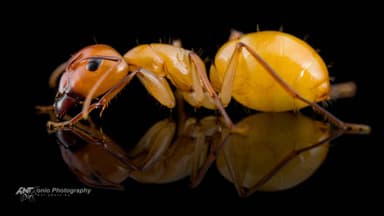
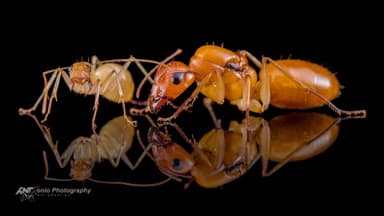
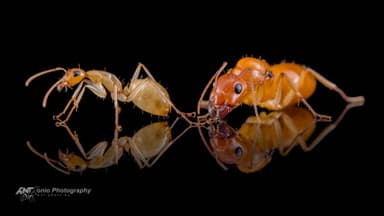
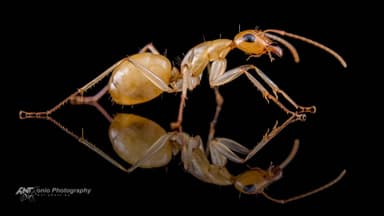
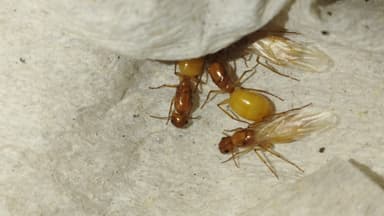
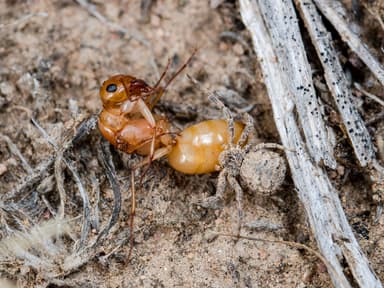
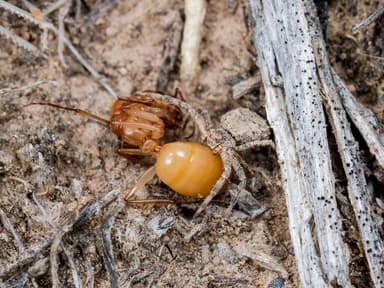
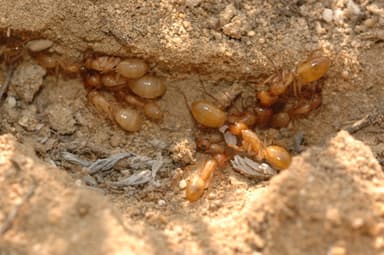
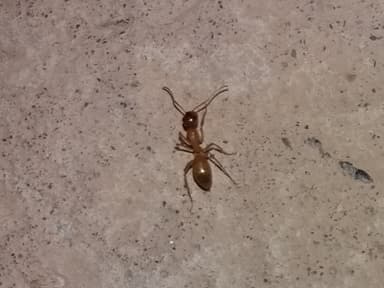
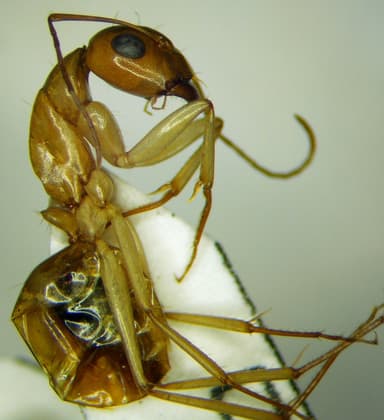
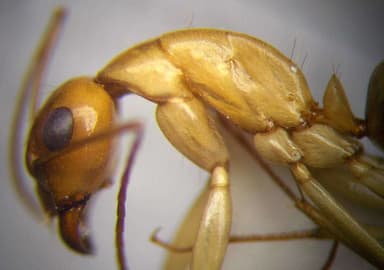
Camponotus turkestanus is a strikingly robust carpenter ant that inhabits the arid steppes and semi-deserts of Central Asia, ranging from the Caspian shores to the foothills of the Tian Shan. Queens are impressively large, measuring 14 to 17 millimetres, while workers display pronounced polymorphism, with minor workers as small as 6 millimetres and massive majors reaching 13 millimetres — their broad, tank-like heads making them unmistakable. A mature colony can grow to around 10,000 individuals, a testament to the species’ vigour under the right conditions. These ants are crepuscular foragers, venturing out in the cooler evening hours to scavenge and tend trophobionts, and their nuptial flights occur on warm, calm evenings after rain in late spring to early summer (Radchenko 1997). Their adaptation to a landscape of temperature extremes and low humidity gives them a distinct resilience, yet it also shapes their precise needs in captivity, offering the keeper a fascinating window into Central Asian entomology.
In terms of care difficulty, Camponotus turkestanus sits at an intermediate level. It is not an ant for the absolute beginner, primarily because of its obligatory hibernation and the need to balance warmth with moderate humidity — a regime that requires some finesse. However, the claustral founding style means the queen requires no food during her initial seclusion, which simplifies the earliest stage considerably. Hobbyists who have successfully kept a few temperate Camponotus species and are comfortable managing a cool winter diapause will find this ant a rewarding next step. The colony grows steadily rather than explosively, giving the keeper time to adjust housing as numbers increase, and the clear dimorphism between minor and major workers provides endless behavioural interest that more than compensates for the slightly elevated attentiveness required.
Housing should replicate the stable microclimate of a deep soil crevice. A temperature gradient within the nest area from 22 to 28 degrees Celsius works beautifully, with the warmer end encouraging brood development; the outworld can sit comfortably at room temperature within this range. Humidity needs to be maintained between 50 and 70 percent in the nest chambers, which can be achieved with a plaster, ytong, or soil-based nest that allows gradual moisture regulation. Crucially, the foraging arena must be kept much drier to prevent fungal issues, mimicking the surface conditions of the Turanian basin. A substrate of sand mixed with a little clay offers a naturalistic footing and aids in humidity control, while an escape-proof barrier is essential — these large ants are powerful climbers and will test every seal. Placing a flat stone or piece of bark under the heat source often encourages the colony to cluster there, making observation easier.
Diet for Camponotus turkestanus follows the typical carpenter ant template but with an emphasis on freshness in their comparatively dry setup. Protein is vital for larval growth and should be supplied as pre-killed insects such as crickets, mealworms, or dubia roaches; a steady supply during the warmer months fuels the colony’s expansion. Carbohydrates are equally important for adult workers, and they readily accept dilute honey, sugar water, or slices of sweet fruit. Given their natural tendency to glean honeydew from root aphids in the wild, they particularly relish free- standing liquid sugars presented in a small feeding dish or on a cotton pad. Clean water must always be available, ideally via a test tube setup or a water tower, as even these xerophilic ants can desiccate surprisingly quickly without a reliable source, especially in the warm nest.
Hibernation is non-negotiable for the long-term health of this temperate species. Colonies require a three- to four-month dormancy at a stable temperature around 10 degrees Celsius. The best practice is to gradually decrease the temperature over a couple of weeks in late autumn, then move the colony into a dedicated cooler or a temperature-regulated fridge that does not drop below the mid-single digits. During this period, the ants will cluster together motionless; they need no food, but a tiny water source should remain accessible to prevent fatal desiccation. Skipping or shortening hibernation invariably leads to a decline in queen fecundity, higher worker mortality, and ultimately a colony that languishes, so it is the single most important annual ritual for the keeper.
When your Camponotus turkestanus arrives, the first days should be as stress-free as possible. If you have a founding queen, she is best left completely undisturbed in her test tube setup, wrapped in a dark cover and placed in a quiet corner. Even if she appears motionless, resist the urge to check; a single inadvertent jolt can cause her to consume her eggs. For a small colony with workers, keep them in their sealed tube until the brood pile looks robust and the worker count approaches 15 to 20 individuals — only then should you consider connecting a small, foundational nest. Offer a minuscule droplet of honey water on a sliver of wax paper after 24 hours, and watch that the workers drink without drowning. In these early moments, the most crucial signs to monitor are steady brood development and the queen’s calm, unhurried movements, which signal that your little slice of the Turkestan steppe is settling in as it should.