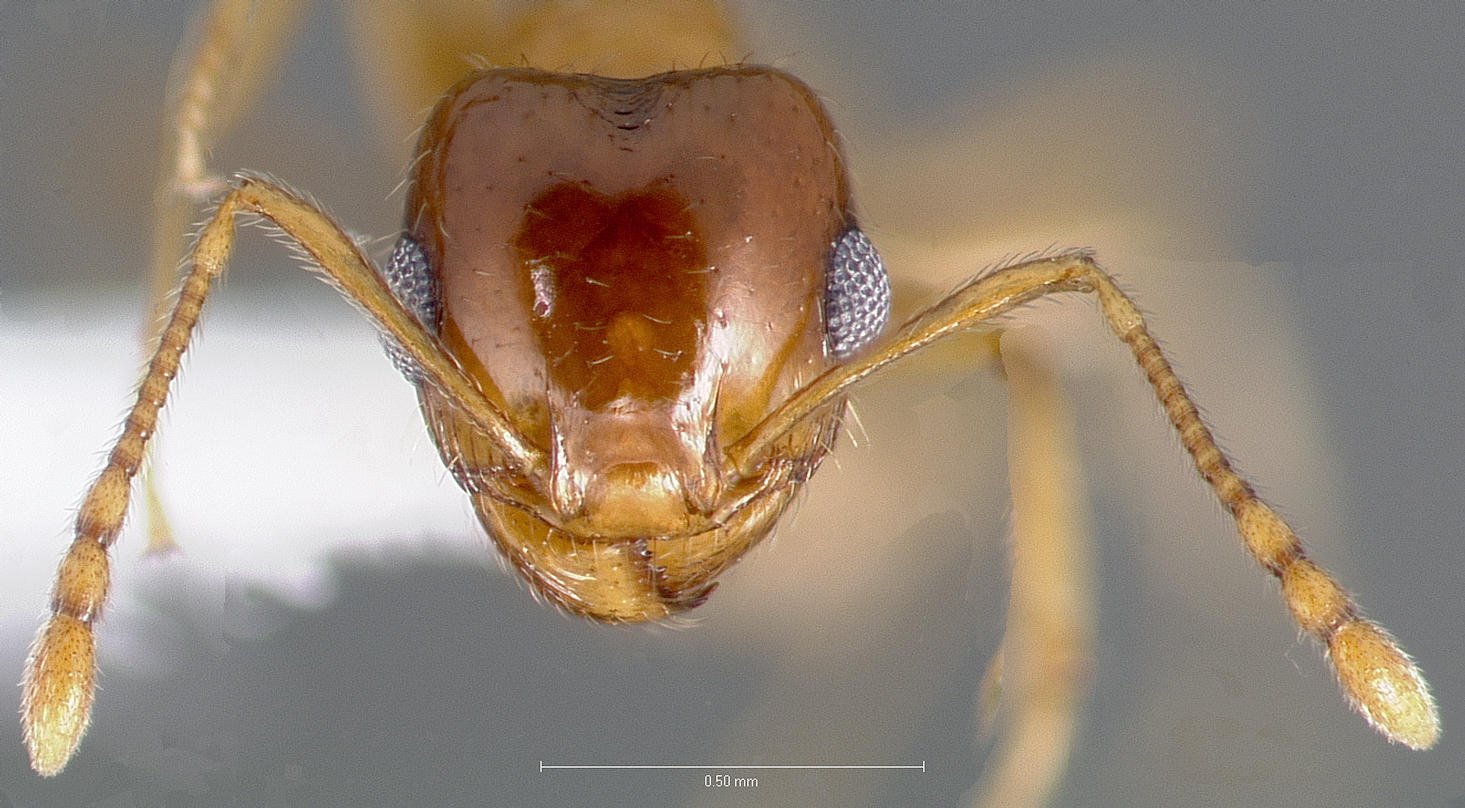
Pheidole
Pheidole gilvescens
Nuptial Flight Calendar
Care Guide
Pheidole gilvescens is a fascinating species that showcases the classic two-caste system typical of the genus, with a clear distinction between minor workers and major workers, often called soldiers. The queen, measuring between 4.5 and 6 mm, is notably larger than her workers and initiates the colony alone, a process made easier by her claustral founding style—she seals herself in a chamber and raises the first generation of workers entirely on her own metabolic reserves. Minor workers are small, around 2–3 mm, and handle foraging, brood care, and nest maintenance. The majors, though not enormous, possess proportionally larger heads and powerful mandibles, making them effective defenders and seed crackers.
One of the most engaging aspects of keeping Pheidole gilvescens is their varied diet. These ants are true generalists: they eagerly collect seeds, which are stored and processed within the nest, but also require a steady supply of insect protein and sugar water. Live or freshly killed feeder insects like fruit flies, small crickets, or mealworms are appreciated, and a drop of honey or diluted sugar water will keep energy levels high. Because they do not require hibernation, they remain active year-round, allowing keepers to observe their foraging and defense behaviors continuously.
Care difficulty
Pheidole gilvescens is best suited for intermediate keepers. While their founding is straightforward and their resilience is good, managing a colony that can reach up to several thousand workers requires attention to space, food variety, and humidity control. The major workers add an extra layer of interest, but their larger mandibles mean they can be more defensive if disturbed. Beginners with some prior experience will find them rewarding but not overly demanding.
Housing
A formicarium for Pheidole gilvescens should provide ample nesting space and a separate foraging area for seed storage. They prefer stable temperatures between 24 and 30°C, and humidity in the nest should be kept around 40–60%. Regular light moistening of the substrate is important, especially in the brood chamber, but avoid waterlogging. These ants are not particularly sensitive to vibration, but they do appreciate a quiet spot with subdued light. A well-sealed nest is essential because minors can squeeze through tiny gaps. Provide a clean water source—a test tube with a cotton plug works perfectly.
First days after purchase
Upon receiving your colony, place the entire setup in a calm, dimly lit location and resist the urge to inspect them constantly. Give the ants at least a day to settle and adjust to their new surroundings. Ensure they have access to water immediately, and offer a small amount of sugar water and a tiny piece of insect protein. Avoid opening the nest area; observe through the glass or tubing instead. If the queen is still in her founding tube, keep her undisturbed until the first nanitics emerge. Patience during these first days sets the foundation for a thriving colony.