Strumigenys
Strumigenys silvestrii
Nuptial Flight Calendar
Flight months: Jan, Feb, Oct, Nov, Dec
Care Guide
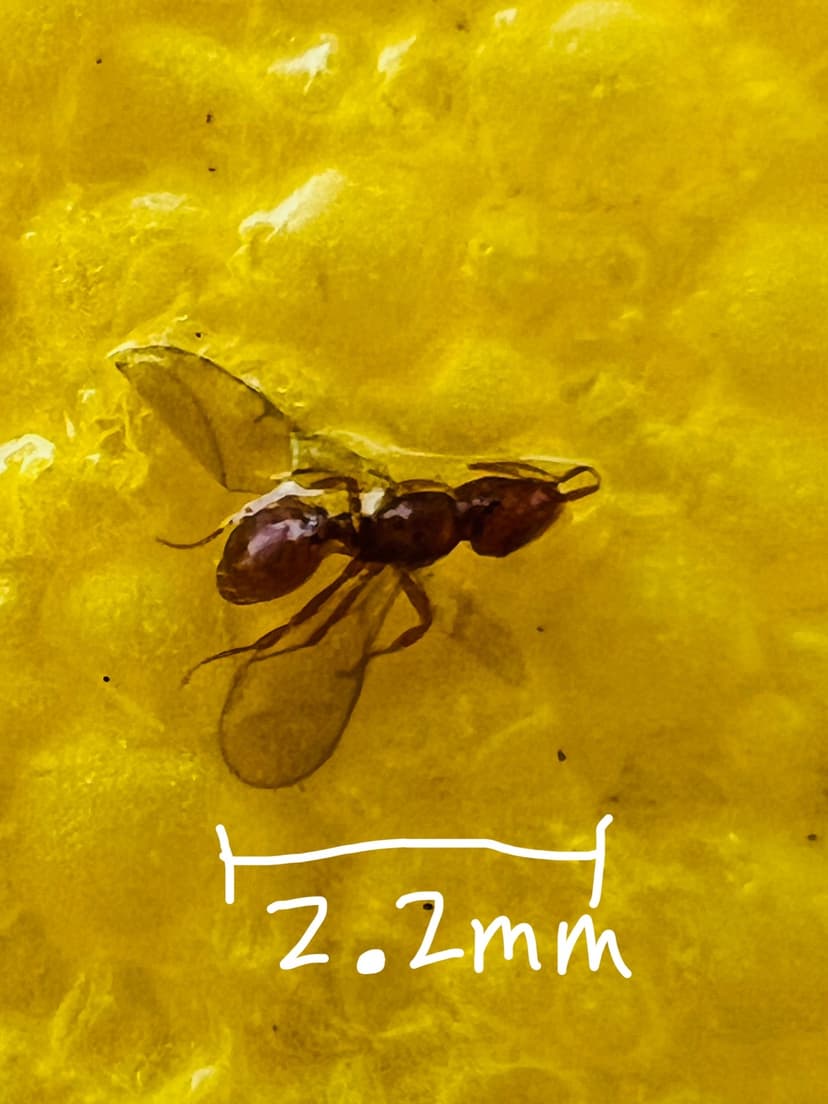
Among the minute and secretive ants of the tribe Dacetini, Strumigenys silvestrii stands out as a true gem for the specialist myrmecologist. Workers of this Neotropical species are monomorphic and exquisitely small, ranging from just 1.8 to 2.3 mm, while the single queen reaches a modest 2.3 to 2.8 mm (Bolton, 2000). Colonies are founded claustrally and peak at around 200 individuals, residing in the humid microcosms of rotting wood, leaf litter, and soil in their native South America. What makes S. silvestrii so captivating is its highly specialised predatory lifestyle: they are obligate hunters of tiny springtails (Collembola), which they stalk with deliberate, slow-motion stealth before using their elongate mandibles to seize their prey. Their cryptic, earth-toned bodies and long sensory hairs betray an evolutionary history finely tuned to life among decaying debris, making them a living lesson in niche adaptation. For the keeper, observing a worker carefully positioning itself for that sudden strike is a reward that few common ants can offer.
It must be said bluntly: Strumigenys silvestrii is an expert‑level species, entirely unsuitable for beginners or intermediate keepers accustomed to generalist formicines. Their extreme dietary specialisation, diminutive size, and demand for continuously high humidity leave no margin for error. A single day’s neglect in prey supply or a momentary drop in moisture can doom a young colony. This ant is best reserved for those who have successfully maintained other micro‑hypogaeic species and who thrive on the meticulous, daily attentiveness that such creatures require. Patience, a steady source of live springtails, and a willingness to build a dedicated micro‑habitat are absolute prerequisites; in return, the keeper gains an intimate window into a behavioural world almost invisible in the wild.
Designing quarters for S. silvestrii requires recreating the warm, saturated atmosphere of tropical leaf litter rather than providing a conventional formicarium. Temperature should remain stable between 20 °C and 26 °C, with humidity locked at an uncommonly high 80–95 % to mirror the constantly moist microclimate of their natural galleries (Bolton, 2000). A compact nest made of plaster, hydrostone, or grout, moulded with a few tiny chambers and connected via a short tunnel to a small foraging arena, works best. The interior should be kept dark, and a generous layer of sterilised oak or beech leaf litter in the arena not only buffers humidity but also provides hunting cover for both the ants and their springtail prey. Because workers are so tiny, all openings must be sealed with micro‑fine mesh or tight‑fitting fluon barriers; a gap of even 0.5 mm is an escape route. The arrangement must prioritise stable, high moisture without flooding, as these ants easily drown in free water droplets.
Feeding Strumigenys silvestrii is unlike provisioning any conventional ant colony. Springtails (Collembola) are not merely a treat but the sole reliable protein source, and a thriving, self‑sustaining culture of Folsomia candida or similar small species must be established before the ants arrive. Live springtails should be introduced into the foraging area two to three times per week, with the quantity gauged so that small prey are always available but never so many that the arena becomes polluted. Soft‑bodied pinhead crickets or freshly hatched mite larvae are sometimes accepted, but relying on anything other than springtails exposes the colony to dangerous fasting periods. They show little to no interest in sugary liquids, having no mutualistic relationships with hemipterans; consequently, no honey‑water or nectar stations are needed. All drinking water is derived from the ambient humidity and from the bodies of their prey, though a minuscule, gently sloping water source can be offered if the substrate ever shows signs of drying.
True to its tropical origin, S. silvestrii experiences no hibernation and maintains active foraging and brood development year‑round, provided environmental parameters remain constant. Nuptial flights in their native range occur during the austral warm season, roughly from October to February, following rains that create warm, humid conditions (Wetterer, 2012). In captivity, abandoning all seasonal cues is recommended; any attempt to impose a cool or dry resting phase will be lethal. The colony should be kept on a stable 12:12 light cycle and consistently moist warmth, with the keeper noting that large egg‑laying peaks can follow an influx of springtail abundance, echoing their opportunistic breeding strategy in the wild.
For the first crucial days after purchase, a hands‑off approach is vital. Unpack the delicate colony into its pre‑prepared, humidity‑stabilised nest and allow it to settle in complete darkness for at least 24 hours before offering the first live springtails through a darkened tube or directly into the leaf litter. Avoid any temptation to check on them with bright lights; use only red illumination for brief, necessary inspections. Signs of a healthy inauguration include queens and workers slowly exploring their new surroundings and, critically, workers returning to the nest with prey within a few days. Panic, incessant circling, or refusal to exit the nest often signal inadequate humidity or the presence of chemical residues. With gentle acclimation and an unwavering commitment to their specialised diet, Strumigenys silvestrii will establish itself as a hidden jewel of the insect world, rewarding the dedicated expert with an intimate portrait of a tiny, ferocious specialist.


