Odontoponera
Odontoponera denticulata
Nuptial Flight Calendar
Flight months: Jan, Feb, Mar, Apr, May, Jun, Jul, Aug, Sep, Oct, Nov, Dec
Care Guide
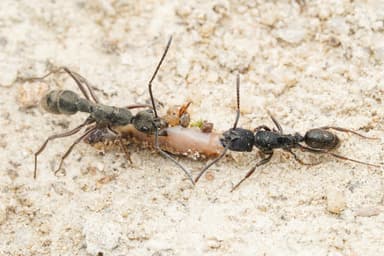
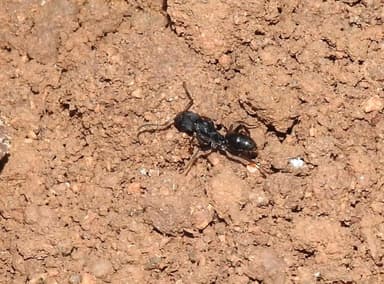
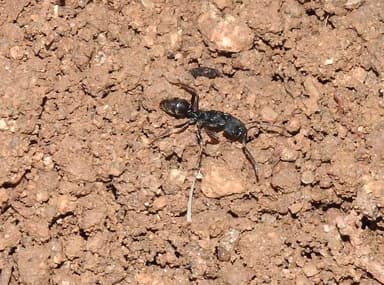
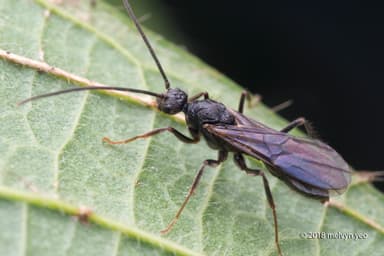
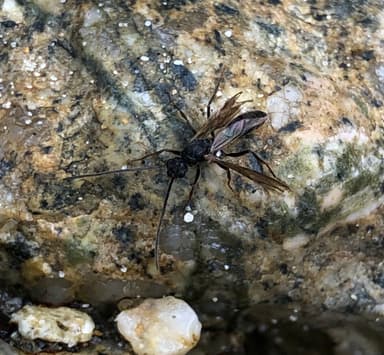
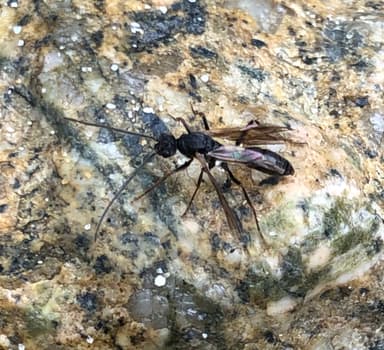
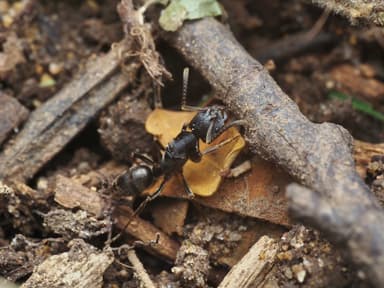
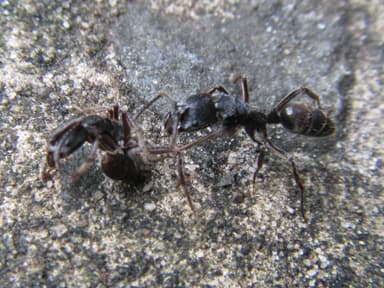
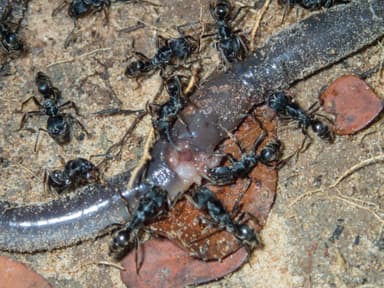
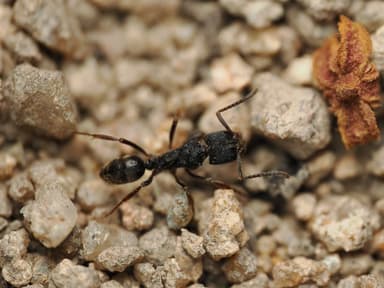
Among the Ponerinae, few ants command attention quite like Odontoponera denticulata, a robust predator whose common name, the toothed ponerine, alludes to the dramatic serrations lining its mandibles. Workers measure a respectable 9 to 11 millimetres, while the queen is slightly larger at 11 to 13.5 millimetres, and the entire colony is strikingly uniform, lacking a distinct soldier subcaste (Yamane & Hashimoto 1999). A mature colony, one of the largest recorded in its subfamily, can house up to 3,000 individuals (AntWiki), yet despite this size the species retains the primitive, restless energy typical of its lineage. Its distribution, mapped by GBIF occurrence records from the Indian subcontinent through the Malay Archipelago to the northern reaches of Australia, places it squarely in the hot, humid lowlands of monsoon Asia. What makes O. denticulata particularly captivating for the hobbyist is the combination of its formidable hunting behaviour, large eyes that track movement with unnerving precision, and a semi‑claustral founding strategy which forces the new queen to step outside the safety of her chamber and hunt for her first brood — an intimate window into the ant’s life history.
This is an intermediate‑level species whose care requires a steady hand and prior experience with predacious ants. The semi‑claustral foundation alone rules out absolute beginners: a freshly mated queen must be offered a foraging arena from day one and fed regularly with small insect pieces, a rhythm that demands observation but forbids over‑disturbance. Workers are swift, alert, and capable of delivering a memorably painful sting, so escape‑proof housing and deliberate feeding routines are non‑negotiable. For the keeper who has successfully maintained other high‑humidity tropical ponerines or large Camponotus, however, Odontoponera denticulata offers a richly rewarding display. The ants are diurnally active hunters, often dragging prey back to the nest in full view, and their colony grows at a pace that lets you savour each brood cycle without feeling overwhelmed. If you thrive on building naturalistic, moisture‑regulated setups and don’t mind a species that demands live food, this ant belongs on your shortlist.
Creating the right microclimate is the foundation of good housing. The species’ native range experiences temperatures between 24 and 30 °C and relative humidity rarely dropping below 60 percent; in the nest you should aim for 70 to 80 percent humidity to mimic the tropical soil cavities where they naturally occur. A plaster or Ytong formicarium with an integrated hydration system works well, but many enthusiasts believe a naturalistic soil‑based vivarium brings out the most authentic behaviours, as these ants are enthusiastic diggers. A substrate blend of coco peat, sand, and a little clay, kept evenly moist but never sodden, allows them to sculpt their own chambers. Provide a dry, ventilated outworld for foraging, furnished with a water tube and small shelters; the nest entrance should be narrow and easily guarded, for the colony will quickly seal openings that feel too spacious. Heating is best supplied by a gentle heat mat or cable attached to one side of the nest, establishing a thermal gradient so the ants can self‑regulate.
Feeding Odontoponera denticulata is a carnivore’s affair. These ants hunt down live prey in the wild, and in captivity they thrive on a mixture of appropriately sized crickets, dubia roaches, and mealworms, with the occasional waxworm as a lipid‑rich boost. Carbohydrate supplements are rarely accepted, and some colonies ignore them altogether; therefore protein is the pillar of the diet. For a growing colony, offer two to three feedings per week, removing uneaten prey after twenty‑four hours to prevent mould and mite outbreaks. The founding queen is no exception — she needs a tiny, freshly killed insect every two or three days during the claustral‑like lulls between foraging bouts. Always keep a clean water source, such as a cotton‑plugged test tube, available in both the nest and the outworld; the heightened humidity requirements mean water can be depleted more rapidly than in temperate setups.
Happily, no hibernation period is required. As a denizen of the lowland tropics, Odontoponera denticulata maintains activity and brood production throughout the year when kept warm and humid, so you will not need to simulate a cooling period. The nuptial flights, though poorly documented with low observational confidence, appear to occur on warm, rain‑soaked evenings during the monsoon months from April to September (AntWeb specimen records and anecdotal field notes), offering a rough guide for those hoping to raise a queen from captivity.
When your colony or founding queen first arrives, resist the urge to fuss. Settle a queen into her test‑tube setup — a standard water reservoir tube with a cotton plug — and attach a tiny foraging box with a thin layer of moist substrate. After a day of quiet in a dim, warm spot at around 26 °C, lay a pre‑killed fruit fly or a fragment of mealworm just outside the tube opening. Her emergence to feed is a very good sign; if she stays hidden, try again the next evening. Once workers eclose, connect a full‑sized nest and outworld, but block off all but a small area until the colony numbers at least 30 individuals. Watch for tell‑tale problems: desiccated brood signals insufficient humidity, while a refusal to forage may indicate temperature stress or too much light. With steady, attentive care, your Odontoponera denticulata colony will unfold into one of the most animated and beautiful displays in the ant‑keeping hobby, a living echo of the Southeast Asian forest floor that Yamane and Hashimoto so vividly documented.