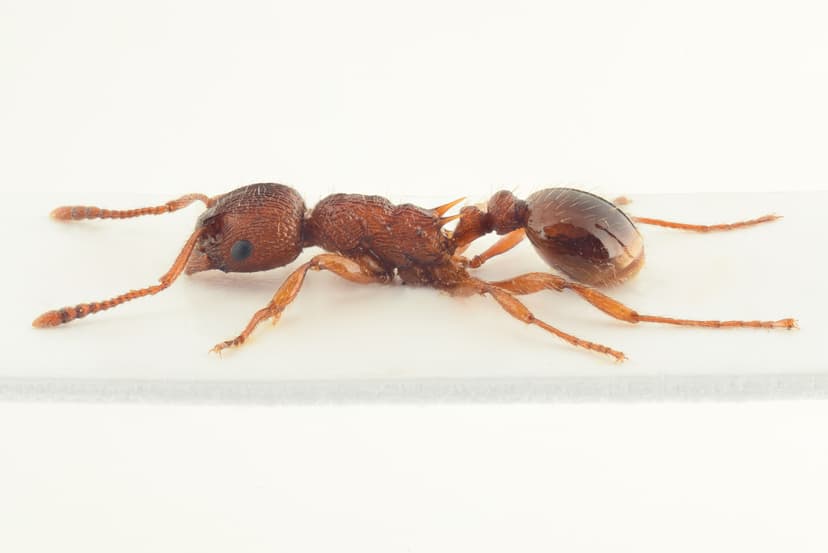
Myrmica
Myrmica gallienii
Nuptial Flight Calendar
Flight months: Jul, Aug, Sep
Care Guide
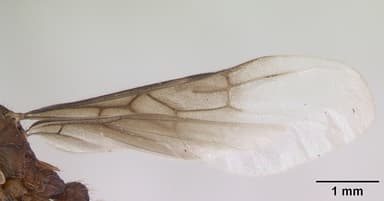
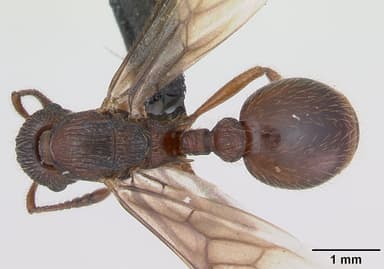
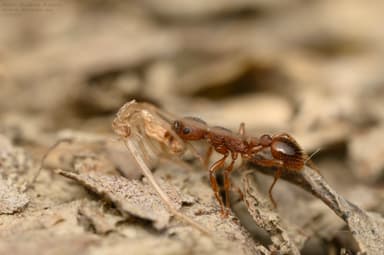
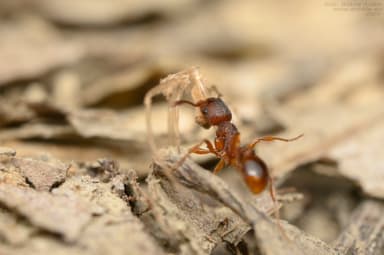
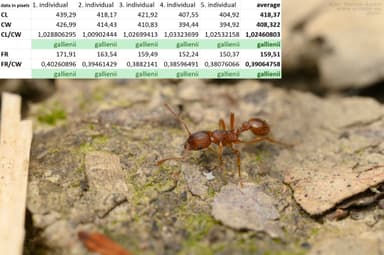
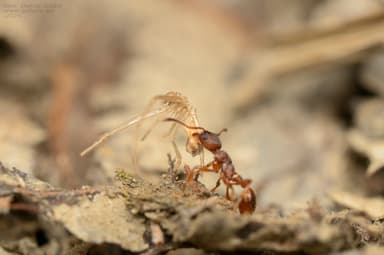
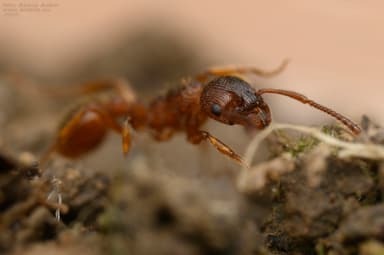
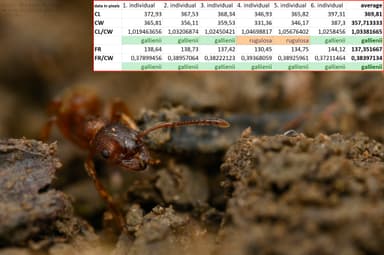
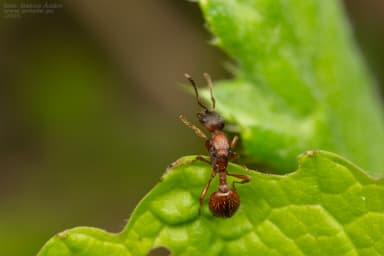
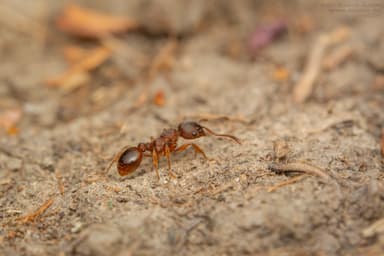
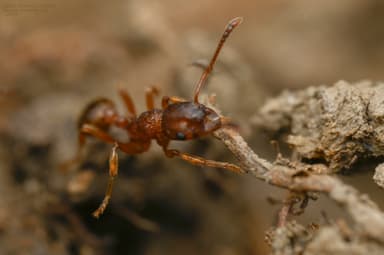
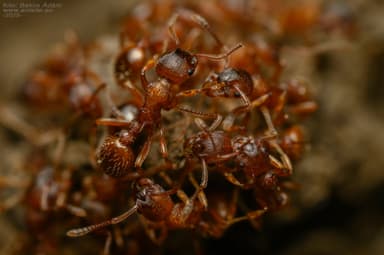
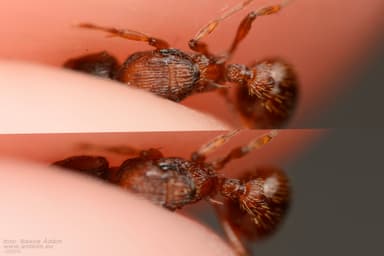
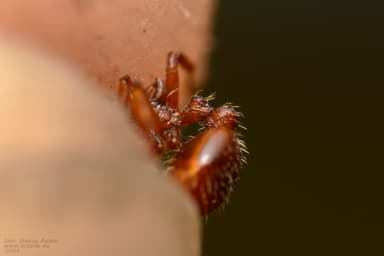
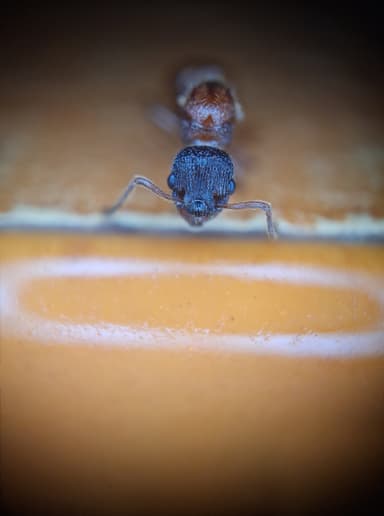
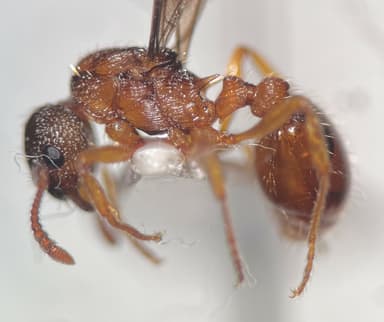
Among the diverse and often overlooked ant fauna of Europe’s wet meadows, Myrmica gallienii stands out as a captivating species for the hobbyist willing to meet its particular needs. Workers, ranging from a diminutive 4 to 5.5 mm, are clad in a rich reddish-brown to dark brown integument, while queens achieve a more substantial 6.5 to 8 mm, all within a strictly monomorphic worker caste (Radchenko & Elmes 2010). Colonies can grow to a moderate size of around 5,000 individuals, a bustling society that, like all Myrmica, defends itself with a functional sting. What makes M. gallienii truly interesting is its specialization for waterlogged habitats: it thrives in fens, wet grasslands, and the margins of bogs, a niche that sets it apart from many of its more drought-tolerant relatives. Observations suggest it often feeds on hemipteran honeydew and insect prey within the dense vegetation, and its founding is entirely claustral, with the queen sealing herself away in a small chamber to rear her first brood using only her stored body reserves (Seifert 2018).
This species earns an intermediate care difficulty, making it a rewarding but not effortless choice. It suits keepers who have already mastered a few beginner species and are ready to manage precise humidity and a strict annual rhythm. A key challenge lies in its sensitivity to desiccation, a direct consequence of its wetland origins. If you are comfortable maintaining a consistently damp nest environment, providing a reliable temperature gradient, and committing to a true hibernation, M. gallienii will thrive. The colony’s modest size means it does not demand enormous formicaria, but it does require careful monitoring during the founding stage and the initial growth phase. The reward is observing a species that displays a rich repertory of social behaviors, from tending brood in humid chambers to foraging in the cooler, damper parts of the setup, offering a glimpse into the biology of a specialized ecosystem.
Housing must replicate the perpetually moist, cool microclimate of a sedge tussock or mossy hummock. A soil-based or plaster nest works best, as materials like Ytong or aerated concrete wick moisture effectively and can be kept permanently damp without waterlogging. The target range is 60–80% relative humidity, with the higher end essential for brood development; a temperature gradient from 18°C at the humid end to around 26°C at a drier basking spot gives the ants choice. A deep layer of natural substrate—a mix of fine sand, chemical-free peat, and loam—mimics the colony’s native mire soils, and adding a patch of live moss or a few grass clumps not only boosts humidity but also provides cover and foraging structure. Ventilation must be ample to prevent stagnation, yet sufficiently shielded to retain moisture; a well-designed formicarium with a moist cotton reservoir or a slow-drip watering system works admirably.
A varied diet is essential for colony vigour. Offer small insect prey such as fruit flies, pinhead crickets, or chopped mealworms at least twice a week, providing a protein source that fuels larval growth. Carbohydrates are eagerly taken in the form of diluted honey, sugar water, or a commercial honeydew substitute fed on a small tray or directly onto a piece of clean sponge to prevent drowning. Always ensure a separate clean water source, such as a water tube or a saturated cotton plug, as the ants will drink frequently in addition to absorbing moisture from the nest environment. Take care to remove uneaten food after a day to prevent mould, which is particularly aggressive in the high-humidity conditions these ants demand. For young colonies, offering tiny, freshly killed prey items every two days supports the rapid development of the first batch of workers (Radchenko & Elmes 2010).
An unbroken winter dormancy is not optional: M. gallienii requires a genuine hibernation at around 5°C for three to four months to reset its biological clock and trigger healthy egg-laying in spring. In the wild, colonies endure cold, wet winters beneath the frozen ground of their meadow homes. To prepare, gradually reduce the temperature and photoperiod throughout autumn, allowing the ants to slow down naturally. Once the colony is clustered and inactive, move the formicarium to a refrigerator or a cool cellar that reliably holds 5°C, checking periodically that the nest medium does not dry out completely. In early spring, reverse the process by warming the setup a few degrees each week. Colonies that are denied this cold period often show low brood production, elevated mortality, and erratic queen behaviour, underscoring how deeply ingrained this cycle is in their physiology (Seifert 2018).
Receiving your new M. gallienii colony is a delicate time. Whether the queen arrives with a handful of workers or alone in a test tube, allow the ants to settle undisturbed in a dim place at room temperature for at least 24 hours before any interaction. For a queen with workers, after this rest you may offer a micro-drop of sugar water on a slip of paper and a tiny fragment of freshly killed fruit fly placed near the tube entrance. Watch for calm, steady feeding; a frantic, constantly agitated queen or workers clustering tightly around the brood without foraging may indicate stress from shipping or unsuitable conditions. If you have only a newly mated queen, do not feed her—she is fully claustral and stores all necessary reserves. Simply connect her tube to a dark, humid nest chamber and check only weekly for signs of first eggs. During these first days, the greatest danger is over-attention; resist the urge to check more than once a day, and focus on maintaining stable humidity and temperature. Within a month, you should see the first small larvae, a heartening sign that your colony is on its way to becoming a thriving piece of fenland ecology.