Streblognathus
Streblognathus peetersi
Nuptial Flight Calendar
Flight months: Jan, Feb, Oct, Nov, Dec
Care Guide
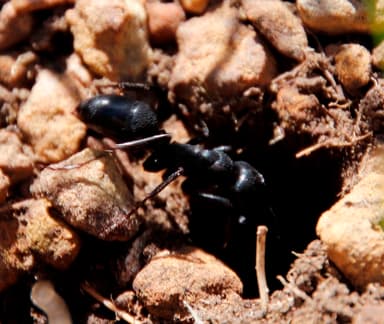
Streblognathus peetersi is a commanding presence among African ants, with workers measuring between 15 and 18 millimetres and possessing a robust, jet-black body that glints under good light. This species belongs to the subfamily Ponerinae and is known only from the cool uplands and coastal margins of southeastern Africa, stretching roughly from latitudes 22°S to 34°S and longitudes 24°E to 32°E (Robertson 2002). What makes S. peetersi truly remarkable, however, is not its size but its social organisation. Colonies are entirely queenless, a rare condition in ants. Instead of a morphologically distinct reproductive caste, a single mated worker — called a gamergate — assumes the breeding role after internal insemination by a male (Cuvillier-Hot et al. 2004). All females are morphologically identical, with no polymorphism, yet they establish a linear dominance hierarchy in which the top-ranked worker suppresses ovarian development in her nestmates through chemical signalling and physical policing (Cuvillier-Hot et al. 2004). Colony size is modest, rarely exceeding 100 individuals, and reproduction is tied to the survival of that one fertile individual, making every colony a delicate social achievement. The observation that these ants produce males and new gamergates primarily during the warm summer months from October to February aligns with their southern hemisphere distribution, though detailed flight records are sparse and confidence remains low.
The unique reproductive biology and demanding needs of S. peetersi place it firmly in the expert category of ant keeping. This is not a species for beginners or even intermediate hobbyists. Maintaining a stable gamergate-led colony requires a deep understanding of ponerine social dynamics, experience with humidity-sensitive setups, and the patience to manage a slow-growing nest that can collapse rapidly if the reproductive individual is lost or stressed. Colonies do not forgive neglect, as they lack the buffer of multiple egg-layers. Prospective keepers should have successfully maintained other queenless ponerines or challenging genera such as Harpegnathos or Diacamma before attempting Streblognathus. The reward for dedicated experts is an intimate window into the evolution of reproductive division of labour — watching the subtle behavioural negotiations that maintain social harmony is a rare privilege.
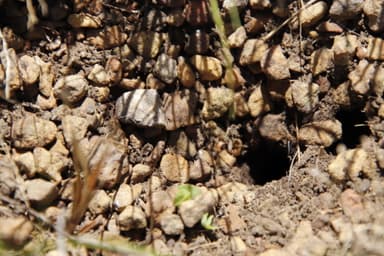
Providing appropriate housing mirrors the species’ natural habitat — temperate grasslands and scrubby woodland with well-drained soils. A nest chamber with a plaster, ytong, or soil-clay mixture helps replicate this, as these materials retain moisture while allowing the ants to excavate or shape their environment. A separate foraging arena is essential, and all surfaces must be smooth-lined with a reliable escape barrier such as fluon or a tight-fitting lid, as these large ponerines are strong climbers and can deliver a painful sting if they get out. Temperature should be maintained within a comfortable 20°C to 28°C, avoiding sharp fluctuations. This is a species that does not require hibernation; it stays active year-round, so a gentle heat mat on one side of the nest creates a useful gradient. Humidity must remain moderately high, between 50% and 70%, which can be achieved by regularly misting the substrate and providing a water-filled test tube with a cotton plug inside the foraging area. If the air becomes too dry, workers may desiccate or refuse to forage; too wet, and you risk fungal outbreaks. A deep layer of slightly damp sand mixed with coconut fibre or peat gives the colony natural digging opportunities and helps buffer moisture levels.
Feeding Streblognathus peetersi connects you directly to its predatory ancestry. In the wild, these ants are active hunters that overpower a variety of arthropods. In captivity, they thrive on a protein-rich diet of small crickets, roach nymphs, mealworms, and termites, all of which should be pre-killed or stunned before offering, as live large prey can injure the ants. It is wise to dust insect prey occasionally with a calcium supplement, given that these ants lack a hard exoskeleton to store minerals. Carbohydrate sources are less frequently mentioned in scientific literature, but like many ponerines they will lap at extrafloral nectaries or honeydew in nature. A small drop of sugar water, diluted honey, or a specialised ant nectar every few days keeps foragers energised. Provide fresh water at all times via a test tube or a shallow dish filled with cotton wool to prevent drowning. Feeding frequency can be twice a week for protein, with carbohydrate supplements in between, but watch the colony’s appetite — overfeeding leads to waste buildup and mould, which these moisture-loving ants are particularly sensitive to.
There is no hibernation requirement for S. peetersi. Their native region experiences mild winters without extreme cold, and the colony remains fully active throughout the year. Maintain the stable temperature range of 20–28°C, and do not attempt to cool them down artificially, as this will only cause stress and reduce foraging activity. A consistent photoperiod is not critical, but dimming the lights slightly during winter months can mimic natural day-length cycles without the need for temperature drops.
The first days after acquiring a colony are a critical window. Expect the ants to be disoriented from transport and likely huddled together in a tight cluster. Place the shipping container directly into the foraging arena and allow them to move into the prepared nest at their own pace — never force them. Cover the setup with a dark cloth and resist the temptation to check on them for at least 24 hours. For the initial feeding, offer only a tiny drop of sugar water on a small piece of wax paper and, if the colony appears active, a single pre-killed small cricket placed near the nest entrance the following day. Watch for the gamergate’s presence: she will be the individual that other workers surround and groom frequently, though she looks identical in size and shape. If she appears weak or is being ignored, the colony may be failing to integrate; immediate sealing of the nest and minimal disturbance are the only aids. Any sign of ants biting at each other or dragging a worker to the refuse pile may indicate rejection of the gamergate, which often spells doom for the entire group. With patience and a hands-off approach, a well-settled colony will gradually begin to explore, hunt, and reveal the fascinating spectacle of a true queenless society.