Prenolepis
Prenolepis nitens
Nuptial Flight Calendar
Flight months: Sep, Oct
Care Guide
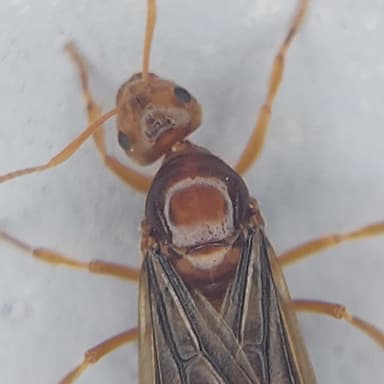
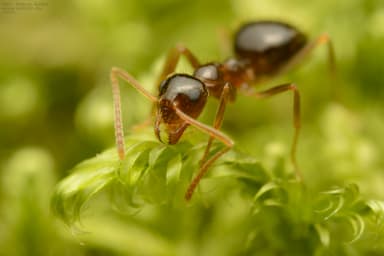
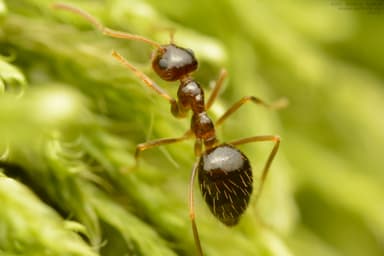
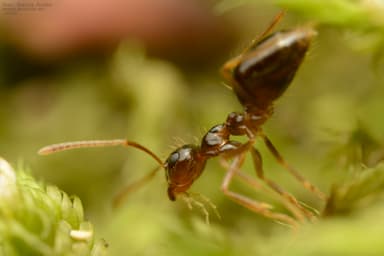
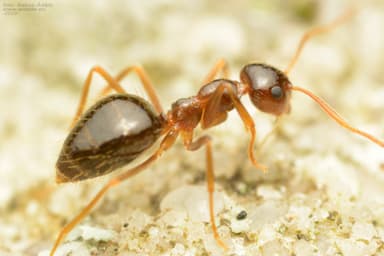
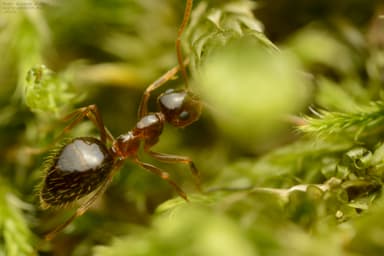
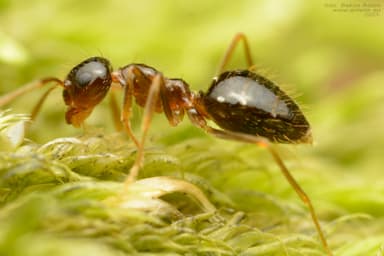
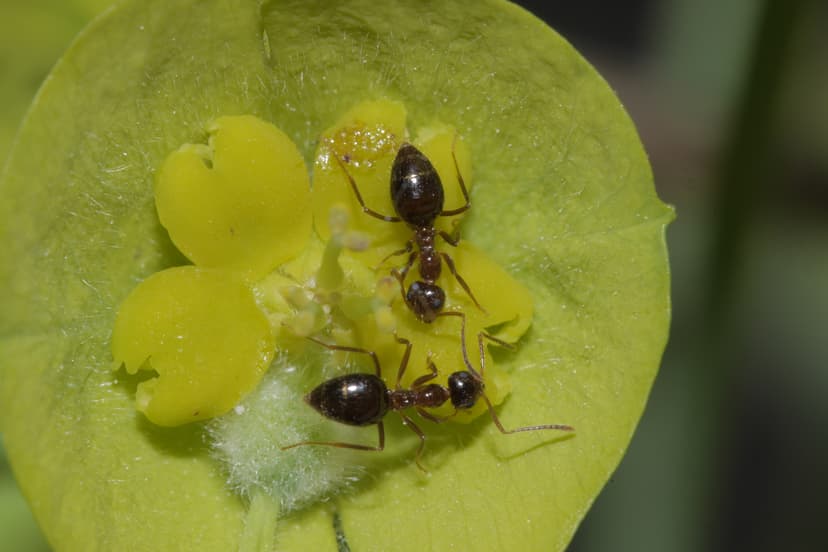
Prenolepis nitens, the elegant false honey ant, is a jewel of the temperate ant world, captivating keepers with its glossy, two-toned body and unusual seasonal rhythms. Workers measure a petite 3.5 to 4.5 millimetres and gleam with a dark, polished head and gaster set against a warm amber thorax, while the queen is a more robust 8 to 10 millimetres, often deeper in colouration. This is a monomorphic species with a single worker caste; there are no distinct soldier or major forms. Mature colonies can reach a modest 2,000 individuals, making them a manageable display species. What truly sets P. nitens apart is its behaviour as a false honey ant — certain workers become living storage pots, their crops engorged with sugary liquid, a trait shared with its better-studied North American cousin Prenolepis imparis (Tschinkel 1987). These ants are also famous for their cold-season activity. In their native Eurasian woodlands they often forage at temperatures that send other ants into torpor, a quirk that brings the colony’s most dynamic period during the crisp days of spring and autumn.
This species sits at an intermediate care difficulty, primarily because it demands a faithfully executed hibernation period each year. While day-to-day husbandry is straightforward, the commitment to a long, stable winter chill means P. nitens is best suited to keepers who already have a few months of general ant-keeping under their belts, or at least the confidence to manage a cooling setup. If you enjoy a species that follows a pronounced seasonal storyline — weeks of quiet brood rearing, sudden bursts of foraging when temperatures dip, and then a true winter rest — the false honey ant will reward you richly. For complete beginners, better to gain experience with more forgiving species first, but anyone willing to invest in a small wine cooler or a dedicated hibernation space will find the rhythm deeply satisfying.
Housing should mirror the cool, well-ventilated soil environments these ants naturally inhabit. A formicarium with a moisture gradient works best: one end of the nest kept at 50–70% humidity while the other is slightly drier, giving workers choice. Nest materials can range from plaster to sand-clay blends or even a naturalistic loam-filled terrarium, as P. nitens will happily excavate tunnels in suitable substrate. Temperature across the main nest and foraging arena should be maintained between 18 and 26°C, though a gentle drop at night is beneficial. Avoid excessive heat; these ants thrive in the mild range and will retreat deep into their chambers if the nest becomes too warm. A temperature-regulated mat on one side of the nest, not covering the entire floor, allows them to self-regulate. An outworld with a thin layer of sand or coconut fibre and a few twigs for climbing completes the setup. Because they are escape artists by nature, a tight-fitting lid and a reliable PTFE barrier are essential.
Feeding Prenolepis nitens is a study in their carbohydrate-first metabolism. Like all false honey ants, they rely heavily on liquid sugars to fuel their foraging and to fill the distensible crops of their replete workers. Offer a constant supply of sugar water, honey water, or a commercial ant nectar in a small feeding tube or on a cotton pad. For protein, provide freshly killed fruit flies, tiny crickets, or chopped mealworm segments two or three times a week, scaling the amount to colony appetite. Remove uneaten insect pieces after a day to prevent mould. Fresh water, either via a test tube setup or a water-filled tower, should always be available. You will notice that workers gorge themselves on sugars, their gasters swelling into translucent amber beads — a sign of a well-fed colony and a behaviour that gave these ants their common name. During periods of active brood rearing, the demand for protein will spike, so watch the larvae; bigger batches mean a hungrier kitchen.
Hibernation is not optional for P. nitens — it is the biological clock that drives the entire colony cycle. The species requires a sustained winter rest at around 5°C for a minimum of three to four months. Begin mimicking autumn in late October by gradually reducing the nest temperature over two weeks, then transfer the formicarium to a fridge, wine cooler, or cool basement that can hold a steady 5°C. Lightly moisten the nest so it doesn’t dry out completely, but do not feed during the deep cold phase; the ants will cluster motionless with their queen. In early spring, reverse the process by slowly warming the colony back to room temperature. Once activity picks up, offer a drop of sugar water and a small protein meal. The research of Tschinkel (1987) on Prenolepis imparis showed that colonies that do not hibernate eventually stop brood production and dwindle, and available observations on its Eurasian congener strongly suggest the same is true here. Neglect this step and you risk losing the queen.
When your Prenolepis nitens colony first arrives, give them peace to decompress from the journey. Connect their shipping tube to a small, darkened nest space and let them move in on their own; resist the urge to prod. For the first 24 hours, offer only a tiny dab of sugar water near the entrance and ensure humidity remains within the 50–70% window. The queen should soon settle into a chamber, and workers will begin exploring. Wait a full day before offering the first protein — a pre-killed fruit fly or similar — and observe from a distance. Healthy workers will immediately investigate the sugar source and may start filling their crops within minutes. Watch for excessive huddling near the water source, which can indicate dehydration, and for workers being lethargic or refusing to feed, which may signal temperature stress. If the colony was shipped during their natural hibernation window, they might already be slow; in that case, introduce them directly to a chilled hibernation setup as per the species’ seasonal cues. After the initial settling period, your false honey ant colony will soon show you why their quiet elegance and winter-active nature have earned them a devoted following among temperate ant enthusiasts (Wheeler 1930).