Plagiolepis
Plagiolepis pygmaea
Nuptial Flight Calendar
Flight months: Jun, Jul, Aug, Sep
Care Guide
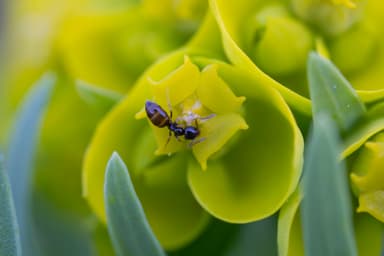
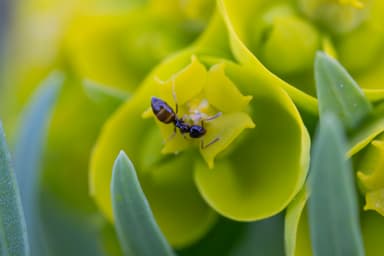
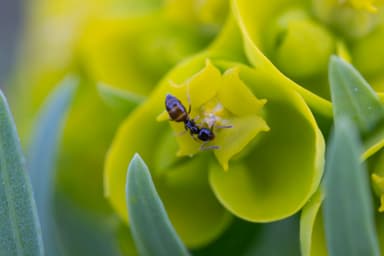
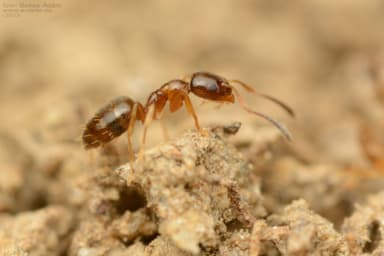
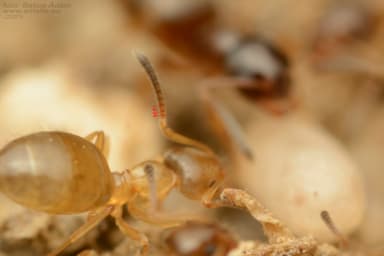
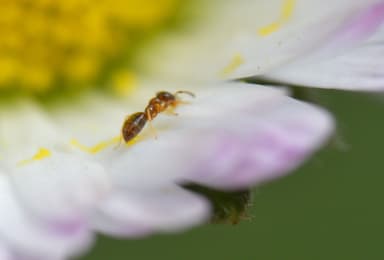
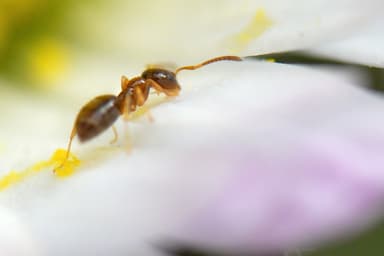
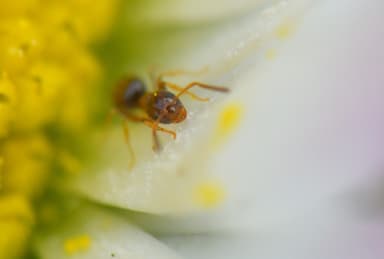
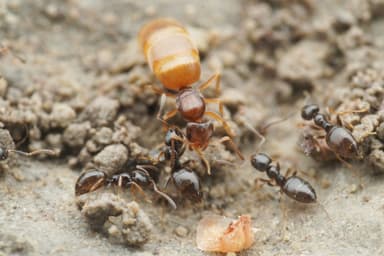
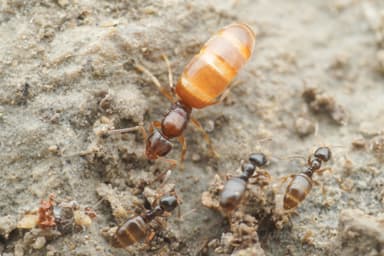
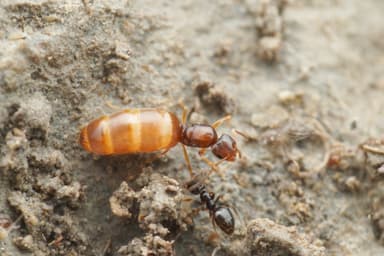
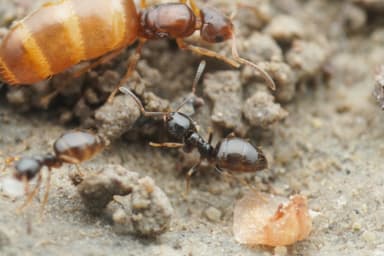
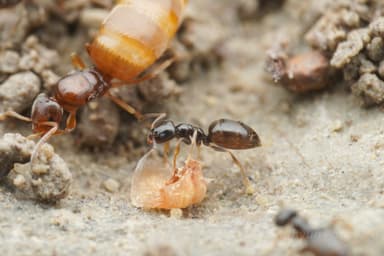
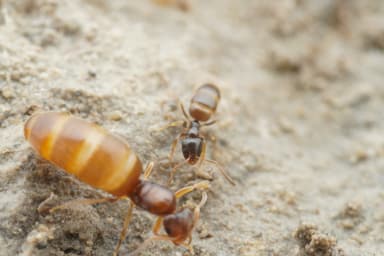
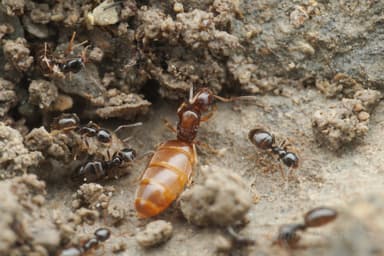
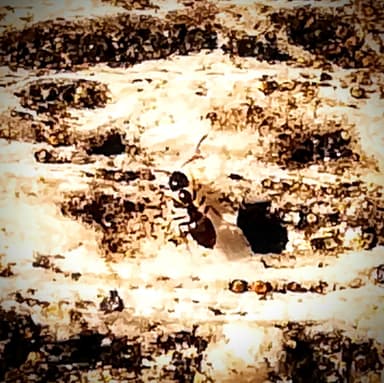
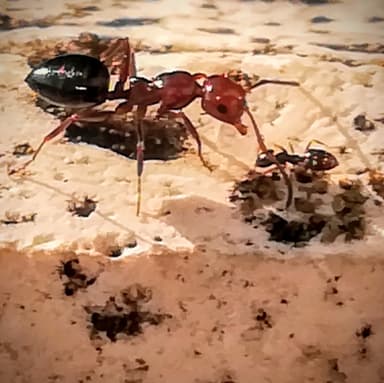
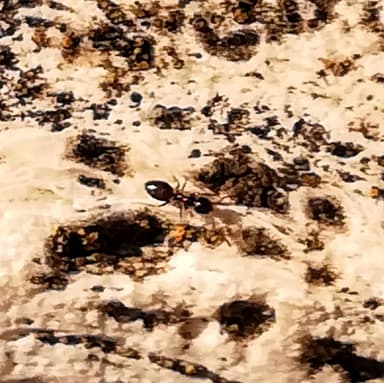
Plagiolepis pygmaea, often called the pygmy ant, is a marvel of miniaturization that captivates keepers with its delicate proportions and industrious nature. Queens measure an unassuming 4 to 5 millimetres, while the workers are truly minute at just 1.5 to 2 millimetres, ranking them among Europe’s smallest ant species (Seifert 2018). The workers are monomorphic, forming a single minor caste, and mature colonies can swell to around 10,000 individuals. This ant’s natural range stretches across the Mediterranean basin, but it is best known from the sun‑baked scrublands of Southern Europe, where nuptial flights occur on warm, humid afternoons between June and September, often following summer rain. What makes P. pygmaea so intriguing is not just its Lilliputian scale but its mode of colony founding: unlike claustral species, it reproduces by budding, meaning new colonies are formed when a group of workers and one or more queens splits from the mother nest. This social strategy allows for rapid expansion and makes the growth of a nascent colony a delight to observe, as small worker groups cooperate seamlessly from the start.
This is a beginner‑friendly species, but it comes with one non‑negotiable demand: escape‑proof housing. Because of the workers’ tiny size, even minuscule gaps in a setup can become thoroughfares. For a careful keeper, however, this presents more of an engaging challenge than a true hurdle. P. pygmaea is neither aggressive nor prone to stinging, and it is forgiving of minor husbandry fluctuations, making it an excellent introduction to ant keeping for those who are detail‑oriented. Patience is rewarded, as the colony’s rapid budding can lead to a thriving, multi‑queen society that provides endless activity inside the nest. The primary caution is to avoid any husbandry that might let workers roam freely; a well‑sealed outworld is essential, but once this is secured, the day‑to‑day care is pleasantly low‑stress.
For housing, a compact nest with tight joins and fine‑mesh ventilation is critical. Plaster, ytong, or glass nests work beautifully, and a temperature gradient between 20 and 28 °C should be provided, typically by placing a heat mat under one portion of the nest. This allows the ants to self‑regulate brood development. Humidity requirements are modest—between 40 and 60 percent relative humidity—which conveniently aligns with typical indoor levels in most homes. A small external water source, such as a cotton‑plugged water tube, is sufficient to maintain hydration, but avoid oversaturating the nest to prevent drowning accidents. In the outworld, a thin layer of sand or a sand‑loam mix mimics their natural foraging ground and provides a safe surface for depositing waste; additional decoration is optional. The outworld should be completely sealed with a tight‑fitting lid or a double barrier of fluon and olive oil, as workers can sometimes defy a single vertical barrier if it dries unevenly. Lighting can be ambient room light, though the ants prefer darker nest areas—red film over the nest glass lets you observe without disturbing them.
Feeding such diminutive ants requires a little finesse. For protein, offer pinhead crickets, fruit flies, or springtails twice a week, ensuring prey items are freshly killed or frozen‑thawed and cut into minuscule pieces if needed so that workers can transport them. Carbohydrates are eagerly received: a tiny droplet of diluted honey, sugar water, or maple syrup placed on a small piece of aluminium foil or a plastic tray prevents the ants from becoming stuck. Because workers are so light, even surface tension can be a hazard, so avoid deep pools of liquid food. Always keep a clean water source in the form of a test‑tube drinker. In nature, P. pygmaea avidly tends aphids for honeydew (Seifert 2018), and while offering live aphids is impractical for most keepers, the ants’ relish for sugary secretions is a constant that makes feeding time a spectacle of rapid recruitment.
Hibernation is mandatory for this species if you wish to maintain a healthy, long‑lived colony. In the Mediterranean climate, winters are mild but distinct, and the ants enter a diapause that resets their internal clocks. Over three to four months—typically November through February—they should be kept at around 10 °C. A wine cooler or a cold cellar works perfectly. Gradually reduce feeding in late autumn to allow the ants to clear their crops, then lower the temperature in steps. During diapause the colony will be sluggish and may cluster tightly; check monthly that the water supply is not dried out. When spring arrives, raise the temperature slowly over a week to avoid shock. Skipping this cool period can lead to reduced brood production, shorter queen lifespans, and a general failure to thrive.
The first days after acquiring your colony are about providing a stress‑free transition. Whether you receive a newly budded group in a test tube or a more established colony in a travel container, place the setup in a dim, quiet spot at about 24 °C and resist the urge to examine them for at least 48 hours. For a test‑tube foundation, that first micro‑society typically consists of one or more queens and a dozen or so workers. Offer a minuscule dab of sugar water on the second or third day by touching a toothpick to the edge of the tube’s cotton plug, and introduce a single fruit fly only after they have taken the carbohydrates and appear calm. Watch for agitated behaviour like workers frantically tugging at the cotton; this often subsides once they settle. If you plan to transfer them to a nest, wait until the worker count exceeds roughly 20 individuals, and always connect the new nest via a short tubing bridge, allowing them to move at their own pace. Check daily for escaped ants, remove uneaten food promptly to prevent mould, and within a few weeks you will witness the steady rhythm of a thriving Plagiolepis pygmaea colony.