Polyergus
Polyergus lucidus
Nuptial Flight Calendar
Care Guide
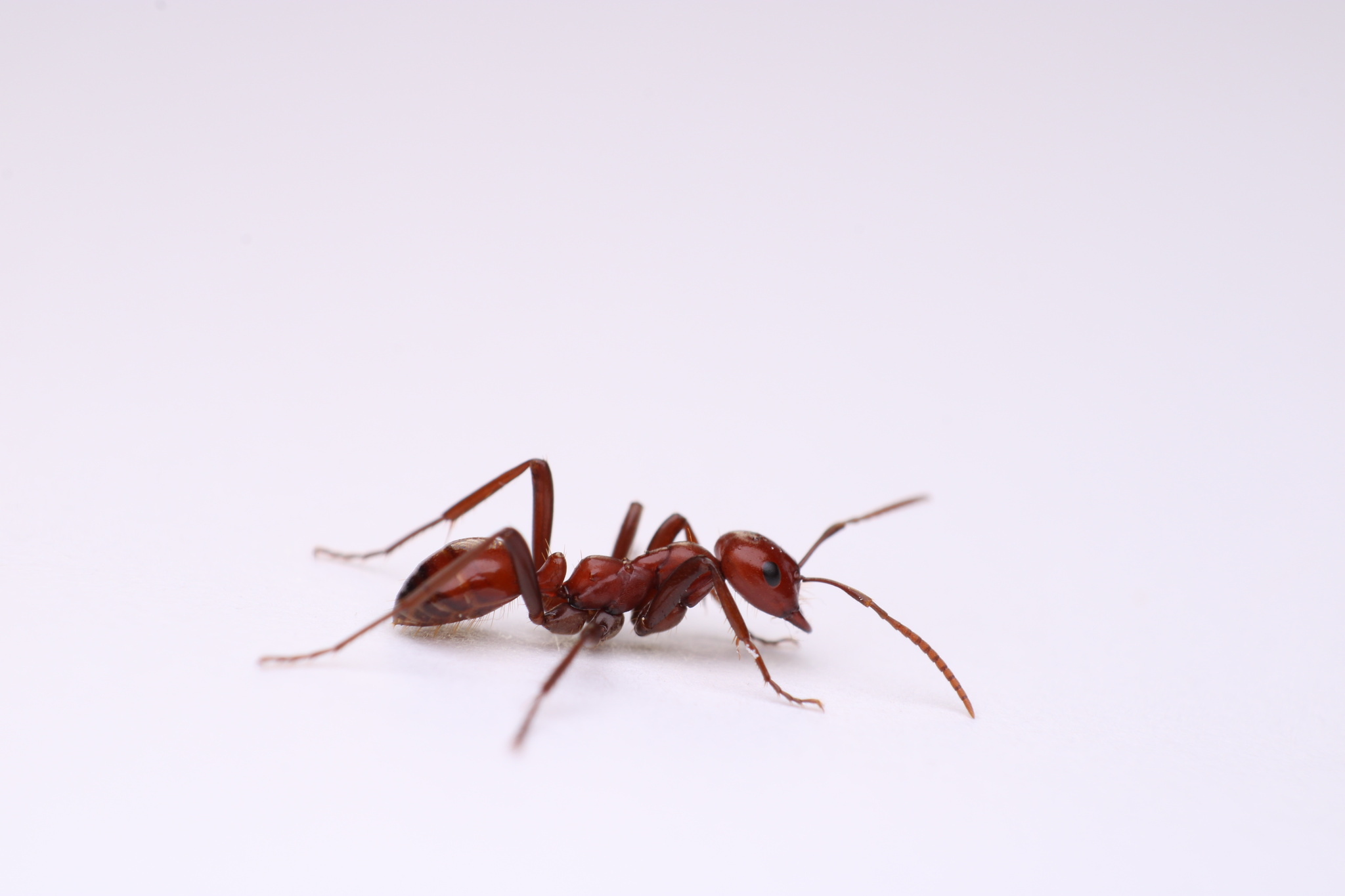
Polyergus lucidus is a master of deception and a true specialist among ants. The queen reaches 8–10 mm in length, while workers are slightly smaller at 5–7 mm. Unlike typical ant species, these ants do not have workers capable of foraging or caring for brood on their own. Instead, Polyergus lucidus is an obligate social parasite — meaning that every colony depends entirely on enslaved workers from host species, most commonly from the genus Formica. The queen initiates a new colony by infiltrating a host nest, killing the resident queen, and then using the host workers to raise her own brood. Over time, the colony replaces the host workers with Polyergus workers, but the enslaved Formica continue to perform all essential tasks like foraging, feeding the brood, and nest maintenance.
One of the most striking behaviors of Polyergus lucidus is their raiding expeditions. Groups of workers will march in coordinated columns to nearby Formica nests, overwhelm the defenders, and steal host pupae. These pupae are brought back to the nest, where they emerge as new host workers that join the slave workforce. This raiding cycle is essential for colony growth, as the Polyergus workers themselves cannot feed or clean the nest. In the wild, a mature colony can number between 2,000 and 10,000 individuals — a mix of sleek, reddish-brown Polyergus workers and their larger, darker Formica slaves. Their diet consists primarily of insects and sugar water, but the enslaved workers will also collect protein sources and manage the nest environment.
Care difficulty
Keeping Polyergus lucidus is not for beginners. This is an expert-level species that requires a deep understanding of social parasitism and host ant biology. The queen cannot found a colony without a constant supply of host pupae, so keepers must either provide a steady source of Formica pupae or maintain a separate host colony to support the Polyergus. Even after the colony is established, regular raiding opportunities or artificial introduction of host pupae are necessary for continued growth. Without host workers, the colony will quickly decline. Patience and meticulous observation are essential.
Housing
A formicarium for Polyergus lucidus should be spacious enough to accommodate both the parasite ants and their enslaved workers. The nest area requires humidity levels between 50–70% and temperatures around 20–26°C. A separate foraging arena is needed for feeding and for simulating raiding events. During winter, a hibernation period at 6°C is required for several months to maintain a healthy reproductive cycle. The nest must be kept dark and stable, as these ants can be sensitive to disturbances.
First days after purchase
Upon receiving your Polyergus lucidus colony, place them in a quiet, dimly lit area. Do not disturb them for at least 24–48 hours. Ensure the nest has adequate moisture and that a small number of host workers (if provided) are present. Offer a drop of sugar water and a piece of insect protein, but do not overfeed. Observe the colony’s behavior closely — any sign of stress or loss of host workers should be addressed immediately. Make sure the ants can settle into their new environment before attempting any raiding procedures. With careful attention, this fascinating slave-making species will reward you with a unique window into one of nature’s most complex social strategies.