Meranoplus
Meranoplus castaneus
Care Guide
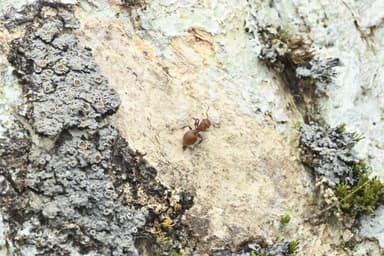
Meranoplus castaneus is a captivating species that might not catch your eye at first glance, but once observed closely, its unique adaptations become unmistakable. These ants belong to a group often called shield ants or turtle ants, thanks to their distinctive, flattened bodies with broad, shield-like heads and a pronounced overhang of the pronotum. This morphology is an adaptation for wedging themselves into tight crevices and defending against predators—when threatened, they tuck their legs and antennae beneath this carapace, effectively becoming a living pebble. Colonies are moderate in size, numbering between 100 and 500 workers, with a single queen measuring 6 to 7 mm. Workers are smaller, ranging from 3 to 4.5 mm, and show little size variation; instead, the colony’s charm lies in its deliberate, careful movements and cryptic foraging style.
Care difficulty
Keeping Meranoplus castaneus is considered intermediate. While their claustral founding and straightforward dietary needs are approachable, these ants require a bit more attention to microclimate and stress management than beginner-friendly species. They are not aggressive but can be delicate, especially during the early colony stages. Ensuring stable humidity and temperature is key—they thrive between 24 and 28°C with humidity around 50 to 70 percent. Because they do not hibernate, they can be kept active year‑round, making them a pleasant option for keepers who want a consistent routine.
Housing
A formicarium for Meranoplus castaneus should prioritize shallow nesting spaces with small, dark chambers that mimic the narrow gaps they occupy in nature. They appreciate a substrate layer of sand or fine clay, as they will often excavate small cavities. The outworld should offer a variety of hiding spots—bark, flat stones, or leaf litter—to let them feel secure while foraging. Regular moistening of the nest area is essential, but avoid waterlogging; a humidity gradient allows workers to choose their preferred zone. These ants are sensitive to vibrations and bright light, so place the setup in a quiet, dim area. Their diet is omnivorous: provide small insects like fruit flies or pinhead crickets for protein, and offer sugar water or honeydew on a regular schedule. They will happily tend to sugar sources, so a feeder with a cotton wick works well to prevent drowning.
First days after purchase
Upon receiving your colony, give them time to settle. Place the formicarium in a still, dark spot and resist the urge to peek or tap the glass. For the first few days, only check to ensure they have access to water and a small drop of sugar water. If the queen is still inside her test tube, leave her undisturbed until she starts laying eggs. Once you see the first nanitics, you can begin offering tiny portions of insect protein. Minimize vibrations and sudden light changes—Meranoplus castaneus can be nervous when first introduced to a new home. With patience, you will be rewarded by watching these living shields move through their world with a quiet grace that sets them apart from many more boisterous ant species.