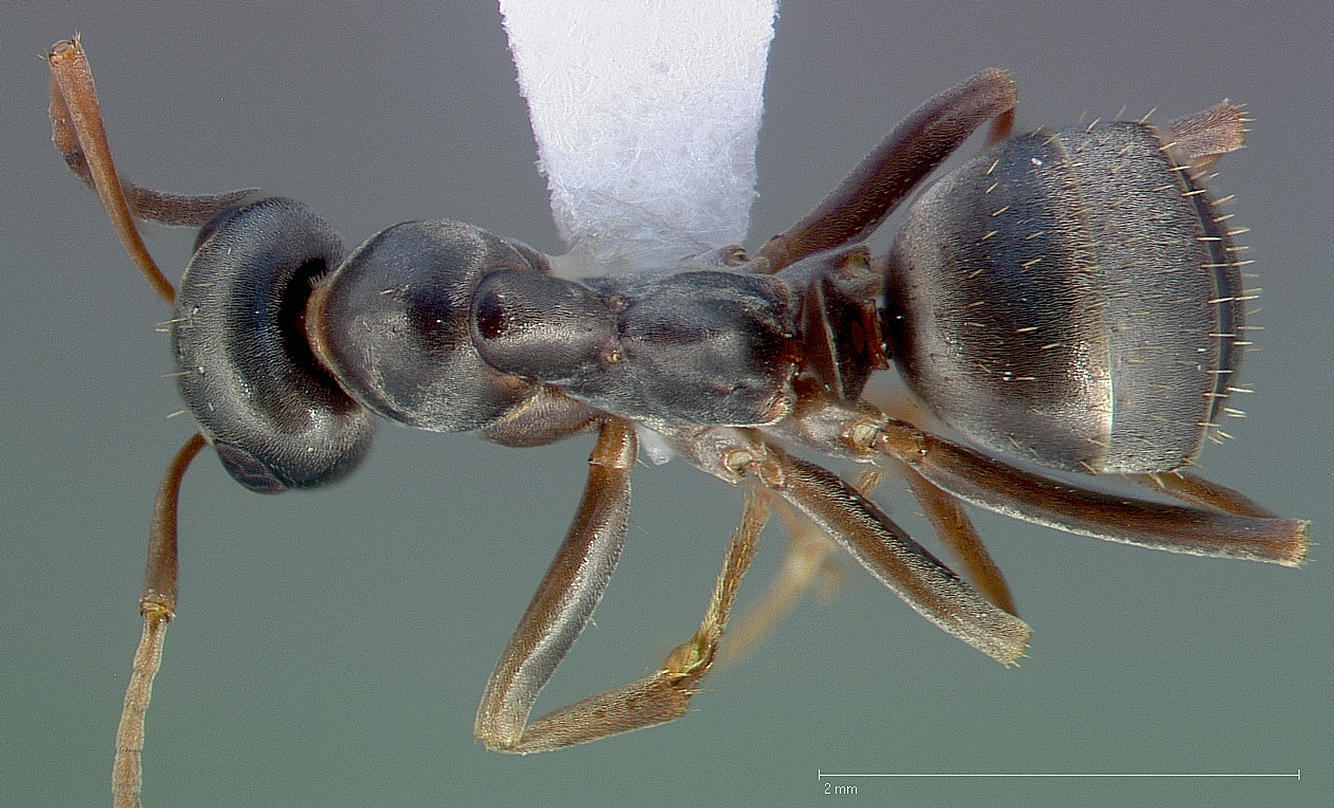
Formica
Formica podzolica
Nuptial Flight Calendar
Care Guide
Formica podzolica is a hardy North American species known for building impressive thatched mounds in meadows and open forests. The queen, measuring 8 to 10 mm, is only slightly larger than the largest workers, and the colony exhibits modest size variation among workers (4–7 mm). What truly sets this species apart is its energetic, diurnal foraging style and its close association with aphids. These ants are natural ranchers—they tend aphids for honeydew, which forms a significant part of their diet alongside insect protein and sugary liquids. Colonies can grow to several thousand workers, and their activity above ground makes them particularly rewarding to observe.
Care difficulty
Formica podzolica is best suited for intermediate keepers. While claustral founding simplifies the early stages, the colony’s need for a pronounced hibernation period and its sensitivity to heat and dryness require attention. They are not as tolerant of low light or vibrations as some beginner species, but they are far from fragile. Once established, they are robust and fast-growing, with workers eager to explore any new territory you give them.
Housing
A formicarium with good ventilation and moderate moisture is ideal. These ants prefer temperatures between 18 and 24°C, and humidity levels of 50–70%—slightly drier than many tropical species but not desert-dry. The nesting area should offer several chambers to allow the colony to expand, as they dislike cramped quarters. A test tube setup works for founding, but after the first winter hibernation, they will benefit from a small acrylic or plaster nest. The outworld should be spacious, with plenty of vertical climbing surfaces and a source of dry sand or soil for mound-building enrichment. Crucially, Formica podzolica must undergo a genuine winter diapause. From late autumn to early spring, reduce temperatures to around 5°C for at least three months. Without this cold period, the queen may stop laying eggs and the colony’s health will decline. Feeding is straightforward: offer a rotation of live or frozen insects (crickets, flies, mealworms) along with sugar water or honey water. They will also appreciate fresh aphids or small caterpillars if available.
First days after purchase
When your Formica podzolica colony arrives, place the container in a dim, quiet spot and let them settle for at least 24 hours. Resist the urge to peek constantly—these ants are more sensitive to disturbance during the first few days than they will be later. Ensure the test tube or nest has a clean water reservoir and a small drop of honey water on a piece of foil. Do not offer protein until the ants are calmly exploring their surroundings. If the colony is very small (queen with a handful of workers), keep them in the test tube setup for the first month. After they accept your presence, you can gradually connect the outworld. Watch for signs of stress such as clustering at the nest entrance or refusing food; if this occurs, provide more darkness and stillness. With patience, you will be rewarded by their confident, sun-loving foraging displays.