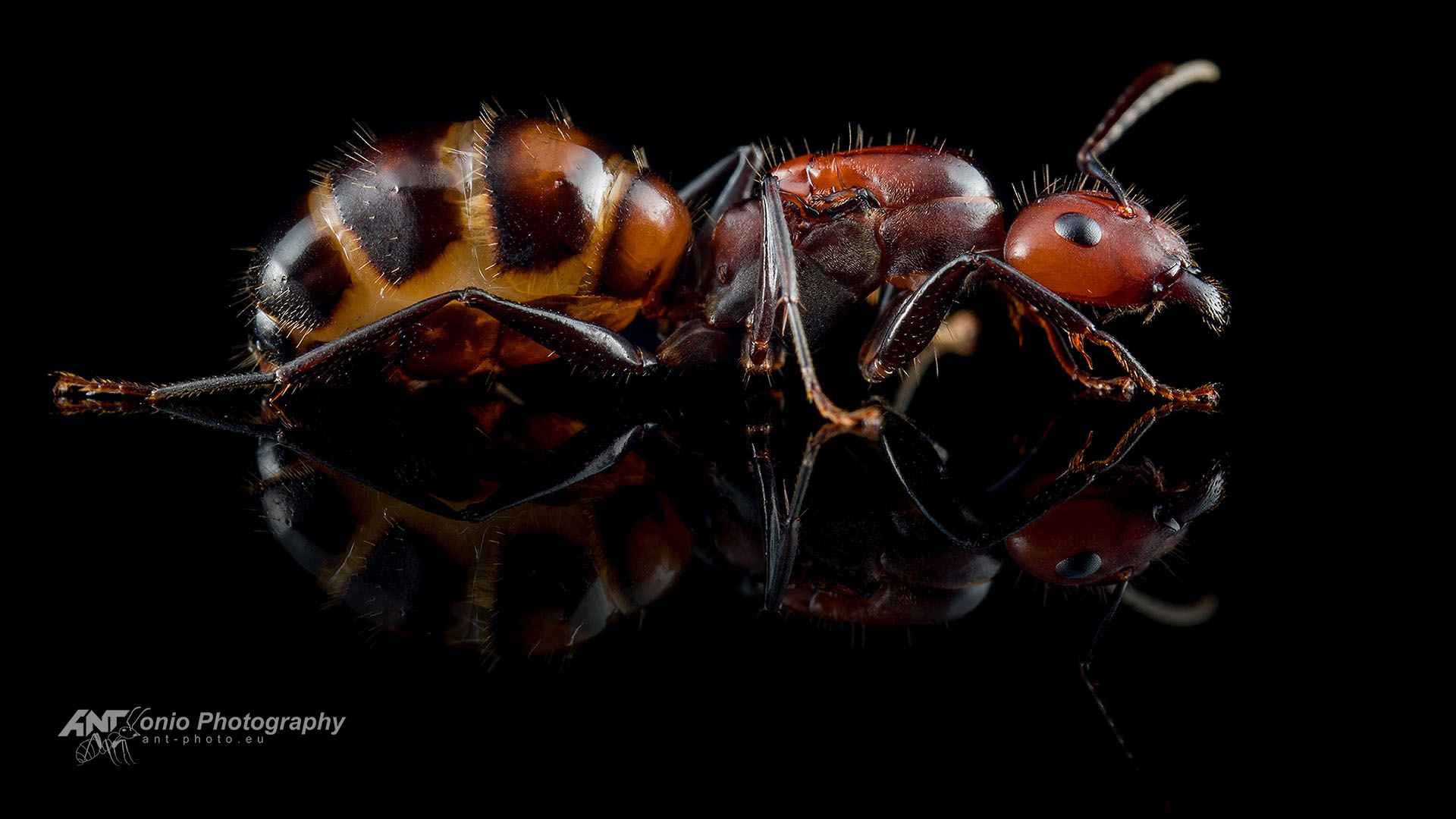
Camponotus
Camponotus nicobarensis
Nuptial Flight Calendar
Care Guide
Camponotus nicobarensis is a stunning and highly adaptable ant species native to Southeast Asia, prized by hobbyists for its striking color contrast – a deep orange-red head and thorax paired with a dark, almost black gaster. This species displays clear size polymorphism within the worker caste. The queen, measuring between 12 and 15 mm, is the largest individual in the colony. Workers range from 5 mm minor workers to robust major workers reaching up to 11 mm. These larger workers act as defenders and foragers, while the minors handle brood care and internal tasks. The colony grows steadily, eventually reaching between 2,000 and 10,000 individuals – a size that is both impressive and manageable for a dedicated beginner.
One of the most appealing traits of Camponotus nicobarensis is their claustral founding method. The queen seals herself into a founding chamber and raises her first generation of workers entirely on her own fat reserves and wing muscle tissue, requiring no feeding during this initial phase. Once the first workers emerge, the colony quickly becomes active and bold. These ants are opportunistic omnivores, thriving on a diet of insects (crickets, mealworms, roaches) alongside sugar water, honeydew, and other sweet liquids. They are enthusiastic feeders and will readily accept a variety of protein and carbohydrate sources.
Care difficulty
Keeping Camponotus nicobarensis is straightforward, making them an excellent choice for beginner ant keepers. They are resilient, grow without a diapause, and adapt well to captive conditions. Their tropical origins mean they do not require hibernation, simplifying year-round care. The main requirements are stable warmth and humidity – aim for a nest temperature of 24–28°C and ambient humidity of 60–80%. A heat mat placed along part of the nest or outworld will help create a thermal gradient, allowing the ants to choose their preferred microclimate.
Housing
A formicarium with a modular design works best for this species. Start with a small test tube setup or acrylic founding chamber, then expand to a larger nest and outworld as the colony grows. Camponotus nicobarensis appreciate slightly humid nesting areas; moistening part of the substrate or using a water reservoir in the nest helps maintain the humidity needed for brood development. The outworld should offer a clean feeding area with easy access to sugar water (in a test tube or feeder) and a supply of small insects. These ants are not particularly sensitive to light or vibrations, but they do benefit from a quiet, stable location – especially during the early stages when the colony is small and vulnerable.
First days after purchase
After receiving your Camponotus nicobarensis colony, carefully transfer the queen and workers into a pre-prepared founding setup (test tube with water cotton or a small nest). Place the container in a warm, dark, and quiet spot. Give the ants a full day to acclimatize without disturbance. On the second day, check that the queen is comfortable and that workers are tending the brood. Provide a small drop of sugar water and a tiny piece of insect protein – but avoid overfeeding. Minimize handling and bright light for the first week. Once you see the first workers actively exploring, you can gradually introduce a larger outworld and begin regular feeding schedules. With patience and stable conditions, your colony will soon transform into a vibrant, fast-growing community that showcases the best of tropical carpenter ant keeping.