Nylanderia
Nylanderia bourbonica
Nuptial Flight Calendar
Flight months: May, Jun, Jul, Aug, Sep
Care Guide
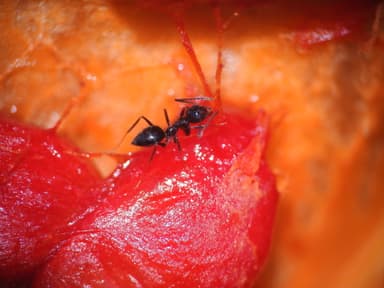
Few ants embody the spirit of the bustling, tropical tramp species quite like Nylanderia bourbonica. Queens are a modest 4.5–5.5 mm in length, and their monomorphic workers, the colony’s sole caste, range from just 2.5–3 mm. These tiny, brownish ants move with the jerky, hyperactive gait characteristic of the “crazy ant” complex, making them endlessly entertaining to observe. Though colonies tend to cap at around 3,000 individuals—a comfortable size for the home keeper—their growth is remarkably rapid from a single claustral queen. What makes this species particularly interesting is its almost weedy adaptability: from its native Old World tropics it has spread pantropically through human commerce, a story mapped by Wetterer (2011) and given clearer taxonomic context by LaPolla et al. (2010). For the hobbyist, N. bourbonica offers a front-row seat to the restless energy and relentless productivity of a small but mighty social insect society.
Care difficulty is squarely at the beginner level, making this an excellent entry point for anyone new to the hobby or a satisfyingly undemanding addition to an experienced collection. These ants thrive in the warmth and humidity most homes easily provide; target a temperature band of 22–30 °C and a relative humidity of 60–80%, conditions that mirror their native tropical and subtropical range recorded in GBIF occurrence data. For housing, a simple test tube setup is perfect for the founding queen. As the colony grows to several dozen workers, upgrade to a small formicarium—plaster, ytong, or grout nests that wick moisture work wonderfully. A thin layer of sand or coconut coir in a foraging arena is appreciated but not mandatory. Because these ants are minuscule and exceptional climbers, escape-proofing is essential: a fluon barrier, an oil-based moat, or a meticulously sealed lid will save you from frequent marathons across your desk.
Diet is refreshingly straightforward. N. bourbonica is an opportunistic omnivore that responds to feeding with immediate, visible recruitment. Offer carbohydrates daily or every other day in the form of sugar water, honey water, or a commercial ant nectar—small droplets are all that’s needed. For protein, fruit flies (freshly killed to avoid eclosion in the nest), tiny cricket pieces, or mealworm segments are eagerly taken, and many keepers find that a tiny speck of moistened cat food provides a convenient backup. Fresh water must always be available, either through a test tube reservoir or a water tower, as these ants can dehydrate quickly despite their high humidity tolerance. Prompt removal of leftovers after 24–48 hours keeps mold and mites at bay and maintains a hygienic nest environment.
Hibernation is not required, which is a practical joy for indoor keepers. Nylanderia bourbonica hails from consistently warm climates and possesses no diapause instinct whatsoever. As long as you maintain stable temperature and food, the colony will remain fully active year-round—workers foraging, queen laying, and brood developing in an unbroken cycle. This means no refrigerator antics, no chilly basement retreats, and no seasonal slump in the spectacle of colony life.
When your N. bourbonica colony first arrives, restraint is your best tool. You will likely receive a queen with a small retinue of workers in a shipping tube. Place the tube in a quiet, dim spot within their preferred temperature range and leave them completely undisturbed for 24 hours. After this settling period, offer a tiny drop of sugar water on a small slip of foil near the tube entrance; watch from a distance to avoid alarming them. Hold off on protein until the colony appears relaxed—usually by day two or three—and then introduce a pre-killed fruit fly. In these delicate first days, watch for signs of stress such as huddled, motionless workers or a queen that stops laying. A healthy colony will soon begin exploring with boldness, and within a week you should see fresh eggs and a widening foraging radius. If mold appears in the tube, avoid the temptation to dump them out; instead, simply attach a fresh tube with a short section of tubing and let them migrate on their own schedule. With minimal interference, N. bourbonica will quickly transform into a charismatic, low-maintenance companion, offering even the greenest keeper a vivid and forgiving window into the ant world.