Myrmecia
Myrmecia simillima
Nuptial Flight Calendar
Flight months: Jan, Feb, Nov, Dec
Care Guide
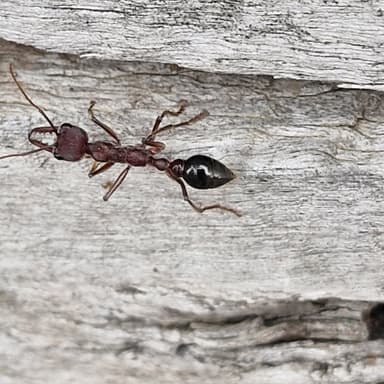
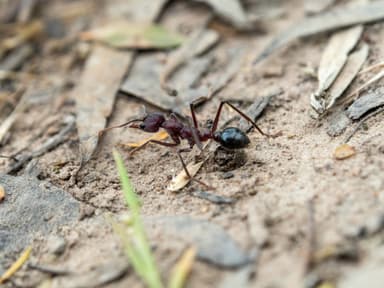
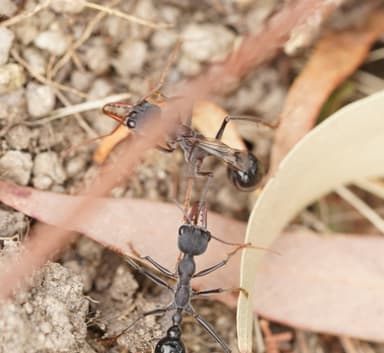
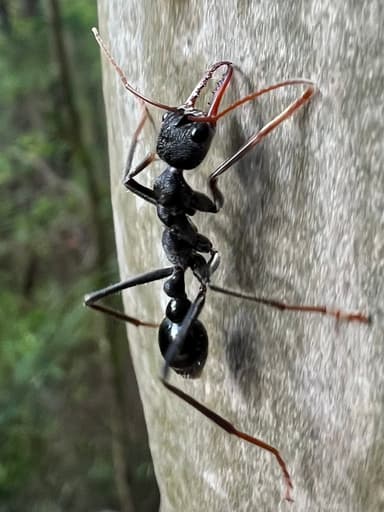
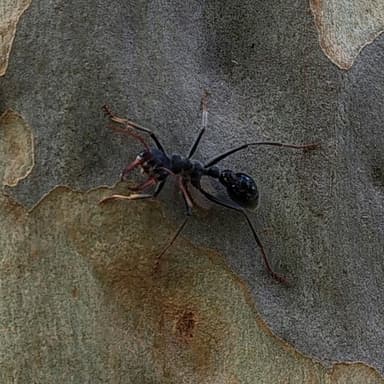
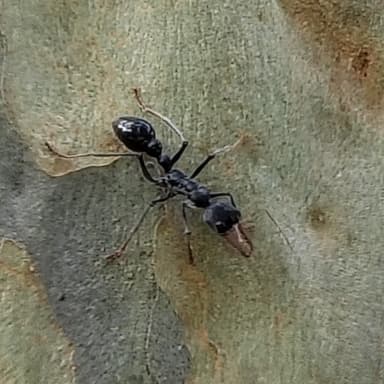
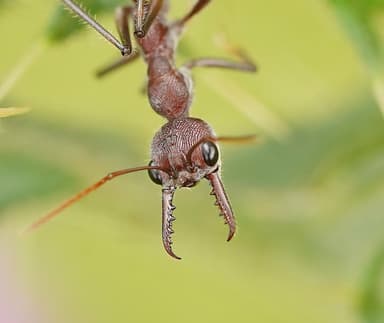
Myrmecia simillima is a striking representative of Australia’s iconic bull ants, a group renowned for their imposing stature and potent stings. Queens reach 18 to 22 millimeters, while the monomorphic workers range from 14 to 20 millimeters, all clad in a dark, robust exoskeleton with powerful mandibles and unusually large eyes. These visual hunters rely on keen eyesight and a formidably aggressive temperament to subdue prey, and mature colonies can contain up to a thousand individuals — a substantial number for a genus in which many species form much smaller societies. Their behaviour, blending primitive solitary foraging with a complex social structure, makes them a fascinating study. The species was included in Ogata and Taylor’s preliminary review and key (1991), and its native distribution spans a broad swath of the Australian continent, roughly between latitudes 10°S and 39°S and from the western coast to the eastern seaboard, occupying a range of sclerophyll woodland and coastal heath habitats.
This is a species for the expert ant keeper only. Its semi‑claustral founding mode demands that the newly mated queen leave the nest to hunt, making her particularly sensitive to disturbance and nutritional deficits during the critical founding weeks. Colonies are active, fast‑moving, and quick to defend themselves with a painful sting that can cause severe allergic reactions; escape‑proof housing and a confident, deliberate approach during maintenance are non‑negotiable. The care regimen requires precise environmental control and a deep understanding of bull ant behaviour, so beginners or even intermediate keepers are strongly advised to gain experience with more forgiving genera before attempting M. simillima.
Housing must accommodate the species’ thermophilic nature and its need for a distinct humidity gradient. Maintain the foraging area at 18 to 28°C, with a basking spot near the upper end where ants can warm themselves; the nest chamber should sit slightly cooler but never drop below 18°C. Relative humidity should fluctuate between 50 and 70 percent, achieved by a partially moistened plaster or grout nest block that allows the ants to choose their preferred microclimate. A deep layer of sandy loam or a clay‑sand mixture in the nest provides a digging substrate, though many keepers successfully use pre‑formed tunnels in a vertical formicarium. The outworld must be spacious, as these ants are active runners and can leap impressive distances; a tight‑fitting, weighted lid with fine‑mesh ventilation is essential to prevent escapes. Given their semi‑claustral founding, a founding queen requires only a small tube setup connected to a miniature foraging dish until her first workers eclose, at which point the fledgling colony can be moved to a modest nest.
A varied, high‑protein diet fuels the rapid brood development of M. simillima. Offer freshly killed or live insect prey such as crickets, roaches, and mealworms at least three times a week; workers will also accept chopped meat or hard‑boiled egg yolk on occasion. Carbohydrate sources like diluted honey, sugar water, or slices of sweet fruit replenish the adults’ energy reserves and should be provided in a shallow dish to prevent drowning. Water must be constantly available, either through a drinking fountain or by lightly misting one section of the foraging area. A semi‑claustral founding queen needs to be fed tiny portions of insect protein and a drop of sugar water every two to three days, as she does not have the internal reserves to raise her first brood unaided.
Hibernation is required for the long‑term health of the colony and must be carefully managed. Mimic the cool winter of their native range by gradually lowering the temperature to 12°C over a period of two to three weeks in late autumn. Keep the nest partially moist and the ants in darkness during this diapause, which should last at least eight to twelve weeks. Do not feed them during the coldest phase, but ensure a tiny water source remains accessible. When spring arrives, warm them slowly back to the active range and resume feeding with a small, easily subdued prey item.
When your M. simillima colony first arrives, place the transport container in a dim, quiet spot and allow the ants to settle for several hours — or preferably overnight — without disturbance. For a queenright colony, then introduce the nest and outworld, gently coaxing the ants into their new home with a brush; avoid sharp movements that may trigger defensive lunging. Offer a single small insect and a droplet of sugar water on the second day, observing from a distance to confirm that foraging occurs. A freshly caught founding queen should be given a similar acclimation period before being offered her first meal. Watch for signs of stress such as persistent pacing, refusal to eat, or frantic escape attempts, and reduce vibrations and light exposure if needed. With patience and meticulous attention to their environmental cues, this remarkable bull ant will reward the dedicated keeper with a window into one of the ant world’s most ancient and dynamic lineages.