Liometopum
Liometopum microcephalum
Nuptial Flight Calendar
Flight months: Jun, Jul, Aug
Care Guide
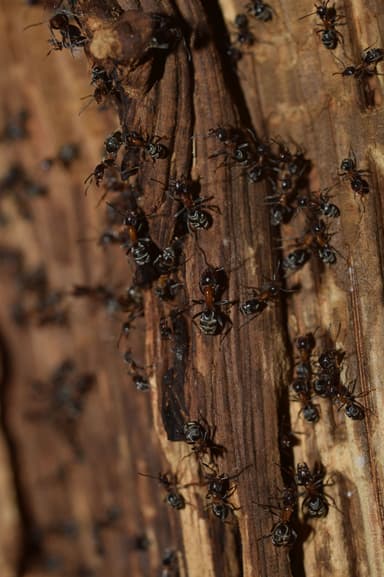
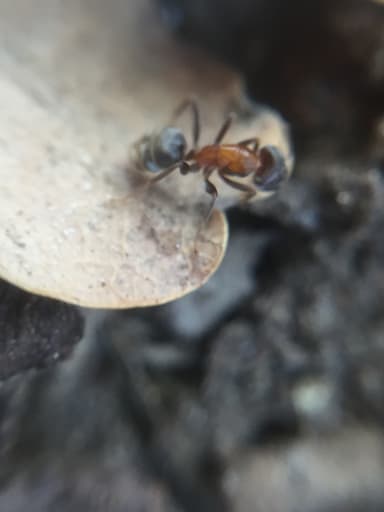
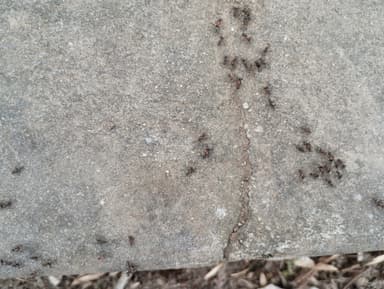
Liometopum microcephalum is the velvet tree ant of Central and Southern Europe, a striking species whose wild colonies carve their homes into the heartwood of ancient oaks and other deciduous trees. Queens measure a robust 12 to 15 mm, while workers display a distinct polymorphism that bifurcates into minor and major castes ranging from 4 to 9 mm, a trait that gives the colony a visibly tiered workforce. Mature colonies are legendary for their sheer numbers, often reaching up to a million individuals, and they blanket their tree-trunk territories with busy foraging trails in a coordinated swarm that can dominate an entire woodland floor (Castracani et al. 2008; Schlaghamersky & Omelkova 2007). For the myrmecologist-hobbyist, this species offers a rare window into the social complexity of a highly populous, arboreal ant, but it is precisely that scale and vigour that demands respect from its keeper.
This is very much an expert‑level species, and for good reason. Liometopum microcephalum colonies grow explosively once established, and their workers are agile, fast, and fiercely defensive; an escape from the foraging arena can turn into a domestic headache in minutes. The difficulty rating reflects not only the insect’s physical needs but the logistical challenge of housing a million-strong colony that will test the integrity of every barrier and seal. Only keepers with experience managing large, escape‑prone species and the willingness to invest in a custom, oversized setup should consider this ant. If you are not yet comfortable with the demands of species like Camponotus at the megacolony scale, it is wise to gain more practice before taking on L. microcephalum.
In captivity, the ideal home mimics the humid, temperate‑warm microclimate of a hollow tree limb. A large, well‑ventilated nest made from wood, cork, or a wood‑imitating ytong/plaster composite should be paired with a spacious foraging arena, as these ants are prodigious patrollers. Maintain a temperature gradient between 20 and 28°C within the nest, and keep ambient humidity steady in the 50–70% range; overly dry air causes brood desiccation, while stagnant dampness encourages fungal blooms. A partial substrate of sand and clay in the outworld, along with plentiful climbing structures, gives the ants the textured footing they prefer. Crucially, the nest must offer a moist retreat zone, achieved by regular, cautious watering of a plaster or ytong block. As the colony swells, you will need to connect additional nest modules; plan for this from the start to avoid stressful, emergency rehousing later.
Feeding this assertive ant presents little difficulty, but the sheer volume needed as the population grows can surprise even experienced keepers. In their natural range, L. microcephalum are avid tenders of aphids and scale insects, collecting copious honeydew, and they supplement this with a wide range of invertebrate prey. Offer a steady supply of small to medium‑sized live or freshly killed insects — crickets, roaches, and mealworms all work well — dusted with no pesticides. Carbohydrates can be provided via sugar water, honey, or a commercial ant nectar, always placed on a feeding tray to prevent sticky drownings. Fresh water must be permanently available in a test‑tube setup or a guarded drinking station, as the colony’s high metabolic rate makes dehydration a real threat in warm conditions.
A mandatory hibernation period is non‑negotiable for the long‑term health of this temperate species. When the days shorten in late autumn, gradually lower the nest temperature over a week or two until it stabilises at around 8°C. The ants will huddle into a tight, motionless cluster, and they should be kept in this chilled, dark state for roughly three to four months — typically November through to February — with only minimal moisture to prevent desiccation. A wine cooler or a dedicated ant‑fridge can provide this steady 8°C, while a domestic refrigerator is often too cold and fluctuating. Skipping or shortening this cold rest disrupts the queen’s egg‑laying rhythm and results in a weak, listless spring awakening; observations consistently show that hibernated colonies of this genus resume brood production far more vigorously (Petrakova & Schlaghamersky 2011).
When your Liometopum microcephalum colony first arrives, everything should be prepared in advance: the nest pre‑humidified, the arena barrier (fluon or a comparable escape‑proof coating) freshly applied, and the outworld darkened with a towel or red foil. Place the opened shipping container directly into the foraging arena and allow the ants to explore and relocate on their own terms; prodding or dumping will only provoke alarm and stinging responses. Offer a tiny blob of honey and a pre‑killed fruit fly from day one, but do not move the nest or expose it to bright light for at least 48 hours. Watch for excessive worker mortality or a refusal to take protein, which may indicate stress; a little patience normally resolves this. Once the first foragers are confidently scouting and the queen has settled into a chamber, you can begin the gradual, attentive routine that will reward you with one of the most spectacular colonies available to the private keeper.