Hypoponera
Hypoponera opacior
Nuptial Flight Calendar
Flight months: Jul, Aug, Sep
Care Guide
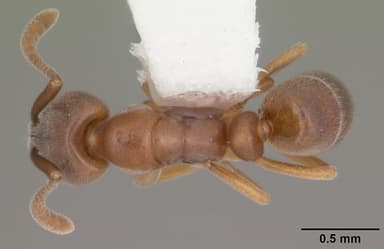
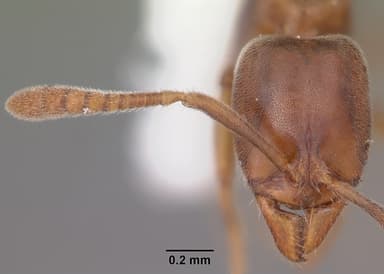
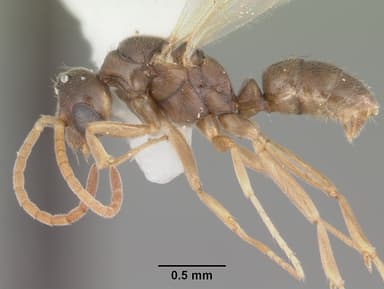
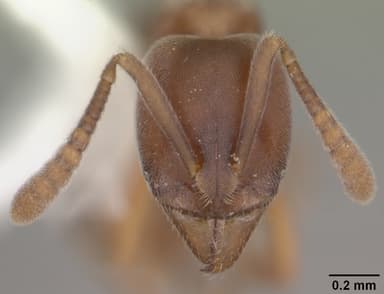
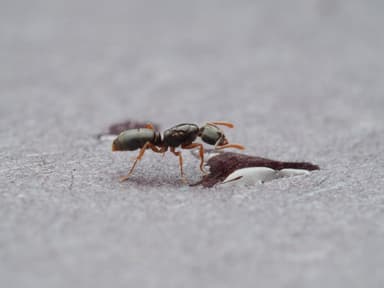
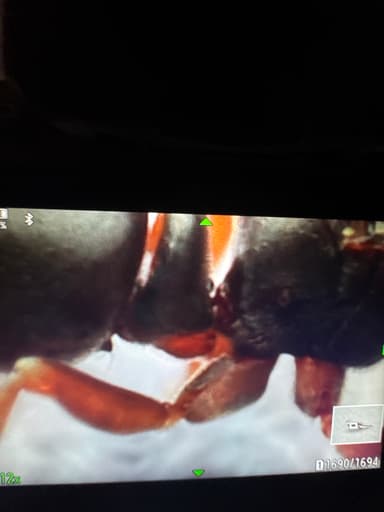
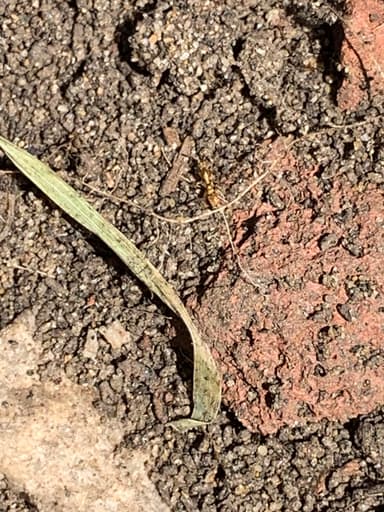
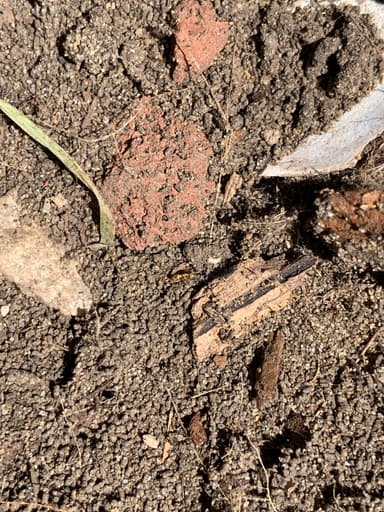
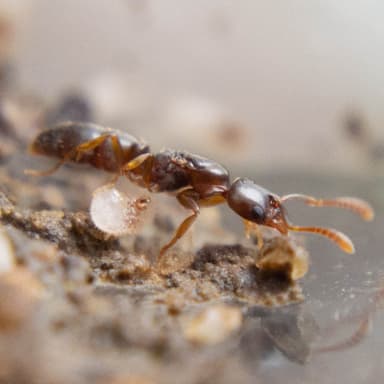
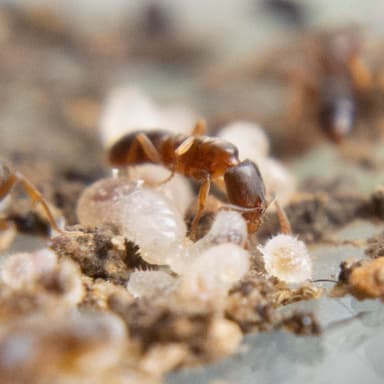
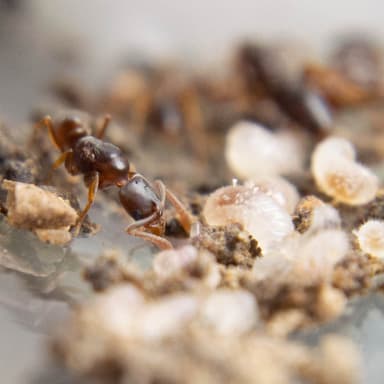
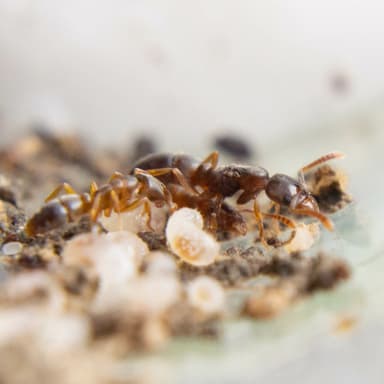
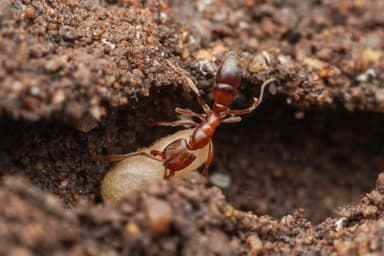
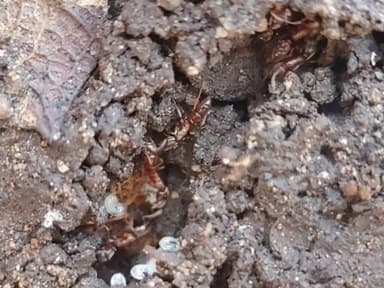
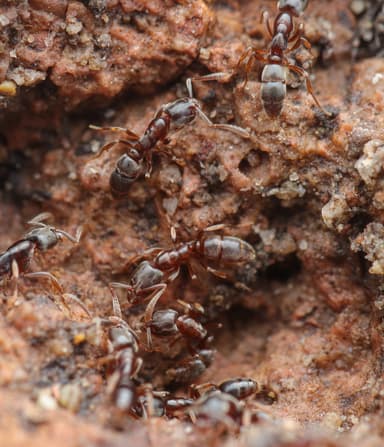
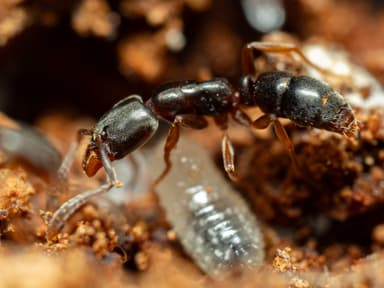
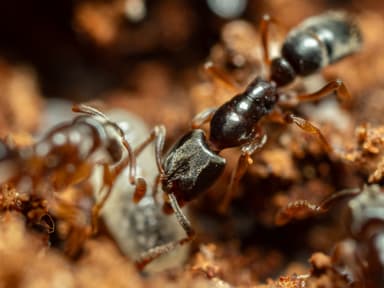
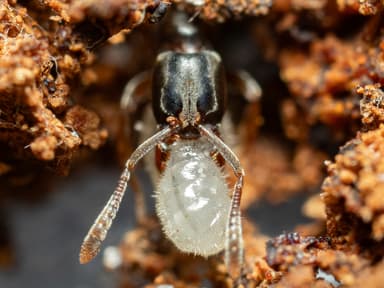
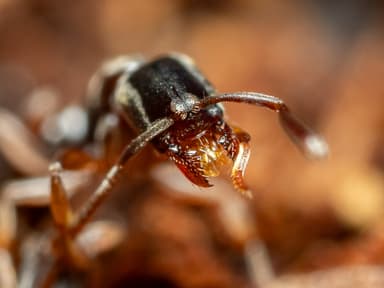
Hypoponera opacior is a small, cryptic ant that draws the attention of keepers who enjoy observing subtle and intricate natural history. Workers measure a mere 2.5 to 3.5 millimeters, while the queens are slightly larger at 3.5 to 4.5 millimeters, with a coloring that ranges from pale yellowish-brown to darker amber. The colonies rarely exceed 500 individuals and contain a single worker caste alongside a fascinating alternative reproductive form: the ergatoid queen. These wingless, worker-like reproductives mate inside the nest with often equally wingless males, a phenomenon well-documented in studies of the species’ mating systems (Foitzik et al. 2002; Kureck et al. 2011, 2012). New colonies are founded claustrally by a single mated queen after nuptial flights that, in the southwestern United States, occur in the warm, humid evenings following summer monsoon rains between July and September. The combination of an exceptionally broad native range—spanning from the southern United States deep into South America—and a reproductive strategy that challenges the typical image of ant alate swarms makes this species a delightful puzzle for the thoughtful keeper.
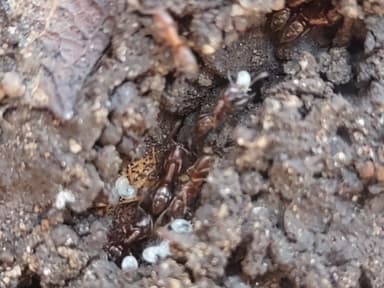
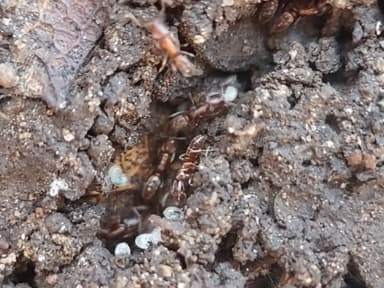
This is an intermediate-level ant, best suited to hobbyists who already have some experience maintaining stable humidity and temperature gradients. Hypoponera opacior is not particularly aggressive, and although they possess a sting, it is too mild to bother most people. However, their minute size makes them true escape artists, and any enclosure must be sealed with care. Their small colonies grow slowly, and the ants exhibit a shy, subterranean disposition, spending most of their time within the nest. The reward for meticulous care is the chance to witness behaviors like intranidal mating and the quiet efficiency of ergatoid queens, whose presence can give the colony a more fluid social structure than what is seen in many other ants. Patience is key, as these ants will not put on dramatic feeding displays, but they will reveal a deep and well-studied world to anyone who takes the time to look (Mackay & Mackay 2010).
Housing must simulate the moist, stable microclimate of their natural soil nest sites. A temperature range of 20 to 28 degrees Celsius is ideal, with relative humidity maintained between 60 and 80 percent. A plaster or gypsum nest block with a thin layer of fine sandy soil or clay works beautifully, allowing the ants to excavate pocket chambers while the keeper retains some visibility. Alternatively, a well-hydrated soil-based setup inside an escape-proof tub can bring out the full range of their digging behaviors. Whatever nest type you choose, include a moisture gradient: one section kept damp, the other slightly less so, enabling the ants to regulate their own microclimate. The foraging arena should be modest in size, with a tight-fitting lid and a PTFE or talcum barrier applied near the rim; these ants can climb smooth surfaces with deceptive ease. Provide a small piece of bark or a flat stone directly on the substrate where they will often gather, as they strongly prefer enclosures that give them a sense of being tucked safely into the earth.
Feeding Hypoponera opacior presents few challenges if you keep their scale in mind. Protein is best supplied as tiny, soft-bodied prey: Drosophila fruit flies—either wingless or freshly killed—are a perfect staple, along with springtails, cut segments of small mealworms, or pinhead crickets. They also appreciate a gentle carbohydrate source, such as a minute droplet of honey water, sugar water, or a dab of ripe fruit, offered on a piece of wax paper or foil for easy cleanup. Water must be available at all times, either via a permanently filled test tube in the outworld or a moistened cotton ball. With a claustral queen, no feeding is necessary until her first workers appear; after that, begin with a single sugar droplet and a single fruit fly once a week, gradually increasing as the colony grows. Always remove uneaten food within a day to prevent mold, which can devastate a small colony in a high-humidity nest.
A distinct cold hibernation is required to maintain the health and seasonal rhythm of the colony. Over a span of four to six weeks in autumn, gradually reduce the temperature from the active range down to around 12 degrees Celsius, and hold it there for two to three months. A wine cooler, a cool basement, or a dedicated temperature-controlled chamber all work well. The nest must remain gently moist throughout—never soggy, but not arid—and all feeding should cease once the temperature drops below 15 degrees. The ants will cluster into a tight, inactive group. When the hibernation period ends, warm them back to room temperature just as slowly, and resume feeding with a small droplet of sugar water to help them rehydrate and regain energy before their first protein meal.
The first days after your ants arrive are a critical period of acclimation. Place the queen or small colony in their prepared, pre-humidified nest, cover the setup with a breathable dark cloth, and leave them completely undisturbed for at least five to seven days. Do not offer food immediately—the queen does not need it, and even fresh workers will have sufficient reserves. After a week, introduce a tiny drop of sugar water near the nest entrance, watching from a distance to see if any ants come to drink. Only after they have accepted the sugar should you add a single tiny insect, preferably pre-killed, and then leave them to settle further. The most common early warning sign is persistent restlessness and workers attempting to chew or climb out, which typically indicates insufficient humidity or a lack of deep, dark nest cavities. Adjust the moisture and add a bit more substrate to address this. With gentle patience, your colony will soon settle into the quiet, hidden rhythm that makes Hypoponera opacior such a uniquely captivating ant to keep.