Acromyrmex
Acromyrmex ambiguus
Nuptial Flight Calendar
Flight months: Oct, Nov, Dec
Care Guide
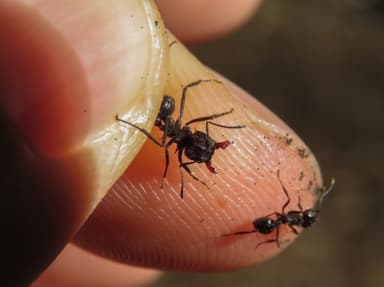
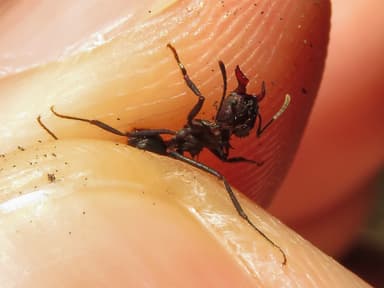
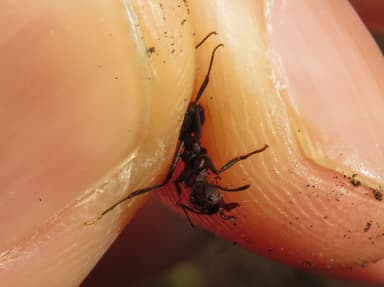
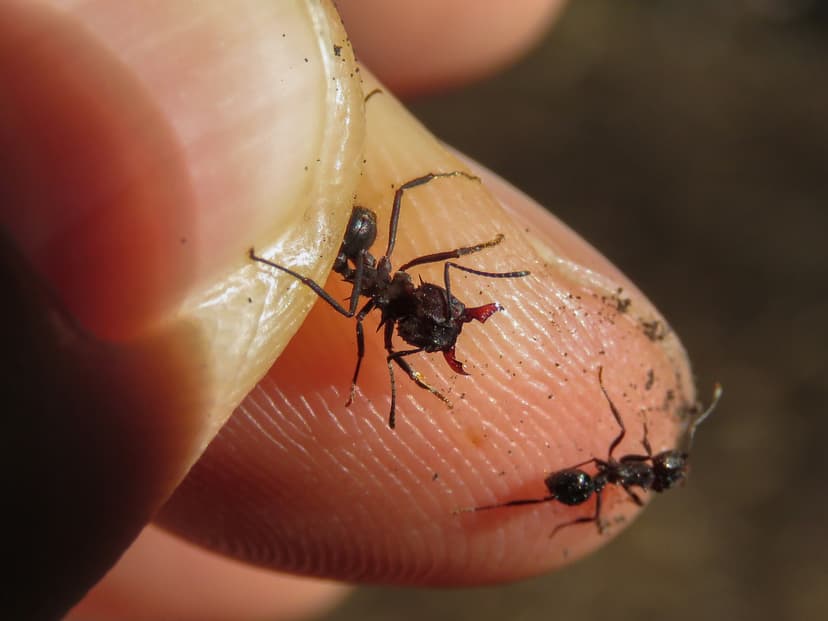
Acromyrmex ambiguus is a polymorphic leafcutter ant native to the southern cone of South America, with verified records spanning Southern Brazil, Uruguay, Argentina, and Paraguay (GBIF occurrence records; AntWeb). Queens are robust, ranging from 14 to 17 mm, while workers display strong size polymorphism across three distinct castes — minors, medias, and majors — spanning 3 to 9 mm in length (Gonçalves, 1961). Mature colonies can harbor up to 50,000 individuals, all dedicated to maintaining their true lifeblood: a symbiotic fungus garden. Unlike most ants, these formigas‑cortadeiras do not feed directly on the plant material they harvest. Instead, workers cut fresh leaves and flowers, chew them into a pulp, and use it as substrate for their Leucoagaricus fungus. The fungus breaks down the plant matter and produces nutrient‑rich hyphal swellings (gongylidia) that the ants consume. This intricate mutualism, refined over millions of years, makes Acromyrmex ambiguus one of the most fascinating and behaviourally complex species available to the dedicated myrmecologist. Their reddish‑brown, spiny bodies and ceaseless leaf‑carving activity provide an unparalleled spectacle.
The care of Acromyrmex ambiguus is firmly rated as expert. This is not a species for the casual admirer; it demands a deep understanding of environmental control and symbiotic biology. The colony’s survival hinges entirely on the health of its fungus garden, which can collapse rapidly if temperature, humidity, or ventilation deviate from narrow tolerances. Even a minor mishap in diet or a pesticide‑contaminated leaf can trigger a catastrophic cascade. Only keepers with years of experience raising advanced ant species, and who have thoroughly researched obligate fungus‑growing ants, should undertake the responsibility. Your reward will be witnessing one of nature’s most sophisticated agricultural societies unfold in your own formicarium, but this comes with the expectation of near‑daily foraging provision, precise climate control, and constant vigilance against mold, mites, and garden senescence. The nuptial flights occur in the austral spring and early summer, from October through December, typically on warm, humid afternoons following rainfall (Della Lucia, 2011). Queens are fully claustral, founding new colonies alone, which simplifies the very earliest stage for the breeder.
Housing Acromyrmex ambiguus requires a bifocal setup: a humidified, well‑ventilated nest chamber for the fungus garden and a dry outworld for foraging. The fungus garden itself is best housed inside a lidded plastic or glass container with a single small entrance hole, placed within a larger climate‑controlled formicarium. The garden substrate is provided by the ants — they will build it from the plant material you supply — so no additional soil is needed. However, the chamber must maintain 70% to 90% relative humidity to prevent the fungus from desiccating. This is typically achieved by placing the garden container on a media of damp plaster or perlite, or by using a fine misting system, being extremely careful not to wet the fungus directly. Temperature should stay consistently between 20°C and 28°C, with an ideal range around 24–26°C; use a heating cable or mat regulated by a thermostat, never a direct heat lamp that could create deadly hot spots. The foraging area should be escape‑proof, with a tight‑fitting lid and a PTFE fluon barrier, and must be kept dry to discourage fungal overgrowth outside the nest. Excellent air exchange is crucial to prevent carbon dioxide buildup which would suffocate the fungus, so passive ventilation holes covered with fine mesh are recommended.
The dietary needs of Acromyrmex ambiguus are unique and indirect. You are not feeding the ants; you are feeding the fungus. The ants rely almost exclusively on the gongylidia of their cultivated fungus for nourishment, so their protein and carbohydrate requirements are met internally by the symbiont. Consequently, no insect prey or artificial sugar water is needed or recommended, although a tiny dish of plain water should always be available in the outworld. Instead, you must provide a diverse daily buffet of clean, pesticide‑free plant material. Suitable leaves include bramble (Rubus fruticosus), rose (Rosa spp.), privet (Ligustrum spp.), hibiscus, and grapevine; citrus leaves are also readily accepted. Flowers such as rose petals, dandelions, and elderflower can be offered as supplementary items. Always source from areas free of chemical treatments, and wash leaves thoroughly before feeding. A colony of 50,000 workers can strip a small bush in a night, so plan your supply accordingly. Offer a mix of mature and young leaves to ensure a balanced fungal substrate. Remove any uneaten, wilted material after 48 hours to prevent mold. Because this species originates from subtropical latitudes without a true winter diapause, there is no requirement for hibernation; stable year‑round conditions are preferred.
Upon receiving a newly mated Acromyrmex ambiguus queen, still in her test tube with a small cotton ball water source, place her in a dark, quiet location at a steady 24°C. She carries a pellet of the ancestral fungus in her infrabuccal pocket, which she will regurgitate to start the garden. She will lay a batch of eggs and tend them alongside the nascent fungus, never needing to be fed during this claustral stage. Check on her only every few weeks, briefly, with red light. When the first nanitic workers eclose after approximately 8 to 12 weeks, they will begin tending the garden and breaking down tiny leaf fragments. This is your cue to introduce the first foraging material: a small piece of fresh bramble leaf, no larger than a fingernail, placed near the test tube entrance inside a small outworld. Watch for worker acceptance; initially, only a few ants may venture out. Over the following weeks, gradually increase the leaf size and variety as the colony and garden expand. Transfer them to a larger fungus chamber only when the colony has a few hundred workers and the tube becomes cramped. During these early months, the biggest danger is overly enthusiastic disturbance, which can cause the queen to stop feeding the fungus. Patience and a gentle touch are your most valuable tools as you shepherd one of the ant world’s most remarkable civilizations into maturity.