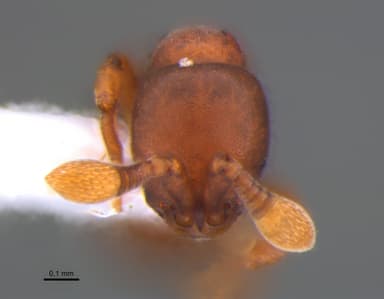
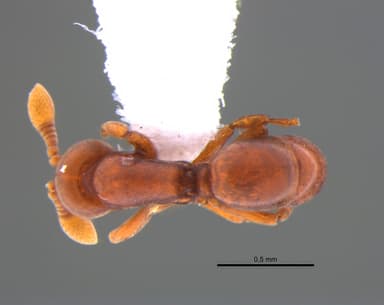
Discothyrea
Discothyrea neotropica
Care Guide
Discothyrea neotropica is a fascinating but demanding species for the dedicated ant keeper. These minute ants, with queens measuring just two to two and a half millimeters and workers slightly smaller, form truly dwarf colonies of only twenty to eighty individuals. What they lack in size, however, they make up for in specialized biology. Discothyrea ants are known for their slender, stiletto-like stinger and their highly particular diet — in the wild, they are specialist predators of spider eggs and other arthropod eggs. Their small colony size and secretive, almost cryptic lifestyle make them a jewel of the formicarium, but one that requires patience and precision.
The most distinctive feature of Discothyrea neotropica is their feeding ecology. These ants do not scavenge seeds or general insect prey; their diet consists almost exclusively of small, soft-bodied arthropod eggs. In captivity, keepers must provide a steady supply of suitable egg sources, such as spider egg sacs (from species like jumping spiders or cellar spiders) or, as a substitute, the eggs of certain small insects. Live prey like tiny fruit flies or pinhead crickets may be accepted occasionally, but eggs remain the cornerstone. This specialized nutritional requirement, combined with the queen’s semi-claustral founding strategy — where she must leave the nest to forage while raising her first brood — elevates the care difficulty considerably.
Care difficulty
Keeping Discothyrea neotropica is advanced. The queen’s semi-claustral founding means she needs to be fed regularly during the early stages, and the colony’s tiny size makes them extremely sensitive to disturbances, fluctuations in humidity, and food shortages. Only experienced keepers with a reliable source of spider eggs or similar substitutes should attempt this species. Their slow growth and low worker count require a steady hand and meticulous observation.
Housing
A small, climate-controlled formicarium is essential. Given the colony’s diminutive size, a test tube setup or a small acrylic nest with a constant humidity level of seventy to eighty-five percent is ideal. The nest should be kept in the dark, with a humidity gradient so the ants can choose their preferred microclimate. Temperature should be maintained between twenty-two and twenty-eight degrees Celsius year-round, as no hibernation is needed. The outworld must be small and escape-proof, with minimal airflow to retain moisture. A thin layer of fine sand or clay can help regulate humidity, but avoid any substrate that might overwhelm the tiny workers.
First days after purchase
After receiving your Discothyrea neotropica colony, transfer them carefully into a pre-humidified test tube or small nest using a fine brush or aspirator. Place the setup in a warm, dark, and vibration-free location. Do not disturb them for at least three days. Offer a tiny piece of spider egg sac or a single fruit fly egg on a small piece of foil near the nest entrance. Observe from a distance whether the queen accepts food. The first weeks are critical — any stress or drying out can easily doom the colony. Patience is your greatest tool with these miniature marvels.