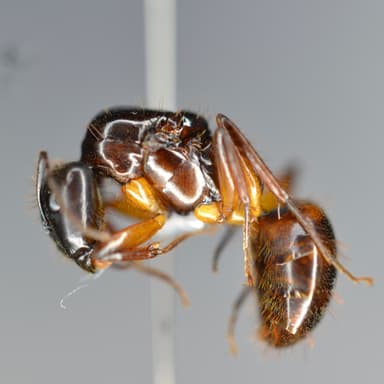
Camponotus
Camponotus atriceps
Care Guide
Camponotus atriceps is a striking and rewarding species, known for its glossy black coloration and subtle blueish iridescence in certain light. As a typical carpenter ant, this species displays moderate polymorphism: the queen, measuring up to 16 mm, is the largest member of the colony, while workers range from small minors around 5 mm to robust majors reaching 14 mm. Despite their size differences, all workers share a calm and steady temperament, making them a pleasure to observe as they move through their formicarium with deliberate purpose.
One of the most appealing traits of Camponotus atriceps is their flexible dietary needs. Like many Camponotus, they thrive on a mix of sugary carbohydrates—such as honey water or commercial ant nectar—and regular protein sources like small insects, which the colony will eagerly dismantle and feed to their larvae. They also appreciate honeydew mimics, so a well‑balanced feeding schedule ensures rapid colony growth. Because they do not require hibernation, these ants remain active year‑round, allowing keepers to enjoy continuous development and foraging activity without the seasonal pause demanded by many temperate species.
Care difficulty
Keeping Camponotus atriceps is ideal for beginners. Their claustral founding means the queen raises her first brood without needing food, relying solely on her body reserves, which reduces early‑stage risk. Once the first workers arrive, the colony is remarkably resilient and forgiving of minor fluctuations in temperature or humidity. The absence of a hibernation requirement further simplifies care, as there is no need to gradually cool the nest or manage a dormant period. This species adapts well to typical room conditions and is less prone to stress than many tropical specialists.
Housing
A formicarium with a dry nesting area and a separate foraging arena works best for Camponotus atriceps. They prefer moderate humidity in the nest (around 50–70%) but are not as demanding as moisture‑dependent species. A test tube setup or small acrylic nest with a water reservoir is sufficient for young colonies, while larger colonies will appreciate a modular system that allows for expansion. Temperature should be kept between 22 and 28°C; a heat cable placed under the foraging area can encourage activity without overheating the nest. Provide a clean water source in the arena, and offer small pieces of wood or cork – these ants enjoy nesting materials and will often move soil or debris to refine their chambers.
First days after purchase
Upon receiving your Camponotus atriceps colony, transfer them to their new formicarium carefully, ensuring the nest is slightly humid and the foraging arena contains a drop of sugar water and a small insect piece. Place the setup in a quiet, dimly lit location and resist the urge to check on them constantly. Over the next few days, the ants will explore, begin tidying the nest, and start foraging. If they seem hesitant, cover the nest area with a red film or dark cloth – these ants prefer low light in their chambers. Within a week, you should see regular foraging and brood care, signaling a successful acclimation.