Myrmecia
Myrmecia gulosa
Nuptial Flight Calendar
Flight months: Jan, Feb, Apr, Nov, Dec
Care Guide
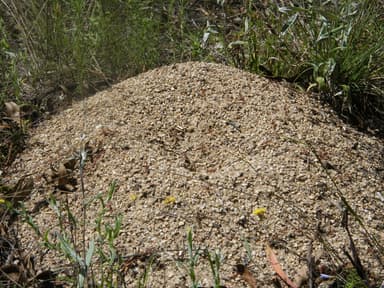
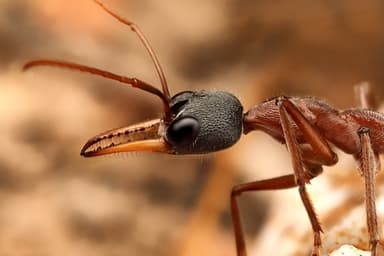
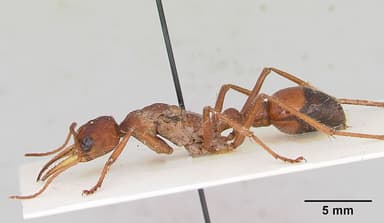
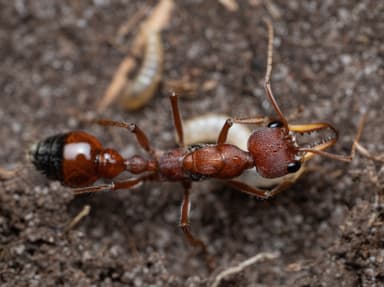
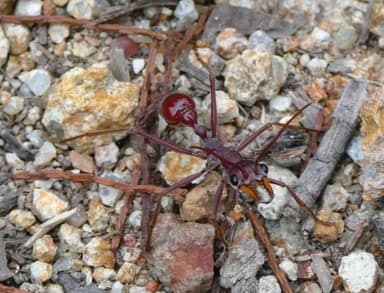
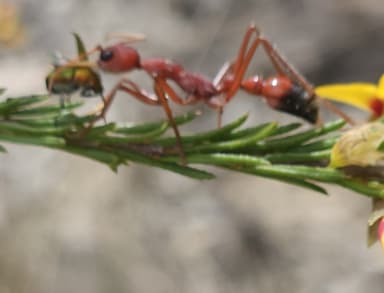
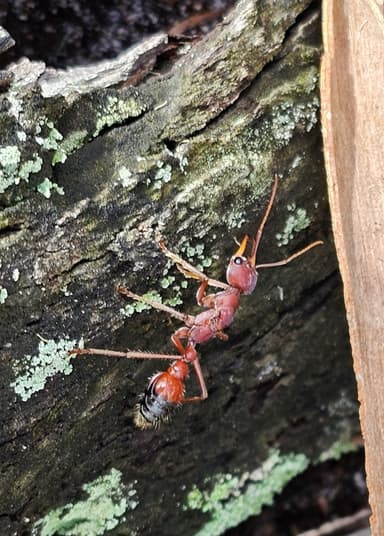
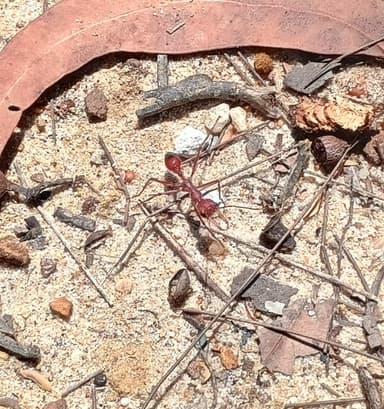
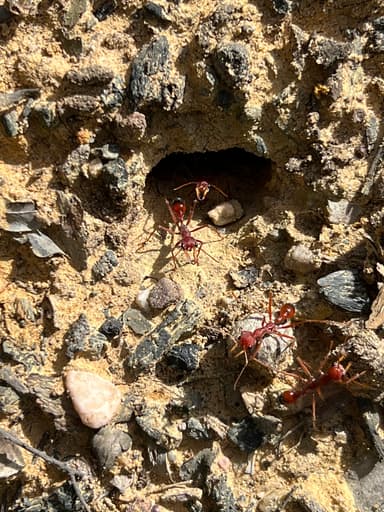
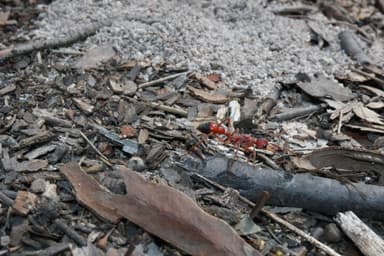
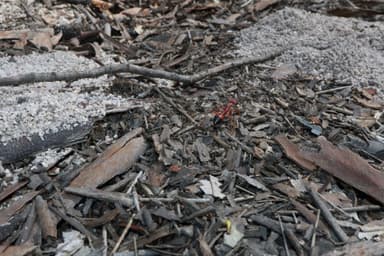
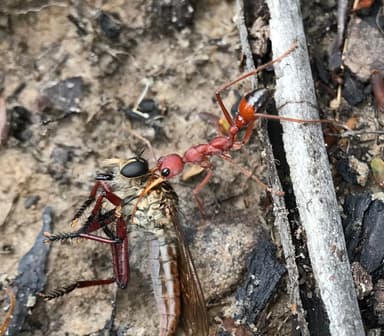
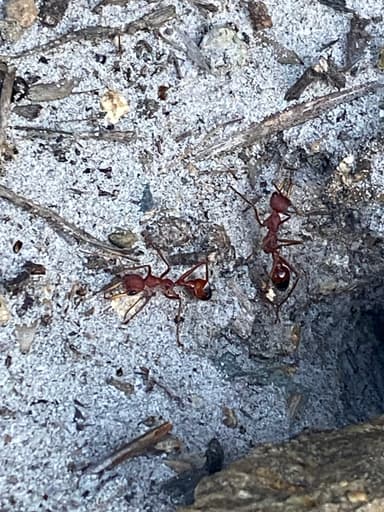
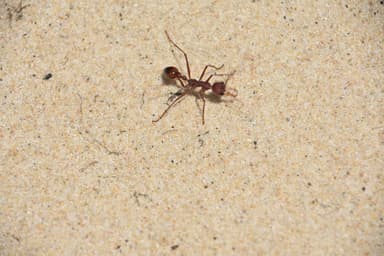
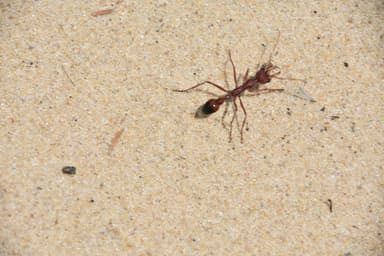
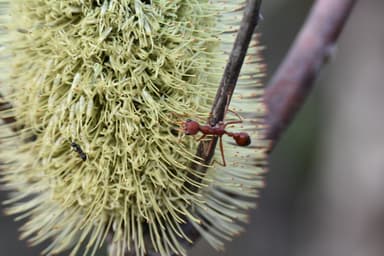
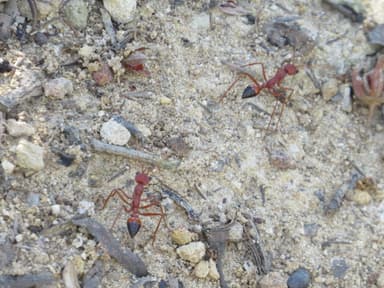
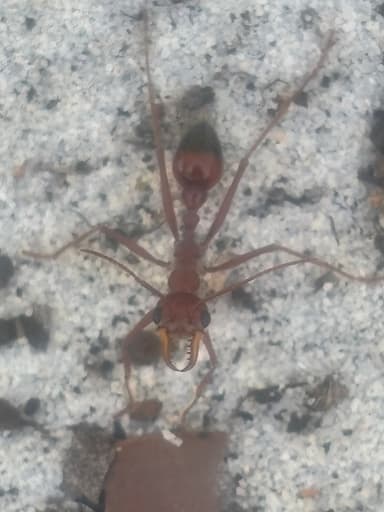
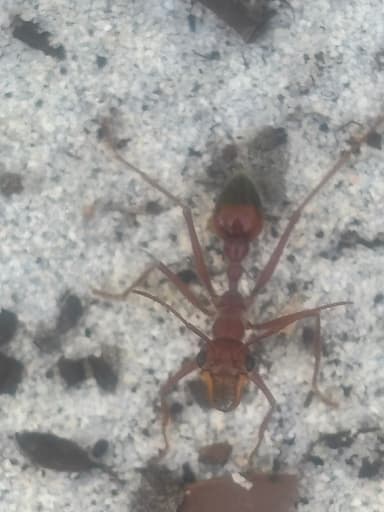
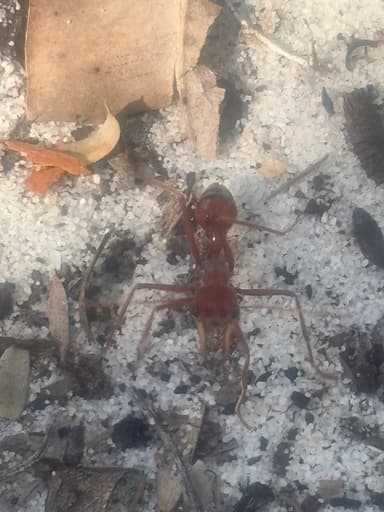
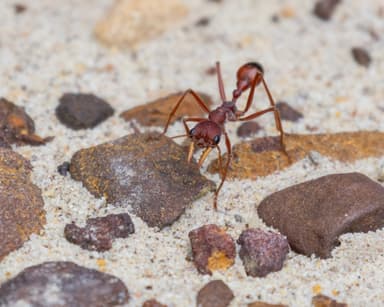
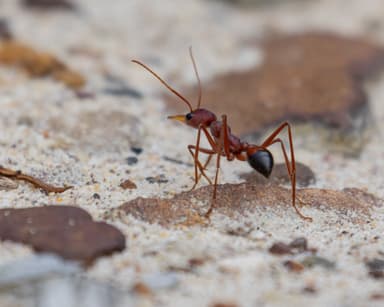
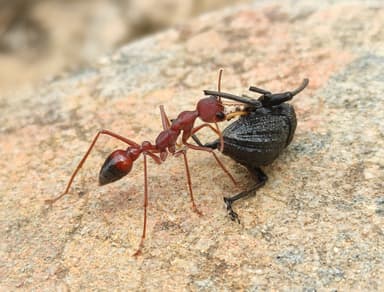
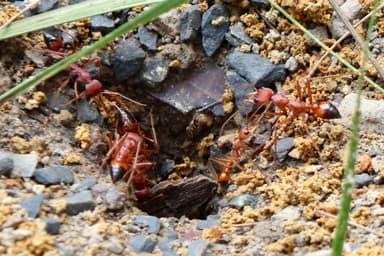
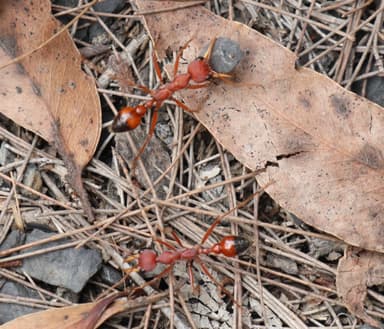
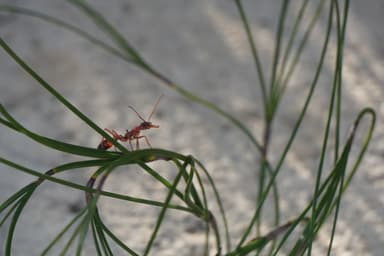
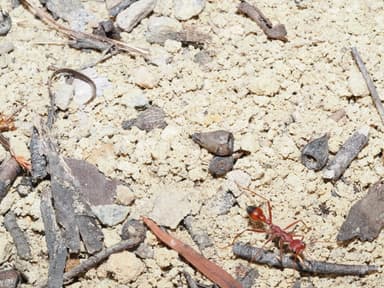
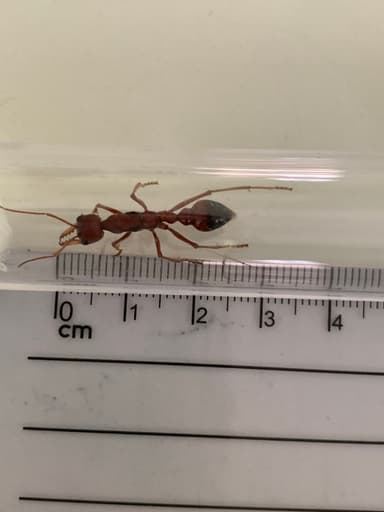
Myrmecia gulosa, commonly known as the giant red bull ant, ranks among the most visually striking and behaviourally captivating ants available to dedicated hobbyists. Queens measure a formidable 25 to 36 millimetres, while workers span 20 to 36 millimetres, making them some of the largest ants on the continent. Their bodies are a vivid contrast of reddish-brown head and mesosoma against a deep black gaster, with long, toothed mandibles that they wield with precision. Colonies are modest in size, typically peaking at around 1,000 individuals, and workers are monomorphic, exhibiting only a single caste rather than physical subcastes. What truly sets this species apart is its primitive social organisation: workers forage solitarily, relying on keen eyesight and a notoriously painful sting, while new queens found semi-claustrally, leaving the nest to hunt during the founding stage (Haskins & Haskins 1950). Nuptial flights occur in Eastern Australia from November through February, on warm, humid afternoons after rain, a pattern well documented in regional occurrence data. For the imaginative keeper, M. gulosa offers a window into the early evolution of ant societies, bridging a gap between solitary and highly social ants.
This is unequivocally an expert-level ant, suited only for those who have mastered the care of more forgiving species. The giant bull ant’s sting can cause intense localised pain and, in sensitised individuals, severe allergic reactions, so handling is never an option and escape-proof containment is mandatory. The semi-claustral founding strategy adds a steep layer of complexity: a queen must be regularly fed proteins and sugars while simultaneously tending her brood, a balancing act that demands constant attention. Moreover, their precise environmental requirements, active hunting behaviour, and obligatory seasonal hibernation push the limits of routine husbandry. Beginners or intermediate keepers looking for a display colony should look elsewhere; M. gulosa rewards patience, deep knowledge of ant biology, and a willingness to invest significant time in meticulous observation.
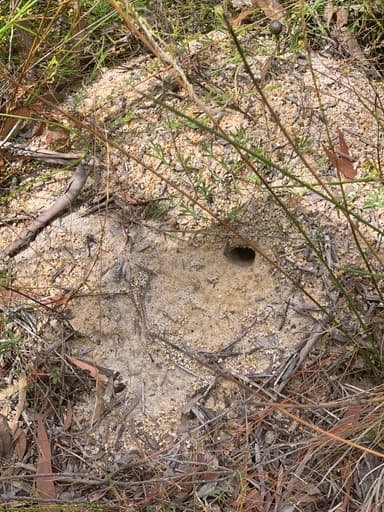
Housing must reflect the ants’ natural subterranean lifestyle while offering security and visibility for the keeper. A vertical plaster, grout, or ytong nest with a deep, moisture-retentive chamber works well, as it mimics the soil galleries they excavate in the wild. Temperature should remain between 18°C and 28°C, best achieved by placing a heating cable or pad at one end of the nest to create a gradient, allowing the ants to self-regulate. Humidity is critical: maintain a range of 50% to 70%, leaning toward the moister side for brood development, by watering a portion of the substrate and ensuring the other end stays drier. If using a naturalistic set-up, a mix of sandy loam and clay provides stability, but the outworld must be sealed with a tight-fitting lid and a fluon barrier, as these large ants are powerful climbers and will test every gap. Because workers are monomorphic—only one size class—there is no need for proportionally larger chambers for a soldier caste, but the nest must still be spacious enough for adults that can reach 36 millimetres.
Diet is a cornerstone of success and highlights the bull ant’s predatory nature. M. gulosa are obligate hunters that thrive on live prey; supply small crickets, flies, mealworms, or appropriately sized roaches several times a week. While workers will scavenge freshly killed insects, the stalking and subduing of live food enriches the colony and stimulates natural behaviour. Supplement protein with a carbohydrate source such as diluted honey or sugar water, offered on a cotton wick to prevent drowning. Fresh water must be available at all times, either through a test-tube waterer or a moistened sponge. For semi-claustral queens raising their first workers, provide a tiny drop of sugar water and a pre-killed fruit fly or pinhead cricket every two to three days; a failure to feed during this stage will result in the queen consuming her own eggs for survival. Remove uneaten prey within 24 hours to prevent mould and stress.
A strict hibernation period at around 15°C is non-negotiable for long-term colony health. In the wild, these ants experience a marked cool season, and captive colonies that skip diapause often show reduced egg-laying, worker lethargy, and eventual decline (Crosland et al. 1988). As autumn approaches, gradually lower the temperature over several weeks until it stabilises at 15°C, then hold it there for two to three months. Cease protein feeding during this time, though a very light sugar source and water should remain available. Keep the nest dark and disturbance minimal. When spring arrives, slowly rewarm the colony to the active range, and the queen will resume her laying cycle. Without this seasonal reset, even the most meticulously cared-for colony will falter.
The first days after purchasing a queen or small colony are a sensitive window that sets the tone for future success. Upon arrival, place the enclosure in a darkened, quiet room and let the ants recover from transit stress for several hours before any interaction. For a newly mated queen, introduce a drop of honey water and a tiny pre-killed insect just outside her founding tube early the following morning; she should venture out to feed within 24 hours, and if she does not, re-check temperature and humidity. Avoid peeking too often—vibrations and light are interpreted as threats and can cause her to abandon her eggs. If you have a young colony in a temporary tube, attach it to the prepared nest and allow a self-paced move by gently warming or illuminating the old tube while keeping the new nest dark and inviting. Never rush a transfer. Watch for warning signs: persistent pacing, refusal to feed, or clustering away from the nest may indicate incorrect humidity or temperature, requiring subtle adjustments. Finally, always remember their formidable sting—plan every maintenance task with escape prevention front of mind, and use long forceps for feeding. With steady, respectful care, M. gulosa will flourish, offering a rare and riveting glimpse into the world of a living ancient lineage.