Messor
Messor denticulatus
Nuptial Flight Calendar
Flight months: Apr, May, Jun
Care Guide
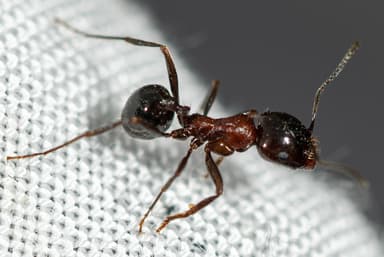
Messor denticulatus is a harvester ant of the eastern Mediterranean and Middle East, with a natural range stretching from Israel and Jordan into Syria and Saudi Arabia (Collingwood, 1985). At first glance, the colony is a showcase of polymorphism: three distinct worker castes work side-by-side, with diminutive minor workers just 4 mm long, robust media workers in the middle range, and impressive large-headed majors reaching up to 9 mm. The queen herself is a substantial 12 to 14 mm, and a mature colony can number as many as 10,000 individuals. This striking size variation, combined with the ants’ methodical seed-collecting behaviour and their habit of processing grains into a soft “ant bread,” makes the species a perennial favourite among hobbyists who appreciate the full drama of harvester-ant life. Nuptial flights take place in the warm spring months of April through June, typically after soaking rains, when new queens seal themselves into a brood chamber and raise their first nanitic workers claustrally — a sequence you can recreate with a freshly mated queen or a small founding colony.
This species is rated as intermediate in difficulty, and that rating reflects a combination of factors that demand a keeper with some foundational experience. It isn’t that Messor denticulatus is fragile; rather, the colony needs a specific seasonal rhythm, particularly a genuine winter rest, and it won’t thrive if the nest humidity is mishandled. Absolute beginners may struggle with the hibernation requirement or the careful monitoring of moisture gradients. However, if you have successfully kept a couple of other species through a full annual cycle and are ready for a moderately large, polymorphic harvester, this ant will be a highly rewarding next step. The colony is generally calm and not prone to outbursts, but workers can deliver a minor pinch, so gentle, unhurried maintenance is wise.
Housing a colony of Messor denticulatus should replicate the warm, dry conditions of its native lowlands. Daytime temperatures should run between 22 and 30 °C, while nest humidity need only hover in the 30 to 60 percent range — far drier than what tropical ants require. A ytong or plaster nest with a built-in water tower works beautifully, provided you only fill the reservoir on one side to create a dependable moisture gradient; the ants will move the brood to the zone that suits them. An alternative that stimulates natural behaviours is a basin nest filled with a sandy loam or a sand‑clay mix, which allows the ants to excavate their own chambers. In all set-ups, an outworld large enough to accommodate a sizeable foraging area is essential, and a thin layer of dry sand or grit there will help the workers manipulate seeds. Good ventilation is vital to prevent condensation and mould, so a mesh‑covered lid or side vents are recommended.
Diet is one of the great joys of managing this granivore. The staple is a varied mix of small seeds — lovegrass, poppy, dandelion, and amaranth are all accepted, and many keepers also offer crushed nuts or budgie seed. Workers chew these grains into a paste that feeds both larvae and adults, and you will eventually see discarded seed husks piling up in the midden. For protein, offer freshly killed insects such as fruit flies, small crickets, or pieces of mealworm two or three times a week during the active growth season; this is crucial for brood development. Although the ants are not strongly drawn to liquid sugars, they will occasionally sip diluted honey or sugar water, and a tiny droplet once a month provides a quick energy boost. Clean water, presented in a test tube or a small water tower, must always be available, but it should never be placed directly on the nest floor to avoid accidental flooding.
Messor denticulatus requires a true hibernation, a fact that often surprises keepers accustomed to tropical ants. In the wild, the mild Mediterranean winter brings a period of reduced activity, and in captivity you must simulate this cycle by cooling the colony to around 15 °C for two to three months. Begin lowering the temperature gradually in late autumn, stop offering protein, and allow the nest to dry slightly, leaving only a small water source. The ants will cluster quietly, and you may not see any foraging for weeks — this is perfectly normal. Skipping this rest period can lead to diminished queen fertility and a general decline in colony vigour, so it is well worth the planning.
When your colony first arrives, give it patience. Place the tube or small nest in a darkened, quiet space at a steady 24–25 °C and resist the urge to check on them for at least two days. After this settling period, offer a tiny pinch of very fine seeds (poppy or grass) and a fragment of pre‑killed fruit fly near the entrance of the tube or in the outworld. Over the coming week, watch for the queen beginning to lay and for the first workers to venture out to collect. If you notice the ants huddling motionless or the queen showing no sign of egg production, do not panic: simply minimize light and vibration, and ensure the hydration is correct but not excessive. Once the first brood hatches and foraging becomes regular, you can gradually introduce a larger nest, and the journey toward a thriving, seed-harvesting colony will be well under way.