Formica
Formica integroides
Nuptial Flight Calendar
Flight months: Apr, Jul, Aug, Sep
Care Guide
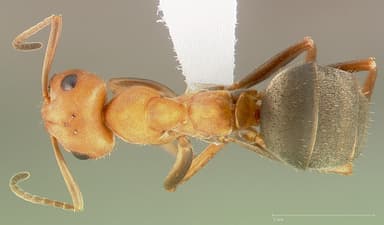
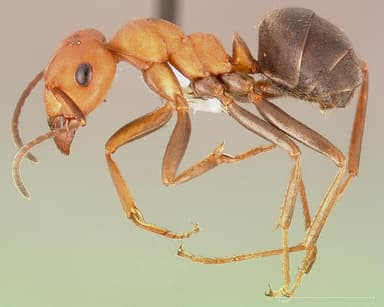
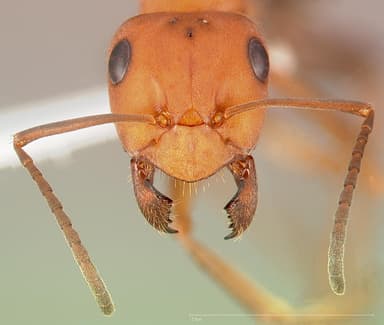
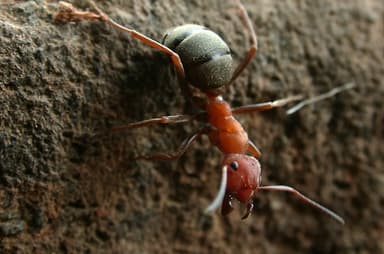
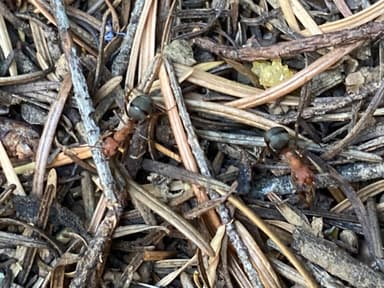
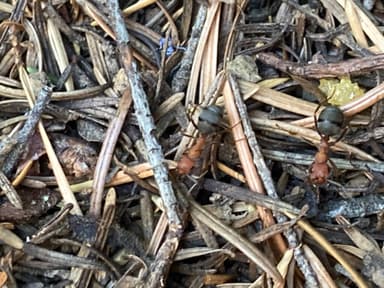
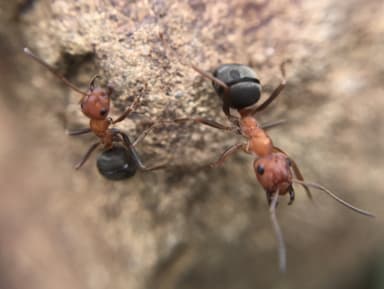
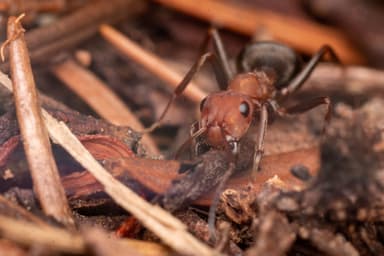
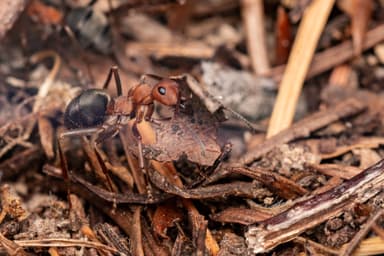
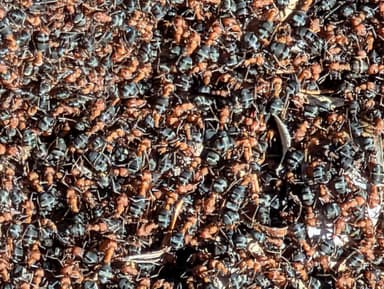
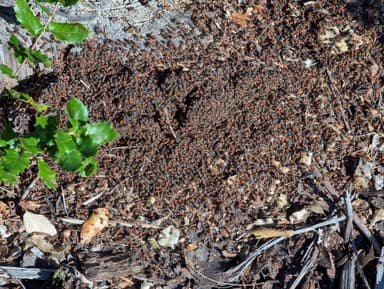
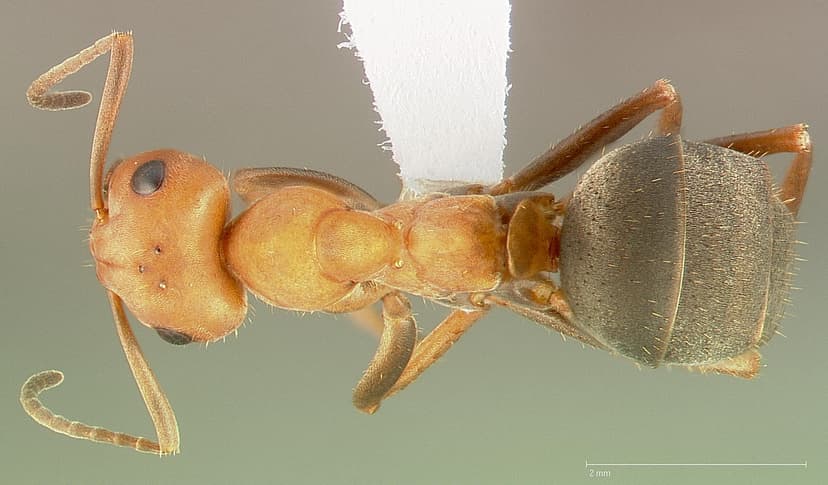
Formica integroides, a robust and polymorphic ant of western North America, commands attention with its size range, complex social architecture, and sheer colony magnitude. Workers measure 4–8 mm, with distinct minor and major castes; queens are notably larger at 8–10 mm, their dark reddish-brown to black bodies bearing a subtle gloss. In mature colonies, populations can swell to an astonishing 500,000 individuals, rivaling the largest formicines. The species occurs from British Columbia to New Mexico and from the Pacific coast to the Rockies, where its nuptial flights unfold on warm, sunny afternoons from July to September, often after rain. What truly distinguishes F. integroides is its social‑parasitic founding: a newly mated queen infiltrates a colony of a host species—typically a member of the Formica fusca group—kills or subdues the resident queen, and co‑opts the native workers to raise her own brood. This strategy, documented by Wheeler (1913) in the genus and confirmed by Mackay & Mackay (2002), sets the stage for a dramatic colony life‑cycle that few ant keepers ever witness in full.
The care difficulty is unambiguously expert‑level. The founding phase alone demands meticulous preparation: the queen must be introduced to ample host pupae or callow workers at precisely the right moment, and even minor missteps can prove fatal. Once established, the colony’s rapid growth and enormous size require a sprawling, escape‑proof setup and relentless attention to feeding, humidity, and waste management. This is not a species for beginners, or even for intermediate keepers without experience raising large Formica or other socially‑parasitic ants. However, for the dedicated hobbyist who can meet its demands, F. integroides delivers a spectacular display of division of labor between minor workers—nimble foragers and brood‑tenders—and broad‑headed majors that serve as defenders and powerful food processors.
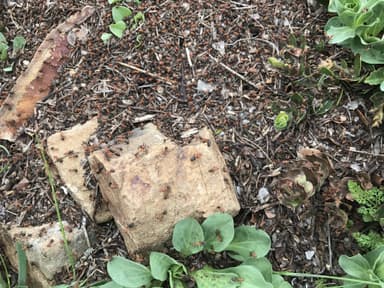
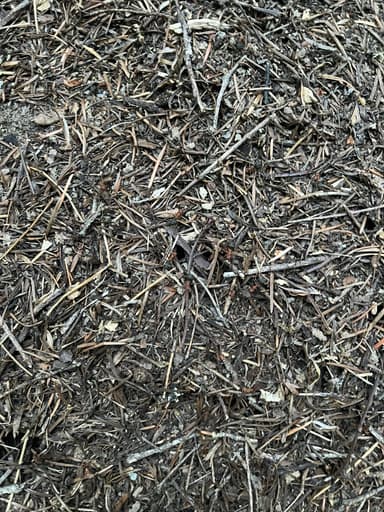
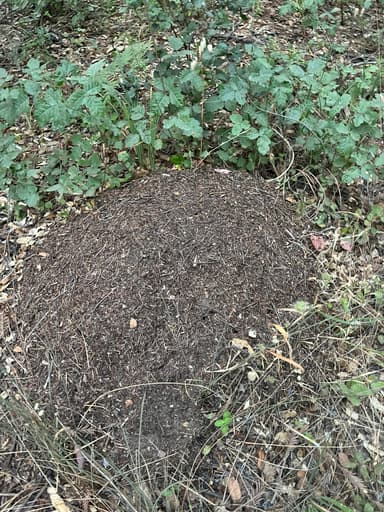
Housing must accommodate both the ants’ natural digging instincts and their huge numbers. Mackay & Mackay (2002) note that these ants commonly nest under stones and logs in rocky, well‑drained soils, so a spacious formicarium with a deep soil‑based nest or a carved ytong block filled with a sand‑loam mixture is ideal. A generous foraging arena is essential to prevent overcrowding. Maintain a temperature gradient from 18°C at the cool end to 28°C at a basking spot, ensuring the nest can be slightly warmer. Relative humidity should stay between 50% and 70%, with the nest chamber kept more humid by moistening a section of the substrate. Ventilation is crucial to prevent mold, but every seal and rim must be reinforced with a PTFE barrier or a tight‑fitting lid—these ants scale glass with ease and are notorious escape artists.
A balanced diet powers this colony’s relentless activity. Offer protein in the form of freshly killed fruit flies, small crickets, and mealworms two to three times a week, increasing frequency as brood volume rises. Their appetite for carbohydrates is equally intense; a sponge feeder with diluted honey, sugar water, or commercial ant nectar satisfies their honeydew‑collecting instincts and keeps workers energized. A constant, clean water source—such as a test tube with a cotton plug—must never run dry. As the colony expands, consider culturing feeder insects to avoid shortages.
Hibernation is a non‑negotiable biological requirement. From roughly November to February, the ants need a sustained chill around 5°C. A dedicated wine cooler or a programmable refrigerator works well; gradually lower the temperature over a week to avoid shock, and hold it steady for 12–16 weeks. Skipping hibernation disrupts the queen’s reproductive cycle, shortens worker lifespan, and eventually dooms the colony. When spring arrives, warm them slowly back to active temperatures.
When your F. integroides queen arrives—usually accompanied by a small cadre of host workers and, if fortunate, her first eggs or larvae—place the setup in a dim, quiet area at 22–24°C. Immediately offer a tiny droplet of sugar water on a slip of foil to replenish energy after shipping, then wait several hours before gently introducing a freshly killed fruit fly. Resist the urge to check for at least 48 hours. Watch for the host workers grooming the queen and huddling around brood; this signals successful integration. Keep the nest moderately humid, and avoid vibrations. After a week, you can regularly supply small protein portions. The emergence of the first true integroides workers—noticeably stouter, darker, and more robust than the host individuals—is a thrilling milestone that confirms the colony is securely launched on its path to greatness.