Acanthomyrmex
Acanthomyrmex ferox
Nuptial Flight Calendar
Flight months: Apr, May, Jun, Jul, Aug, Sep
Care Guide
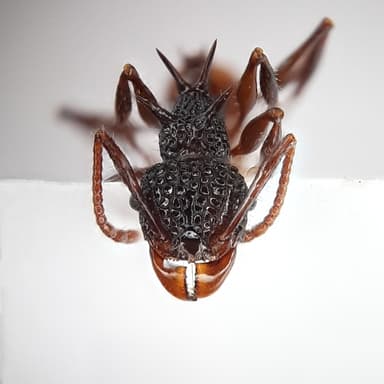
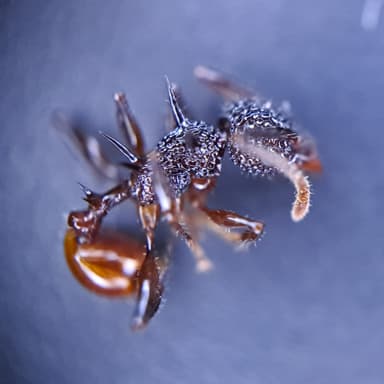
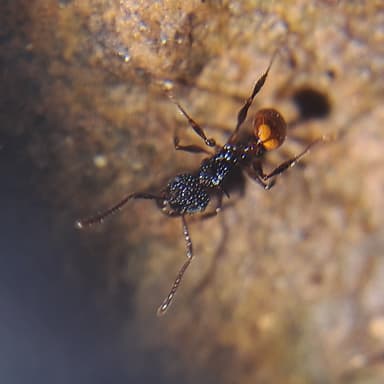
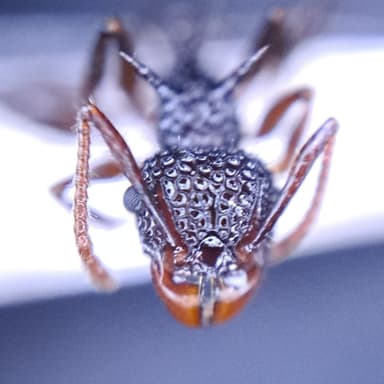
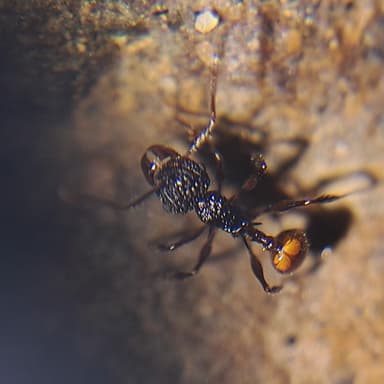
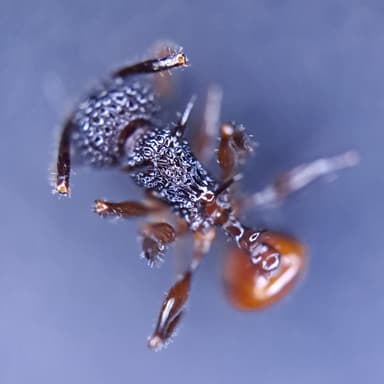
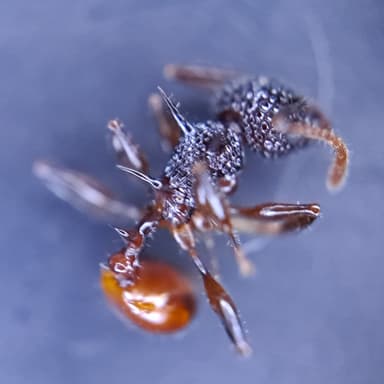
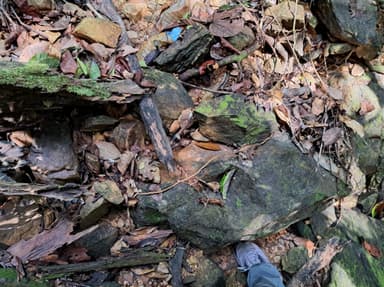
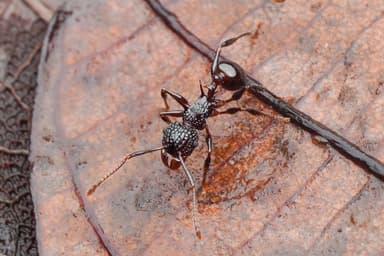
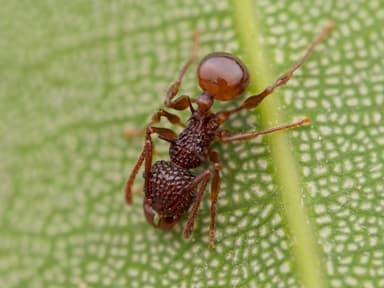
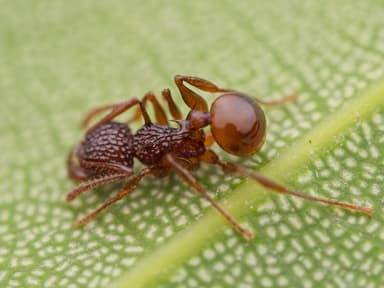
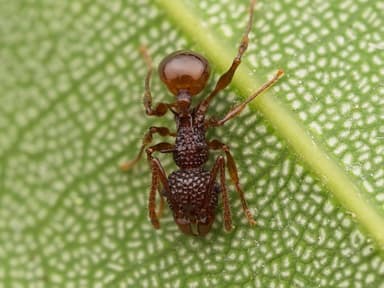
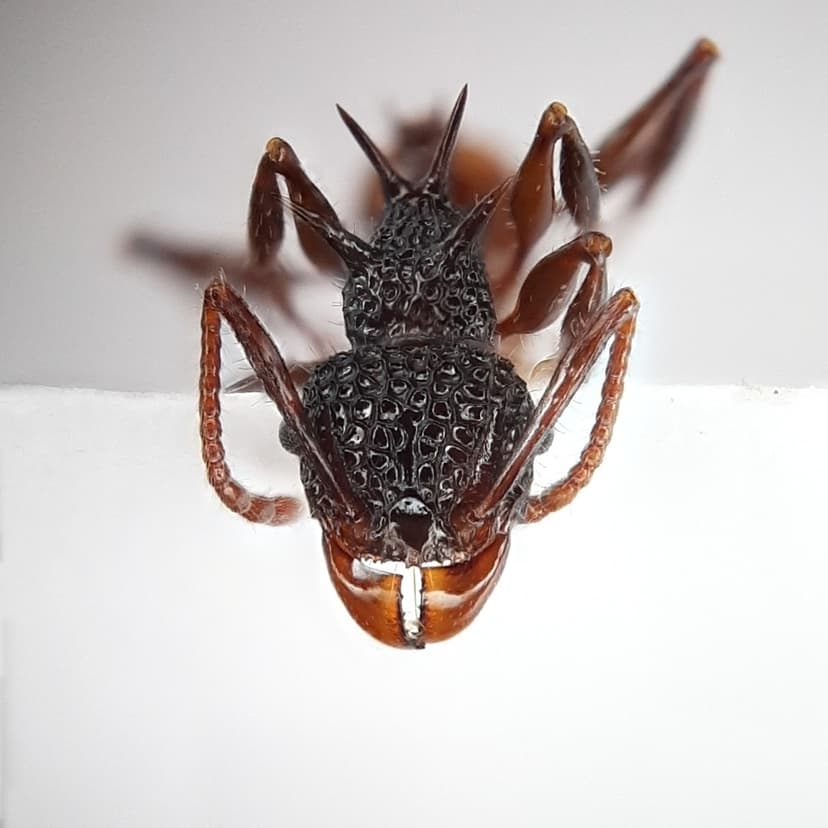
Acanthomyrmex ferox is a diminutive yet visually spectacular ant from the leaf litter and rotting wood of Southeast Asian forests, with a native range stretching from Myanmar and Thailand across the Indonesian archipelago (GBIF occurrence data; Terayama 1995). The queen measures a robust 6.5 to 8 mm, while the worker caste displays one of the most extreme cases of polymorphism found in the myrmicine subfamily. Minor workers are just 2.5 mm long and act as the primary foragers and brood tenders, while the major workers—or soldiers—reach 6.5 mm, their heads swollen with adductor muscles and armed with thick, inward-curving mandibles that give the species its scientific name: Acanthomyrmex meaning spiny ant, ferox meaning fierce (Emery, 1893). These majors are not merely defensive castes; in related species like A. notabilis they have been observed gripping and processing prey items too large for minors, and their heavily sclerotised bodies may serve as living doorways to block nest entrances (Moffett 1986). Colony size is modest, capping at around 300 individuals, making them a manageable subject for the advanced keeper who appreciates the interplay of a dimorphic society in a tiny footprint.
The care difficulty for Acanthomyrmex ferox is unequivocally expert. This is not a species for beginners, nor for anyone without a solid track record of maintaining stable, high-humidity tropical setups. The colony’s small size and specialised environmental needs leave little margin for error; a single desiccation event or a temperature spike can wipe out an entire founding unit. They demand a keeper who can monitor conditions daily and who understands the behavioural nuances of a species that relies on stealth and cryptic nesting rather than the resilience of large, rapidly growing colonies. If you are drawn to the intricate caste dynamics and have experience with moisture-dependent ants like small Ponera or Strumigenys species, this ant will reward your patience with fascinating interactions between the giant-headed defenders and their tiny nestmates.
Housing must recreate the warm, permanently humid understorey of their rainforest floor haunts. A well-insulated formicarium that holds moisture is essential—many keepers succeed with a plaster or ytong nest block partially embedded in a deeper substrate of coconut coir, sand, and finely shredded decaying hardwood, all kept consistently damp. Temperature should be maintained between 22°C and 28°C, ideally with a gentle gradient so the ants can self-regulate; a small heat mat attached to one side of the nest is often sufficient. Humidity is the critical parameter, and it must stay within 60% to 80% relative humidity at all times. Achieve this by misting the foraging area daily, using a large water feeder with a cotton wick, and ensuring the nest’s moisture source is never allowed to dry out. Because these ants do not hibernate, the warm, moist conditions must be provided year-round. A tightly fitted lid on the outworld is non-negotiable—minor workers are astonishingly tiny and can escape through the slightest gap, and a thin barrier of fluon or PTFE along the top rim of the arena will prevent breakouts during feeding.
In the wild, Acanthomyrmex ferox is a generalist scavenger and predator, and its captive diet should reflect this. Offer small, pre-killed insects as the protein backbone: flightless fruit flies, pinhead crickets, freshly cut mealworm segments, or springtails are all excellent. Feed protein items two to three times per week, removing any uneaten prey within 24 hours to prevent mould in the damp environment. The major workers may help tear apart tough prey, so watching them manipulate food is part of the appeal. Carbohydrates can be supplied as diluted honey, maple syrup, or sugar water placed on a small, shallow dish or saturated into a cotton ball to prevent drowning. Always provide a separate water source, either a test tube with a cotton plug or a liquid feeder, and refill it before it runs dry. Calcium supplementation is not needed, but a trace of mineral grit, such as a tiny pinch of fine sand, can sometimes be taken by ants that require it for larval digestion.
Since the species is strictly tropical, hibernation is not required and attempting to cool the colony will be fatal. Keep the setup at the recommended temperatures through all seasons. When your Acanthomyrmex ferox first arrives, whether as a queen with a handful of workers or a small established colony, the key is to minimise stress. Immediately transfer the ants into their prepared nest, or attach their travel tube to the formicarium and allow them to move at their own pace over the next 24 to 48 hours. Place the entire setup in a dark, quiet location and provide a droplet of sugar water and a damp cotton water source right away. Do not offer solid protein for the first two days. Watch for positive signs: the queen should settle into a chamber, workers should begin minor excavation or grooming, and within a day or two a few should explore the outworld for food. If workers huddle motionless in the open, that signals dehydration or stress—gently increase humidity and darkness and wait. Once the colony is exploring confidently, introduce a single, tiny pre-killed fruit fly; if it is eagerly retrieved, you can settle into a regular feeding rhythm. Resist the urge to check too often in the first week, as these ants are naturally reclusive and require stability to begin foraging and brood production. With diligent care, your micro-colony of spiny, dimorphic warriors will gradually reveal the quiet intensity of one of the ant world’s most distinctive societies.