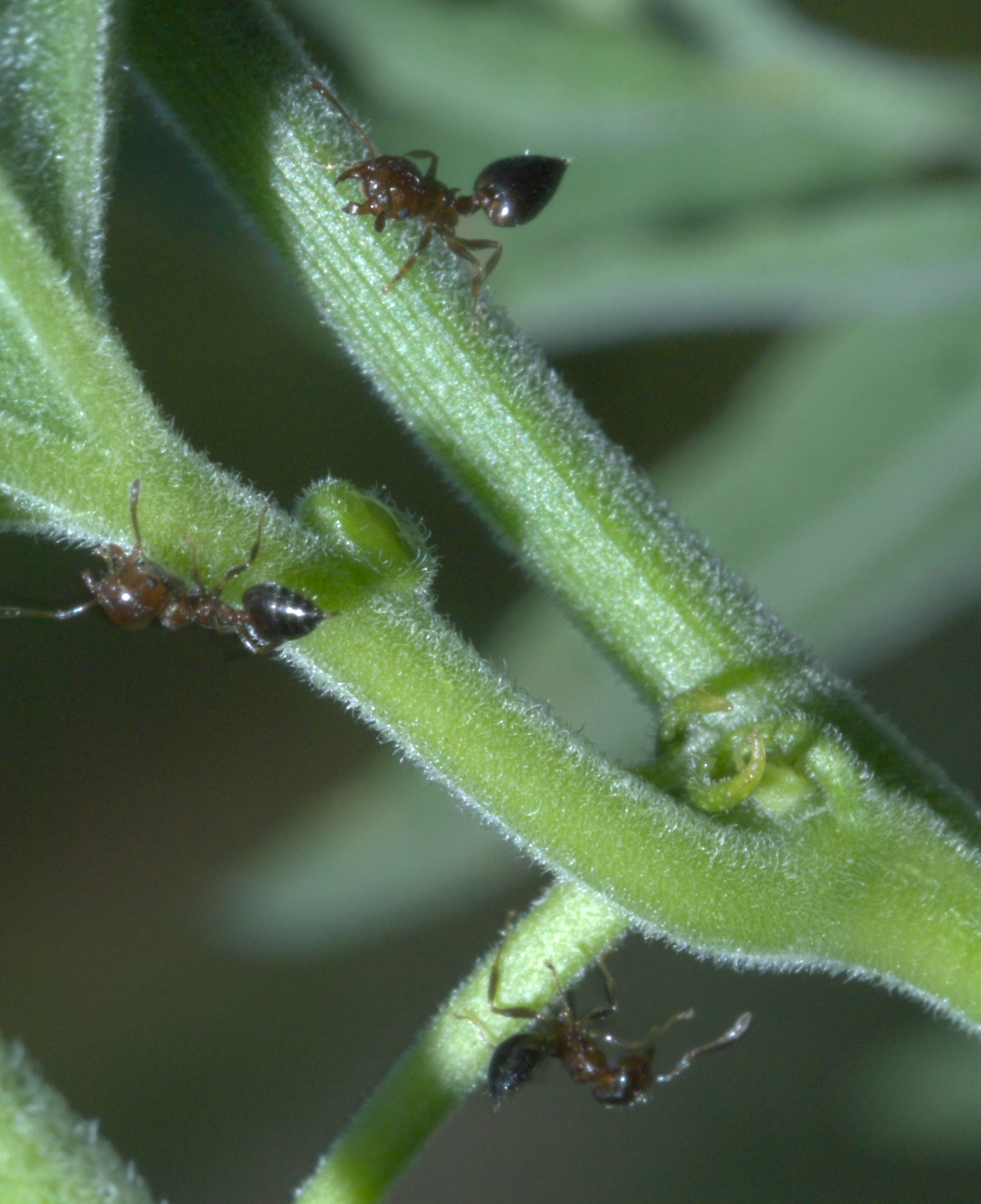
Crematogaster
Crematogaster ashmeadi
Nuptial Flight Calendar
Care Guide
Crematogaster ashmeadi, commonly known as the acrobat ant, earns its name from the distinctive way workers raise their heart-shaped gasters high over their heads when disturbed — a defensive posture that is both charming and a clear warning. These ants are primarily arboreal, naturally nesting in dead wood, hollow branches, and tree cavities. Queens measure 6 to 8 mm, while workers are smaller, ranging from 3 to 4 mm, with a uniformly dark brown to black coloration. Colonies can grow to impressive sizes of several thousand individuals, making them a dynamic and engaging species for the intermediate keeper.
One of the most fascinating aspects of Crematogaster ashmeadi is their diet. In the wild, they are avid honeydew collectors, tending aphids and scale insects on trees. In captivity, they thrive on a mix of sugar water or honey water and a steady supply of protein from insects such as fruit flies, crickets, or mealworms. They also appreciate honeydew substitutes. Providing a balanced diet is essential for brood development and colony growth. Unlike seed-harvesting species, these ants require a constant source of liquid carbohydrates alongside protein.
Care difficulty
Keeping Crematogaster ashmeadi is rated as intermediate. While they are not particularly demanding in terms of climate control, their arboreal instincts and sensitivity to vibrations make them less forgiving for absolute beginners. They do not require hibernation, which simplifies year-round care, but they do need consistent warmth and moderate humidity. Temperatures between 22 and 28°C are ideal, with humidity kept between 50 and 70%. A well-maintained heating cable or mat can help stabilize conditions in cooler rooms.
Housing
A formicarium for Crematogaster ashmeadi should reflect their natural preference for vertical or woody environments. A nest setup with cork, softwood, or plaster blocks with pre-drilled cavities works well. They appreciate climbing structures such as bark or twigs in the outworld. The nest area must be kept slightly moist, especially in the brood chamber, but avoid waterlogging. Because these ants are fast and can squeeze through small gaps, ensure all connections are sealed tightly. Vibrations and sudden disturbances can stress the colony, so place the setup in a quiet, low-traffic area.
First days after purchase
Upon receiving your colony, transfer them into their new formicarium carefully, using a test tube or temporary container if needed. Place the setup in a dimly lit, quiet spot and let the ants acclimatise for at least 24 hours without disturbance. During this period, provide a small drop of sugar water and a tiny piece of insect protein near the nest entrance. Avoid opening the nest unless absolutely necessary. Observe from a distance; you will soon see the first foragers exploring their new home. With patience and consistent care, your Crematogaster ashmeadi colony will grow into a bustling, acrobatic spectacle.