Tetramorium
Tetramorium simillimum
Nuptial Flight Calendar
Flight months: Apr, May, Jun, Jul, Aug, Sep
Care Guide
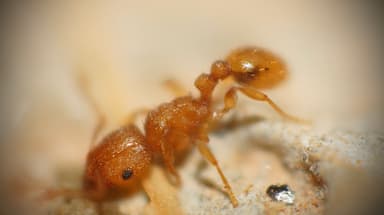
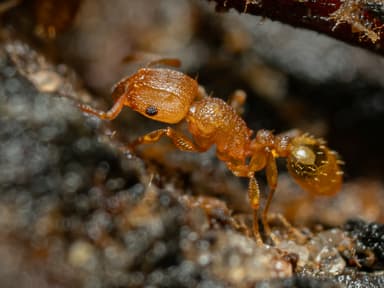
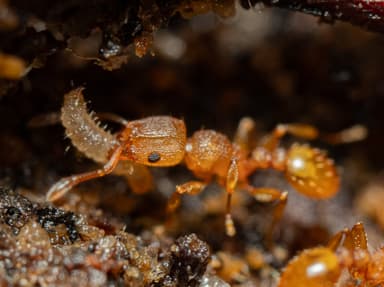
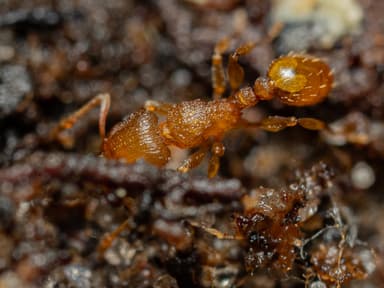
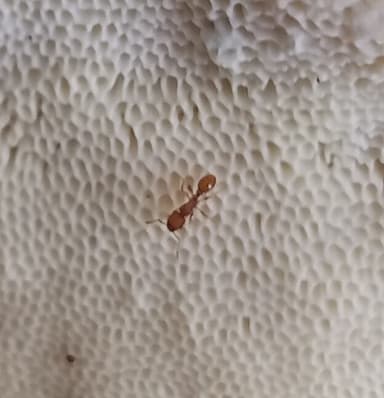
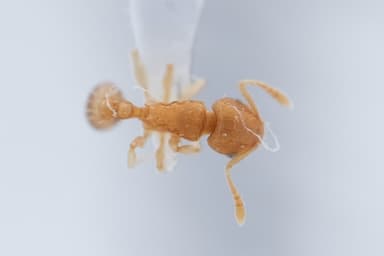
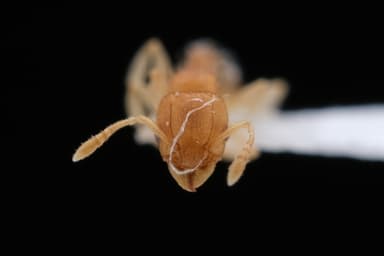
Among the globe-trotting tramp ants that have hitched rides with human commerce, Tetramorium simillimum stands out as a particularly successful colonist of warmer regions. Workers are tiny, measuring just 1.8 to 2.5 mm, and monomorphic, so there is just a single minor-worker caste. Queens are modestly larger at 3.5 to 4.5 mm. The entire colony remains unassuming, yet fully mature nests can house up to 10,000 individuals — a substantial population that allows for rapid resource exploitation. What makes this species fascinating to keep is not flashy morphology but its relentless activity, speedy brood development, and ability to exploit a wide range of microhabitats. Originally described from material collected across tropical Africa and Asia, T. simillimum has been carried across the pantropics, with GBIF occurrence records extending from latitudes of roughly 40°S to 45°N, including the Americas, Pacific islands, and subtropical parts of the Mediterranean. Bolton’s (1977) foundational revision of the simillimum group clarified its identity, and Wetterer (2010) has chronicled the global spread of this and related tramp species, noting its preference for disturbed, human-modified landscapes.
This ant sits at an intermediate care level, making it a more rewarding challenge for keepers who have already gained some experience with hardier starter species. Their escape artistry is legendary — given their minute size, workers can squeeze through seemingly impossible gaps in poorly sealed lids, so a tight-fitting formicarium with fine mesh or a fluon barrier is essential. The colony’s growth potential and need for steady, warm-humid conditions demand consistent attention, but the payoff is a lively, ever-bustling nest that captivates with its constant streams of nanitic foragers. If you have kept your first colony successfully and are ready for something more dynamic, T. simillimum is an excellent next step.
In captivity they thrive in a temperature band of 22 to 30°C, with the upper end accelerating brood development noticeably. Humidity should be kept between 50 and 70 percent, a range that mimics the moist microsites they favor in rotten wood, leaf litter, or under stones in the wild. Many keepers achieve this with a plaster or ytong nest block that can be watered regularly, or a soil-based formicarium with a hydration system. Because the workers are so small, the nest interior should have narrow chambers and fine tunnels to make them feel secure; drilled acrylic or fine grouted nests work well. A short outworld with a sand or clay substrate gives them a natural foraging surface. Do note that no hibernation is required — this species comes from tropical and subtropical climes and stays active year-round, so you can enjoy their constant activity without seasonal interruptions.
Feeding T. simillimum is straightforward once you match the meal size to the workers. They relish small, soft-bodied insects such as fruit flies, pinhead crickets, or freshly killed mealworm segments as protein sources. Carbohydrates can be supplied via a dilute honey-water mix or commercial ant nectar. Because the workers are so tiny, a test-tube water feeder with a cotton plug or a small water tower is safer than an open dish; surface tension can easily trap them, so keep the watering method shallow or use a mesh guard. Provide small amounts daily, removing uneaten food to prevent mold, and watch how quickly they recruit nestmates — a hallmark of a thriving colony.
For newly acquired colonies, the first days are a period of critical stabilization. Upon arrival, offer a tiny drop of sugar water right into their test tube or nest entrance and then leave them largely undisturbed in a dim, quiet spot set to the warmer side of their range, around 27°C if possible. Avoid feeding solid protein for the first 24 to 48 hours; the queen needs peace to settle and resume egg-laying. You may observe a tendency to pile brood near a moisture gradient, which is normal. Check in briefly after two days: if the queen is active, eggs are present, and a few workers are tentatively exploring, you can introduce a single small fruit fly. Remove it after a few hours if uneaten. Their small size means colonies are initially shy, but with patience they will soon begin aggressive foraging, at which point you can offer food on a regular schedule. Pay close attention to barrier integrity from day one — these ants will test every seam relentlessly. Once they have settled, the colony will grow quickly, rewarding you with a dense, industrious population that embodies the resilience of one of the world’s most widely distributed tramp ants (Wetterer 2010; Bolton 1977).