Pheidole
Pheidole dentata
Nuptial Flight Calendar
Flight months: Apr, May, Jun, Jul, Aug, Sep
Care Guide
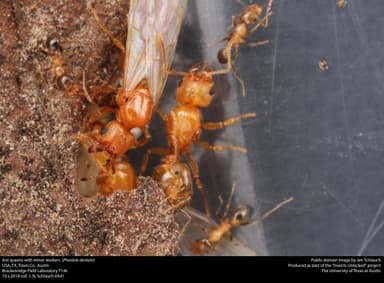
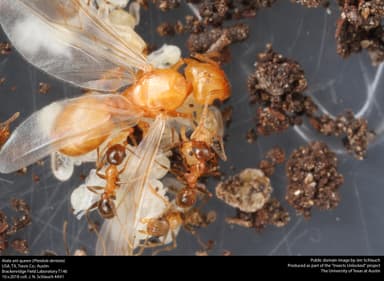
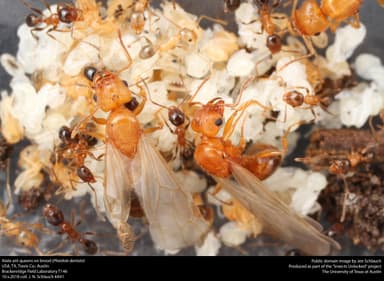
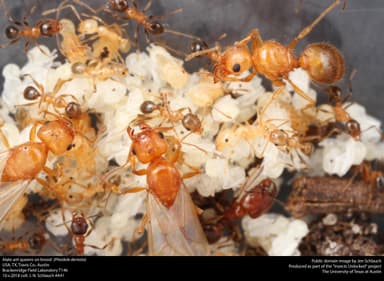
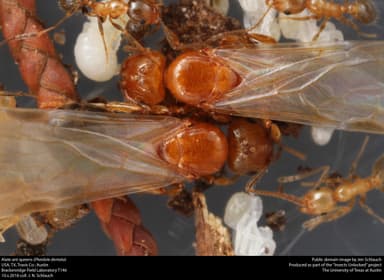
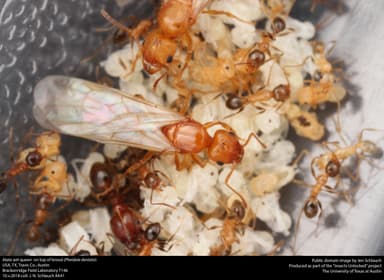
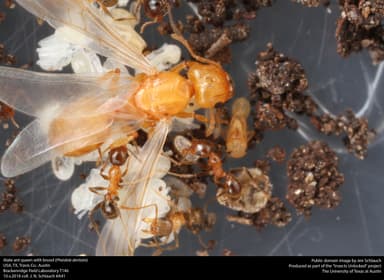
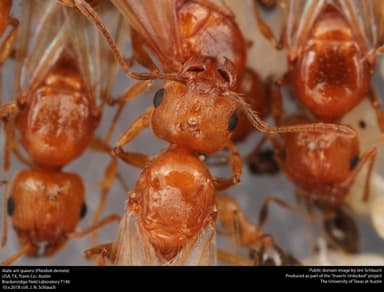
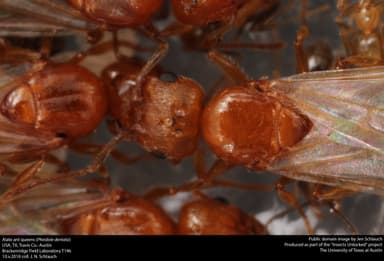
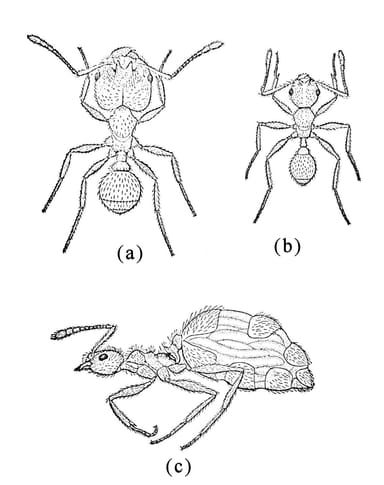
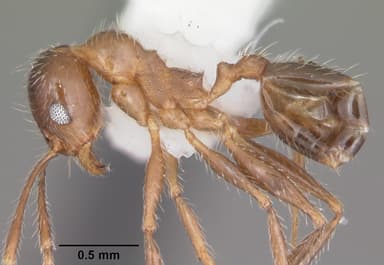
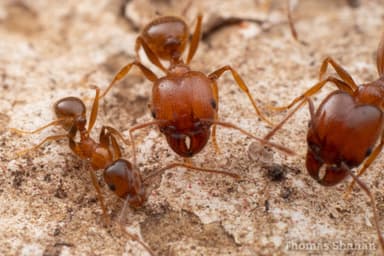
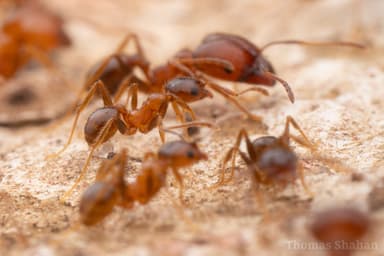
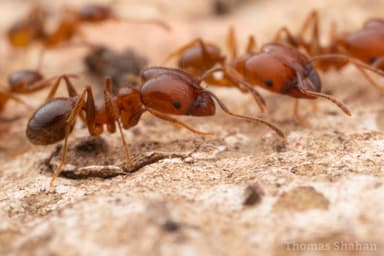
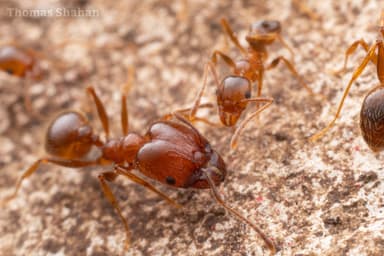
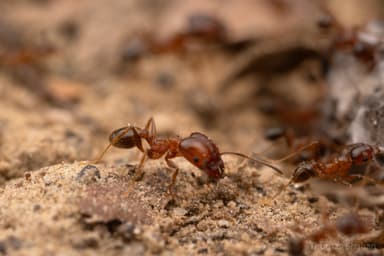
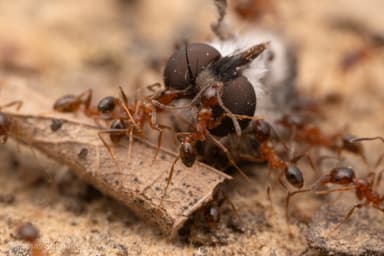
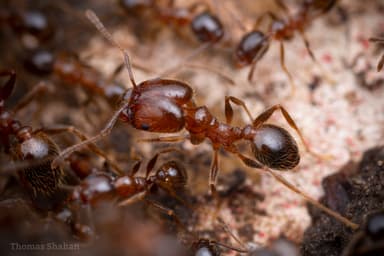
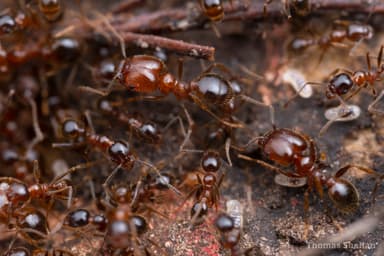
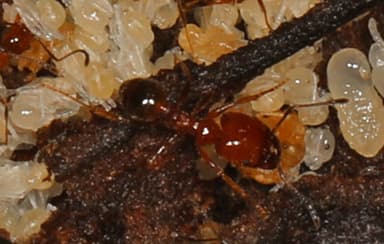
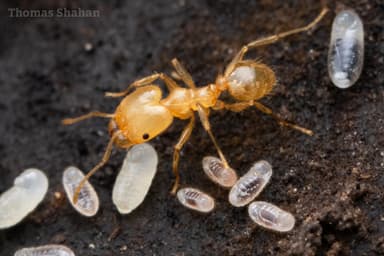
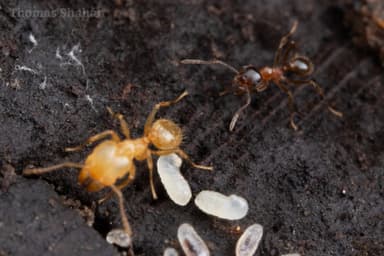
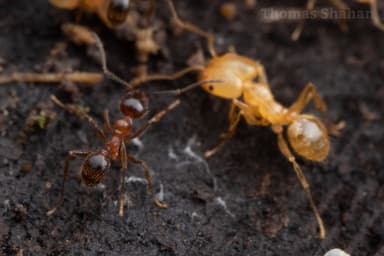
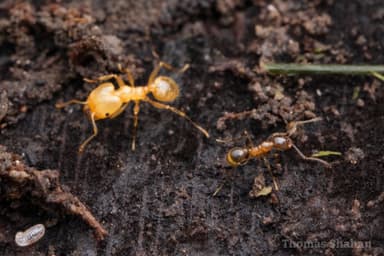
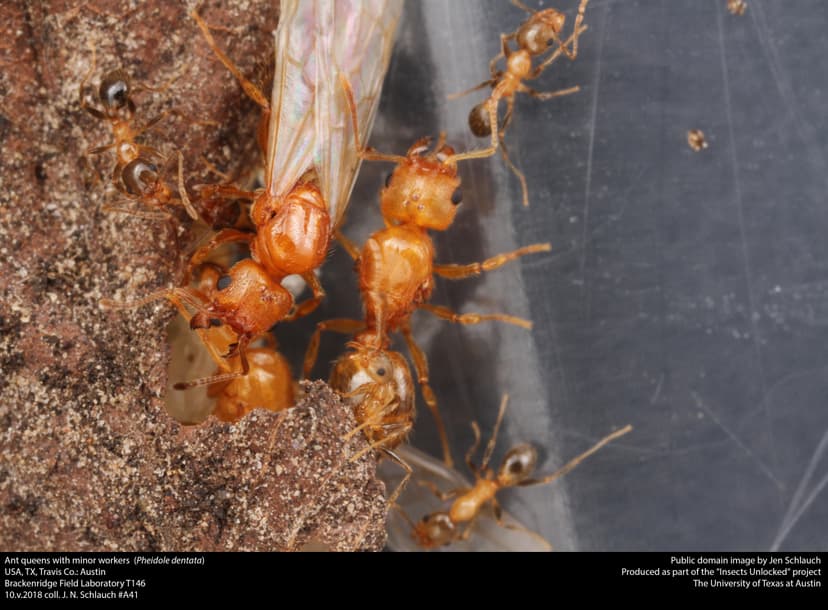
Few ants rival the busy, dynamic spectacle of a thriving Pheidole dentata colony. Native to the warm southeastern quarter of the United States — from the Carolinas down through Florida and west to Texas, as mapped by GBIF occurrence records — this species embodies the classic dimorphic Pheidole plan. Queens are robust, glossy, and deep reddish-brown, measuring an impressive 7 to 8.5 mm, while the workers range from just 2 mm to a noticeably larger 4 mm, divided neatly into two physical castes. The minor workers are lithe, amber-colored, and frantic foragers that form the overwhelming majority of the workforce, which can swell to 30,000 individuals in a mature nest. The major workers, by contrast, are unmistakable: their enormous, blocky heads — packed with muscles — give them a soldierly appearance, and they handle tasks that require brute force, such as cracking seeds, dissecting tough insect prey, and defending the nest entrance. This division of labor, famously documented by Muscedere & Traniello (2012), makes every moment of observation an object lesson in social efficiency, and it is precisely this charismatic caste system that draws so many keepers to the species.
Labelled squarely as a beginner-level ant, Pheidole dentata is forgiving, fast-growing, and endlessly entertaining, suiting both newcomers and seasoned hobbyists who appreciate a lively, low-risk colony. Its claustral founding means a single queen needs nothing more than a quiet test tube setup to raise her first nanitic workers without external feeding, removing the early headaches of semi-claustral queens. The species is remarkably hardy within its thermal comfort zone and does not require a winter diapause, allowing for year-round activity and observation. New keepers will find the colony’s steady, predictable growth rewarding, while experienced enthusiasts can dive into the nuances of caste determination, foraging strategies, and the mass-recruitment trails that these ants lay down with a zeal bordering on theatrical.
Providing the right home for Pheidole dentata means replicating the warm, humid microclimate of the soil layers it naturally occupies. A temperature range of 22 to 28°C is ideal; a gentle gradient achieved with a small heat mat or cable placed at one end of the nest lets the colony self-regulate. Humidity should be kept between 50 and 70 percent, which is easily maintained in a plaster, ytong, or grout-based nest through regular, light watering of the hydration portal. Because these ants readily excavate, a soil-based or naturalistic setup with a loose, sandy-loam substrate can produce stunning behavior, but a classic, glass-topped formicarium with pre-formed tunnels works perfectly for viewing. The nest chamber should be modest at first — too much space can overwhelm a young colony and cause them to pile garbage inside rather than using an outworld. As the population explodes past a few thousand, they will appreciate a generous foraging arena where trails of minors shuttle food back to the nest and the occasional major lumbers out to lend her jaws to a large prey item.
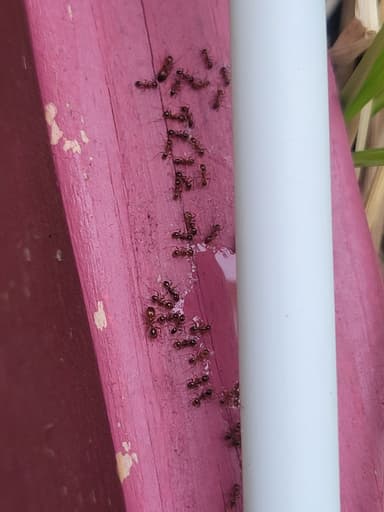
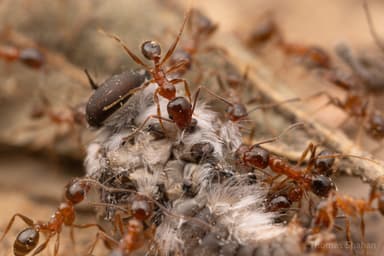
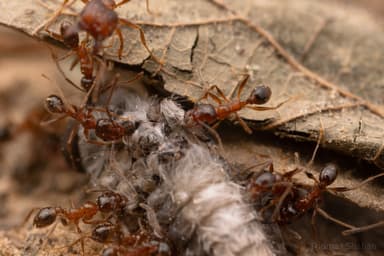
Feeding Pheidole dentata is straightforward, but observing their gustatory enthusiasm is a daily pleasure. Protein is critical for brood development: offer freshly killed fruit flies, small crickets, mealworm segments, or even finely chopped feeder roach. You will soon notice minors swarming the food and, if a piece is too tough, dragging it toward the nest entrance until a major arrives to process it. Carbohydrates fuel the adult workers; a small drop of honey, maple syrup, or sugar water presented on a piece of wax paper or in a tiny liquid feeder will attract a mob of eager drinkers within minutes. Many keepers also provide small seeds such as chia, poppy, or crushed sunflower — majors will crack them with audible clicks, and the workers will extract the oily endosperm, a behavior that links directly to the ant’s natural ecology (Wilson 2003). Fresh water must be available at all times, either through the nest’s hydration system or a water-filled test tube plugged with cotton and placed in the outworld.
One of the greatest appeals of this species is the absence of a mandatory hibernation period. Pheidole dentata does not undergo diapause in the wild across its native range and will continue to forage, brood, and expand without any winter cooling. Maintain them at a steady room temperature or, better, at the warmer end of their preferred range through the winter months, and you will see no drop in activity. This makes them an ideal companion for those who want a visually active colony during the colder, darker part of the year, when many other temperate ants have retreated into dormancy.
The first week after your queen and her first workers arrive is critical. Minimize disturbance completely: place the test tube or small founding nest in a dim, vibration-free space for at least 48 hours, resisting the urge to peek. After that settling period, offer your first tiny meal — a very small fruit fly (dead) and a micro-drop of sugar water right at the entrance of their chamber — and then step back. Watch for signs of stress, such as the queen dashing about erratically, workers abandoning brood, or refusal to feed. In a healthy colony, a few minors will soon find the offerings and recruit sisters excitedly. Once they begin foraging with confidence, you can slowly introduce them to their outworld. By keeping the first weeks calm and predictable, you set the stage for a colony that will soon become a cascading river of amber-colored ants, a miniature empire that embodies all the wonder of the myrmecological world right on your desk.