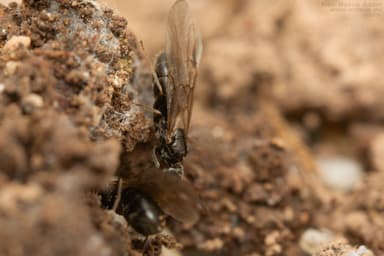
Tapinoma
Tapinoma erraticum
Care Guide
Tapinoma erraticum, commonly known as the erratic ant, lives up to its name with swift, seemingly unpredictable movements that make it a delight to watch. This species is one of the most forgiving choices for a beginner keeper, yet offers plenty of fascinating behavior. The queen is modest in size, measuring only 4–5 mm, while workers are even smaller at 2–3 mm. Unlike some seed‑harvesting or polymorphic species, Tapinoma erraticum is monomorphic — all workers look alike, forming a uniform and highly coordinated workforce. A mature colony can reach several thousand individuals, creating a bustling, active nest that never ceases to entertain.
One of the most endearing traits of these ants is their fondness for honeydew. In the wild, they tend aphids and scale insects, and in captivity they will eagerly accept sugar water or any sweet solution. They also hunt small insects for protein, making their diet easy to provide and balance. Another signature characteristic is the faint, sweet smell of coconut or rotten coconut that emanates from disturbed workers — a chemical defense that is entirely harmless to humans but gives the species a truly unusual identity. Their claustral founding means the queen does not need to be fed during the initial stage; she seals herself in a chamber and rears the first workers using her own metabolic reserves, which simplifies early colony care considerably.
Care difficulty
Keeping Tapinoma erraticum is very straightforward, making them an excellent entry point into the hobby. Their small size means they do not require enormous setups, and their forgiving nature tolerates minor fluctuations in temperature and humidity. The only key requirement is a proper winter dormancy — these ants must hibernate at around 5°C for several months to maintain a healthy annual cycle. Without this cooling period, the colony may lose vigor or fail to produce sexuals.
Housing
A formicarium with moderate humidity levels between 40 and 60% suits them well. The nest area should be kept slightly moister than the outworld, but avoid waterlogging. Because Tapinoma erraticum is fast and can squeeze through tiny gaps, a tight seal around the enclosure is essential. They thrive at temperatures between 20 and 28°C, with the upper end stimulating more brood production. Provide a shallow water source or a test tube with a cotton plug, and always keep sugar water and small insect pieces available. These ants appreciate a bit of substrate or soft sand in their outworld, as they like to forage and explore.
First days after purchase
Upon receiving your colony, place the formicarium in a quiet, dimly lit spot and allow the ants to settle for at least 24 hours. Resist the urge to open the nest or disturb them — simply ensure the water supply is topped up and a drop of sugar water is accessible. Observe from a distance; you will soon see the characteristic erratic dashes of workers exploring their new home. Over the first week, gradually introduce small protein items like fruit flies or pieces of cricket. With patience and minimal interference, your Tapinoma erraticum will quickly adapt and begin building a thriving colony.