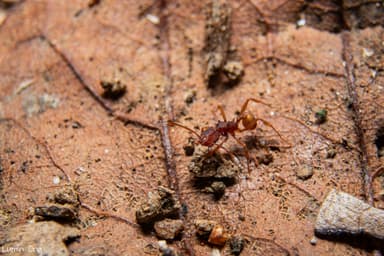
Proatta
Proatta butteli
Care Guide
Proatta butteli may be small in stature, but keeping this Southeast Asian gem is a rewarding challenge for experienced ant keepers. The queen measures just 4 to 5 millimeters, while her workers are even more diminutive at 2 to 3 millimeters, making them among the more delicate species in the hobby. Despite their size, these ants are robust foragers and display a fascinating division of labor within colonies that can grow to between one hundred and a thousand individuals. Their founding is fully claustral, meaning the queen seals herself into a small chamber and raises her first brood without leaving the nest, relying solely on her own fat reserves and flight muscles.
The diet of Proatta butteli is straightforward: they thrive on a mix of insect protein and sugary liquids. Small crickets, fruit flies, or chopped mealworms provide the protein needed for brood development, while sugar water or honeydew keeps the foragers energized. They will eagerly accept honey or diluted honey offered on a cotton swab. Unlike seed-harvesting species, these ants do not store large quantities of dry food, so regular small feedings are essential.
Care difficulty
Keeping Proatta butteli is rated as advanced, primarily due to their exacting environmental requirements. They are not a species for first-time ant keepers. The most critical factor is humidity — these ants require consistently high levels between 80 and 90 percent, which means the nest must be kept moist at all times without becoming waterlogged. Good ventilation is needed to prevent mold, but the substrate or nesting material should retain moisture well. Temperature should be maintained between 25 and 28 degrees Celsius year‑round, as they do not undergo diapause or hibernation. Any prolonged drop below 22°C can quickly stress the colony.
Housing
A formicarium with tight, small chambers suits Proatta butteli best — think test tubes with external foraging arenas or small plaster‑based nests that can be humidified easily. Because the workers are tiny, they can escape through the smallest gaps, so the setup must be escape‑proof. Provide a shallow water source or a test tube with a cotton plug to maintain humidity. The foraging area should be kept dry to avoid drowning, while the nest side stays moist. Avoid strong light; these ants are shy and will retreat to the darkest parts of the nest if disturbed.
First days after purchase
Upon receiving your colony, place the container in a quiet, dimly lit room and allow the ants several days to settle. Resist the urge to observe constantly. Ensure the nest has adequate moisture — if the test tube or nest appears dry, add a few drops of distilled water. Offer a tiny drop of sugar water and a small insect piece, but remove leftovers promptly to prevent mold. Patience is key: Proatta butteli will start exploring and foraging once they feel secure, but rapid growth is not typical. Monitor humidity levels daily during the first week, and you will soon be rewarded by the quiet industry of this advanced, beautiful species.