Messor
Messor denticulatus
Care Guide
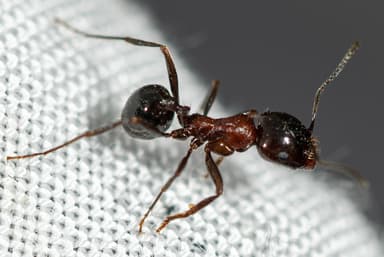
Messor denticulatus is a charming seed-harvesting ant species that rewards keepers with a fascinating glimpse into the world of granivorous ants. Though slightly more modest in size than its larger relative Messor barbarus, this species still displays a gentle polymorphism: the queen measures a robust 10–12 mm, while workers range from 4–7 mm. The colony itself is a comfortable size for the home keeper, typically growing to between 500 and 5,000 workers — large enough to be impressive, yet manageable. The claustral founding style means the young queen seals herself into a chamber and raises her first brood using only her metabolized wing muscles, making the early stages very low‑maintenance for the keeper.
Like other members of the genus, Messor denticulatus has a diet centered on seeds. These ants are expert foragers, bringing a variety of seeds back to the nest where they are dehusked, stored, and eventually milled into a nutritious paste often called “ant bread.” This seed‑based staple provides the colony’s primary carbohydrates and fats. To support brood development and maintain a balanced diet, they also benefit from occasional protein in the form of small insects such as fruit flies, mealworms, or cricket pieces. The dual diet is easy to manage and eliminates the need for a constant supply of live prey.
Care difficulty
Keeping Messor denticulatus is ideal for beginner ant keepers. Their claustral founding removes the stress of feeding a founding queen, and their tolerance of standard room temperatures (22–28°C) makes temperature control straightforward. Humidity should be kept in the 40–60% range, which is easily achieved with a regular moistening schedule in the nest area. The main challenge is providing a suitable hibernation period: these ants require a winter rest at around 8°C for several months. This natural cycle is essential for long‑term colony health and must be respected.
Housing
A formicarium for Messor denticulatus should offer enough space for a colony of several thousand workers, with a dedicated area for granary storage. The nest itself should be kept dark and quiet — these ants are sensitive to vibrations and sudden light, especially during the early stages. Regular, gentle moisture in the nest section ensures larvae develop properly, while an outworld provides a dry foraging area for seeds and water. A small water source (such as a test tube or watering station) is appreciated, though these ants get much of their moisture from seeds and the nest’s humidity.
First days after purchase
Upon receiving your Messor denticulatus colony, place the formicarium in a calm, dimly lit spot and let the ants acclimatize for at least a day. Resist the urge to watch constantly; disturbances stress the colony. Ensure the nest has adequate moisture and that the outworld contains a small dish of water and a scattering of seeds. Observe from a distance for the first few days to confirm the ants are drinking and feeding. With patience, you will soon witness the satisfying sight of workers carrying seeds back to their granary, building a thriving little civilization right on your shelf.