Pheidole
Pheidole pallidula
Nuptial Flight Calendar
Flight months: Jun, Jul, Aug, Sep
Care Guide
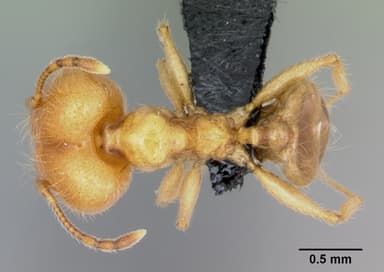
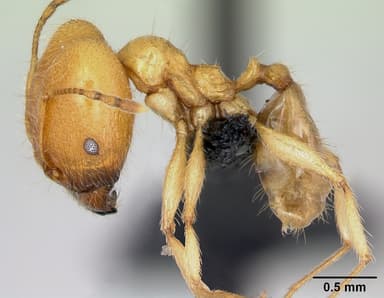
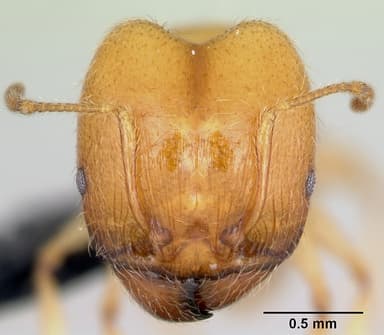
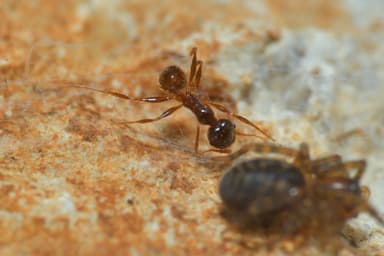
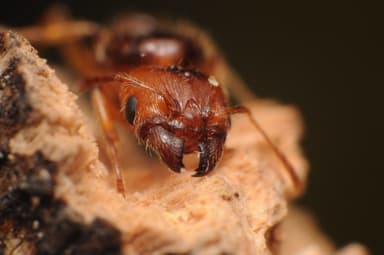
Pheidole pallidula is a small but endlessly fascinating ant species native to the warm Mediterranean basin, with a range that stretches from the Iberian Peninsula through southern Europe and into North Africa. Queens measure a modest 6 to 8 millimetres, while the workers span a mere 2 to 4 millimetres, yet their colonies can swell to an impressive 10,000 individuals in just a few seasons. The species is famously dimorphic: alongside the nimble minor workers that handle most foraging and brood care, you will find a caste of major workers — often called soldiers — with disproportionately large, blocky heads and powerful mandibles. These majors specialise in seed cracking, defence, and processing tougher prey, giving the colony a visibly structured division of labour that never fails to captivate keepers (Lenoir et al. studies; Passera & Aron 2005). Active, aggressive toward intruders, and relentlessly industrious, Pheidole pallidula is a true spectacle of social insect efficiency, and in the wild its claustral queens launch nuptial flights on warm, humid afternoons between June and September, often just after a summer rain.
For the hobbyist, this ant ranks firmly in the “beginner” category, making it an excellent choice for anyone new to polymorphic species or looking for a robust, fast-growing colony that forgives minor husbandry mistakes. It is well suited to keepers who want to witness the dramatic contrast between the darting, slender minors and the hulking majors without the space or feeding demands of larger ants. The key to success lies in stable warmth: temperatures of 22 to 28 degrees Celsius keep the colony active and the brood developing at a satisfying pace. A simple heating cable or heat mat placed under one corner of the nest works well, but avoid overheating, as stress can lead to sudden collapses. Humidity should be maintained between 50 and 70 percent, which can be achieved by using a plaster or ytong nest with a water reservoir, or by misting a naturalistic soil-based setup. These ants are notorious escape artists; the minors can squeeze through the tiniest of gaps, and both castes chew vigorously at any weak point. A tight-fitting lid, a smear of fluon or talc barrier, and a well-sealed foraging arena are non-negotiable — check all joins regularly, because a Pheidole pallidula escape is a lesson in their relentless exploratory drive.
In terms of diet, Pheidole pallidula is a straightforward but enthusiastic feeder. Protein fuels the ceaseless brood production; offer a steady supply of freshly killed insects such as fruit flies, small crickets, or chopped mealworms. The majors will often carry entire prey items back to the nest entrance, where the minors take over maceration. Carbohydrates are equally important and can be supplied via diluted honey, sugar water, or slices of sweet fruit placed on a small feeding dish to keep the arena clean. A colony of several thousand workers will consume surprisingly large quantities of both, so scale your offerings with the population. Fresh water must always be available, ideally through a test tube setup with a cotton plug or a dedicated water feeder, as these small ants can drown in even a thin film of moisture if the surface tension is not broken by a sponge. Remove uneaten protein promptly to prevent mould, and avoid live, vigorous prey that might harm the workers — pre-killed is always safest.
Hibernation is a requirement that cannot be skipped without compromising the colony’s long-term health. From late autumn until early spring, Pheidole pallidula needs a cool, steady temperature of around 15 degrees Celsius, mimicking the mild winters of its native range. During this three- to four-month diapause the colony slows dramatically, the queen ceases egg-laying, and workers cluster tightly; activity will pick up again as temperatures rise in March or April. A wine cooler, a cool cellar, or a reptile hibernation chamber all work well, but the temperature must never drop near freezing. If you neglect this dormant period, the queen’s lifespan may shorten and the following year’s brood production can be erratic, so treat hibernation as a vital part of the yearly rhythm.
Bringing a new Pheidole pallidula colony home requires a gentle touch. Whether you have acquired a founding queen in her claustral tube or a small colony with first workers, place the setup in a dark, vibration-free spot at the recommended temperature and leave them completely undisturbed for at least 24 hours. The queen will have sealed herself into her founding chamber and needs no food until her first workers are foraging; a small dab of honey on a slip of paper can be introduced after a day, and the tiniest piece of pre-killed fruit fly once a few minors are wandering. Resist the urge to check on them constantly — frequent light exposure and movement can cause stress, leading the queen to cannibalise her eggs. After a week or so, you may open the tube and connect it to a foraging arena, but always allow the colony to expand at its own pace. Watch for workers gathering around the nest entrance, a sign they are ready to explore. With patience and a stable environment, you will soon witness the bustling, two-tiered society that makes Pheidole pallidula such an enduring favourite among ant keepers worldwide (AntWiki; AntWeb).