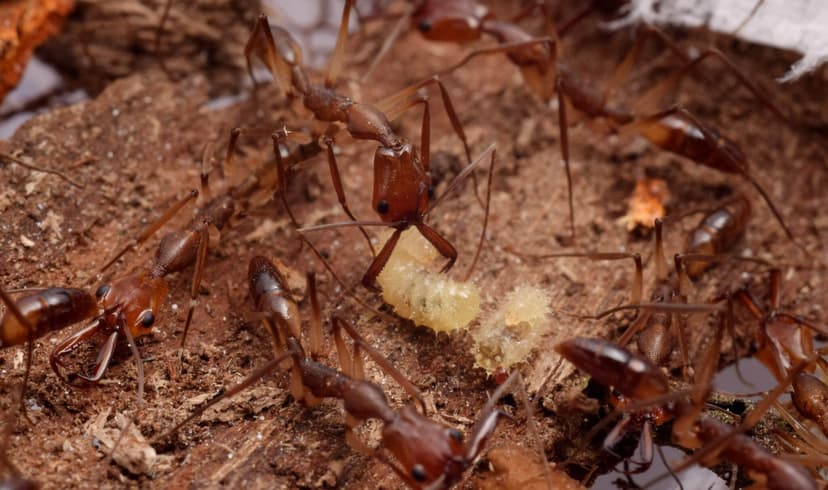
Anochetus
Anochetus emarginatus
Nuptial Flight Calendar
Flight months: Jan, Feb, Oct, Nov, Dec
Care Guide
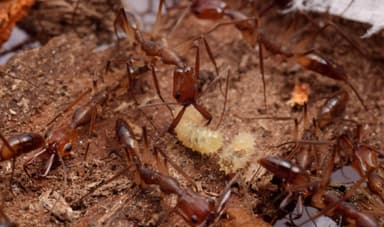
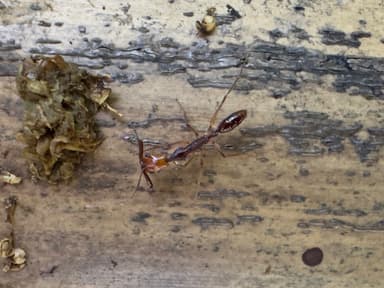
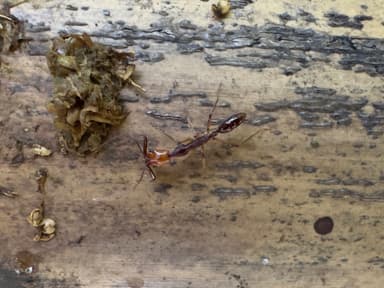
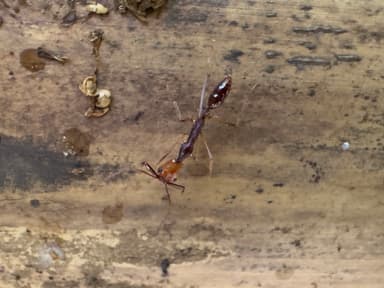
Anochetus emarginatus is a captivating but cryptic member of the Neotropical trap-jaw ant fauna, instantly recognizable by its elongated head, large mandibles that snap shut with astonishing speed, and a slender, elegant body. Workers range from 5.5 to 7 mm, while queens are only slightly larger at 6.5–7.5 mm, exhibiting a monomorphic worker caste and no significant size variation among adult sisters. Colonies are small, rarely exceeding 200 individuals, and in the wild they nest in pre-existing cavities within rotting wood, under bark, or in the leaf litter of humid forests from the Amazon basin north into Central America and the Caribbean, roughly between latitudes 16°N and 25°S (Brown 1978; GBIF). The genus Anochetus belongs to the Ponerinae subfamily and shares the trap-jaw mechanism with its more famous relative Odontomachus, though Anochetus species are generally shyer, slower growing, and far less commonly kept. What makes this ant especially intriguing for the dedicated keeper is its ancient lineage and specialized predatory behaviour — the mandibles are not merely defensive but are used to stun or kill swift, soft-bodied prey before the ant delivers a paralyzing sting. As a subject of observation, their deliberate, almost cat-like hunting tactics and the delicate social interactions within a tiny colony offer a window into a refined evolutionary path that stands in stark contrast to the bustling, fast-growing formicines most hobbyists know.
This species is unequivocally an expert-level ant. Its care demands precise environmental control, patience, and a light touch, because A. emarginatus is highly sensitive to disturbance and poorly tolerates fluctuations in humidity or temperature. Newly mated queens found claustrally, but even a successfully founding colony can fail if checked too frequently or if the nest becomes too dry for even a few hours. I recommend this ant only to keepers who have successfully maintained other sensitive ponerines, such as small Neoponera or Hypoponera species, and who have the equipment to provide a fully stable microclimate. The reward lies not in rapid population growth or mass foraging columns, but in observing a slow, deliberate lifestyle that feels closer to that of a solitary wasp. If you thrive on high-maintenance terrarium plants or delicate dart frogs, you may have the right temperament; if you are looking for a flourishing display within months, you will be frustrated.
Housing must recreate the warm, perpetually moist conditions of the tropical forest floor. Nest temperature should be held between 22°C and 28°C, with a gentle gradient that allows the ants to choose their preferred zone. Humidity is the most critical parameter: 70–90% relative humidity is the target, with the nest chamber itself maintaining near-saturation. Naturalistic setups work best — a glass terrarium with a deep layer of moisture-retentive substrate such as coco coir mixed with rotten wood flakes and live sphagnum moss, into which a pre-formed plaster or ytong nest block is partially buried. The plaster should be kept damp enough that water condenses on the inside surfaces, mimicking the interior of a decaying log. Ventilation must be limited to a few small screened ports to prevent desiccation; stagnant air is not a problem if the substrate is clean and mold is managed by a robust springtail population. Many successful keepers use a semi-closed system, effectively a modified formicarium with a single hydration chamber connected to the nest via a wicking material. The entrance should be narrow, providing the tight, cave-like security these ants crave.
In the wild, A. emarginatus is a specialised predator of small, soft-bodied arthropods such as termites, entomobryomorph springtails, and small dipteran larvae (Brown 1978). In captivity, they readily accept small, freshly killed or live prey items: fruit flies (Drosophila melanogaster and D. hydei), pinhead crickets, termites from a feeder colony, and the smallest mealworms chopped into pieces. Feed sparingly — a colony of 30 workers will thrive on two or three fruit flies every other day, and overfeeding leads to refuse accumulation and mite outbreaks. Carbohydrate needs are minimal; a tiny droplet of diluted honey or sugar water offered once a week on a piece of wax paper is usually sufficient, and many colonies will ignore it entirely for weeks at a time. Prioritise protein, and always remove uneaten food after 24 hours. Provide a small, elevated water source such as a test tube with a cotton plug, but if the nest is properly hydrated the ants will often drink directly from condensation on the chamber walls, so the drinking station acts primarily as insurance.
No hibernation or diapause is required for this tropical species. In the warm, stable equatorial latitudes it inhabits, seasonal temperature swings are negligible, and the ants remain active year-round. A constant temperature regime between 24°C and 26°C keeps the colony in a steady reproductive rhythm; any attempt to cool them down can trigger brood reduction or queen cessation. The nuptial flights occur during the warm, humid nights of the rainy season, roughly from October to February (AntWiki), but captive rearing is so challenging that acquiring a colony usually means purchasing a fertile queen from a specialist. Do not attempt to induce a seasonal cycle — these ants have no need for it and will suffer if temperatures drop below 21°C for extended periods.
When your A. emarginatus queen arrives, the first days are absolutely critical. Immediately place her tube or founding chamber in a completely dark, vibration-free location at the appropriate temperature and humidity. Avoid the temptation to peek for at least five days. She will have founded claustrally and should already possess a tiny clutch of eggs or small larvae; disturbance now can trigger fatal egg cannibalism. After the initial settling period, offer a single pre-killed fruit fly or half a pinhead cricket, placed gently near the brood chamber. If she accepts it, return to darkness and inspect only once every ten to fourteen days for the first two months. Look for steady, incremental growth — one or two new pupae, a slight increase in brood pile size — rather than dramatic change. Signs of trouble include a queen that constantly moves her brood, a pile of discarded eggs, or a motionless, non-feeding queen. In such cases, review your hydration and silence: a nest that is too dry, too bright, or subject to footfall vibrations is by far the most common cause of failure. Successful rearing of Anochetus emarginatus is a masterclass in restraint, and those who master it discover one of the ant world’s most enigmatic jewels.